Why Adults Are Still Playing the Games They Grew Up With
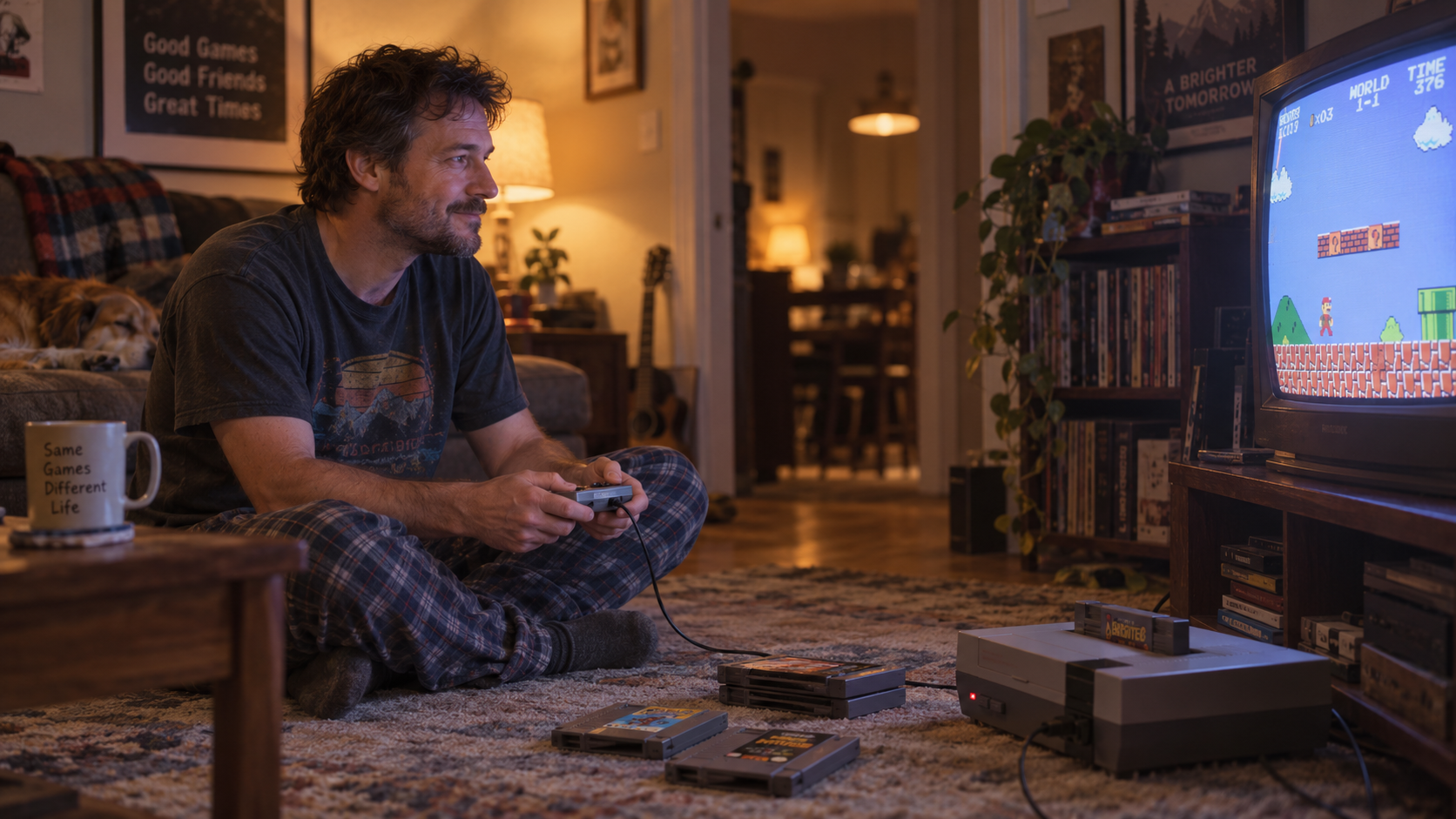
Subhead: Old consoles, familiar characters and childhood favorites are finding their way back into adult life.
Read Time: 3 min read
For a lot of adults, picking up an old video game does not feel like discovering something from the past.
It feels familiar.
The music starts. A character appears on screen. Suddenly you remember where the hidden item is, which level gave you trouble, or who used to sit beside you while you played.
That may help explain why games from the 1980s, 1990s and early 2000s are still very much alive.
Classic titles are now easy to find on modern systems. Nintendo, for example, offers more than 150 older games through its current subscription service, including titles from the NES, Super Nintendo, Game Boy, Nintendo 64 and Sega Genesis eras.
But access is only part of the story.
The Players Grew Up
Video games were once treated mostly as something for children and teenagers.
That is no longer true.
The average video game player in the United States is now 37 years old, according to the Entertainment Software Association.
That means many of the people who grew up with Mario, Sonic, Zelda, Final Fantasy, Street Fighter and the original PlayStation are now adults with jobs, families and their own money to spend.
They did not necessarily leave gaming behind.
They simply got older with it.
Old Games Bring Back More Than Gameplay
Anyone who has returned to a childhood game knows that the experience can be about much more than winning.
A certain soundtrack can bring back memories of summer vacation.
An old menu screen can remind someone of a bedroom they have not seen in years.
Even the sound of starting a console can bring back a period of life almost instantly.
That is part of what makes older games different from a brand-new release.
You already have a history with them.
Sometimes Simple Is Enough
Modern games can be huge.
They can have enormous worlds, long tutorials, online updates, season passes, daily challenges and hundreds of hours of content.
That can be exciting.
It can also be a lot for someone who has only an hour or two to play.
Many older games are easier to jump into.
Turn the system on. Choose a level. Start playing.
For an adult balancing work, family and everything else in the week, that simplicity can be part of the appeal.
You do not always need a new world to explore for 100 hours.
Sometimes you just want twenty minutes with a game you already know.
Parents Are Sharing Games With Their Kids
Old games are also finding new players inside families.
Gaming is now a regular activity for many parents. In 2026, 75% of U.S. parents said they play video games, and among those parents, 81% said they had played with their children. More than half said they play together every week.
That creates an interesting role reversal.
A child may introduce a parent to a new game one day.
The next day, the parent may show them the Mario, Sonic or racing game they played when they were the same age.
A game that once belonged to one generation suddenly becomes something two generations can enjoy together.
The Old Games Never Really Left
The gaming industry clearly knows there is still interest in the past.
Classic-game libraries continue to expand, and older titles regularly return on modern hardware. Nintendo currently supports classic games stretching across several generations, while PlayStation maintains its own catalog of games from earlier PlayStation systems.
Some players want the original experience.
Others prefer remakes with better graphics and modern controls.
And some younger players are discovering these games for the first time, without any childhood memory attached to them at all.
Sometimes You Just Want to Go Back
That may be the simplest reason adults keep returning to the games they grew up with.
A familiar game asks very little from you.
You already know the controls.
You recognize the music.
You remember the characters.
And for a little while, you get to revisit something that belonged to a different part of your life.
The technology may be old.
The feeling is not.