The Things Dads Do That Kids Remember Years Later
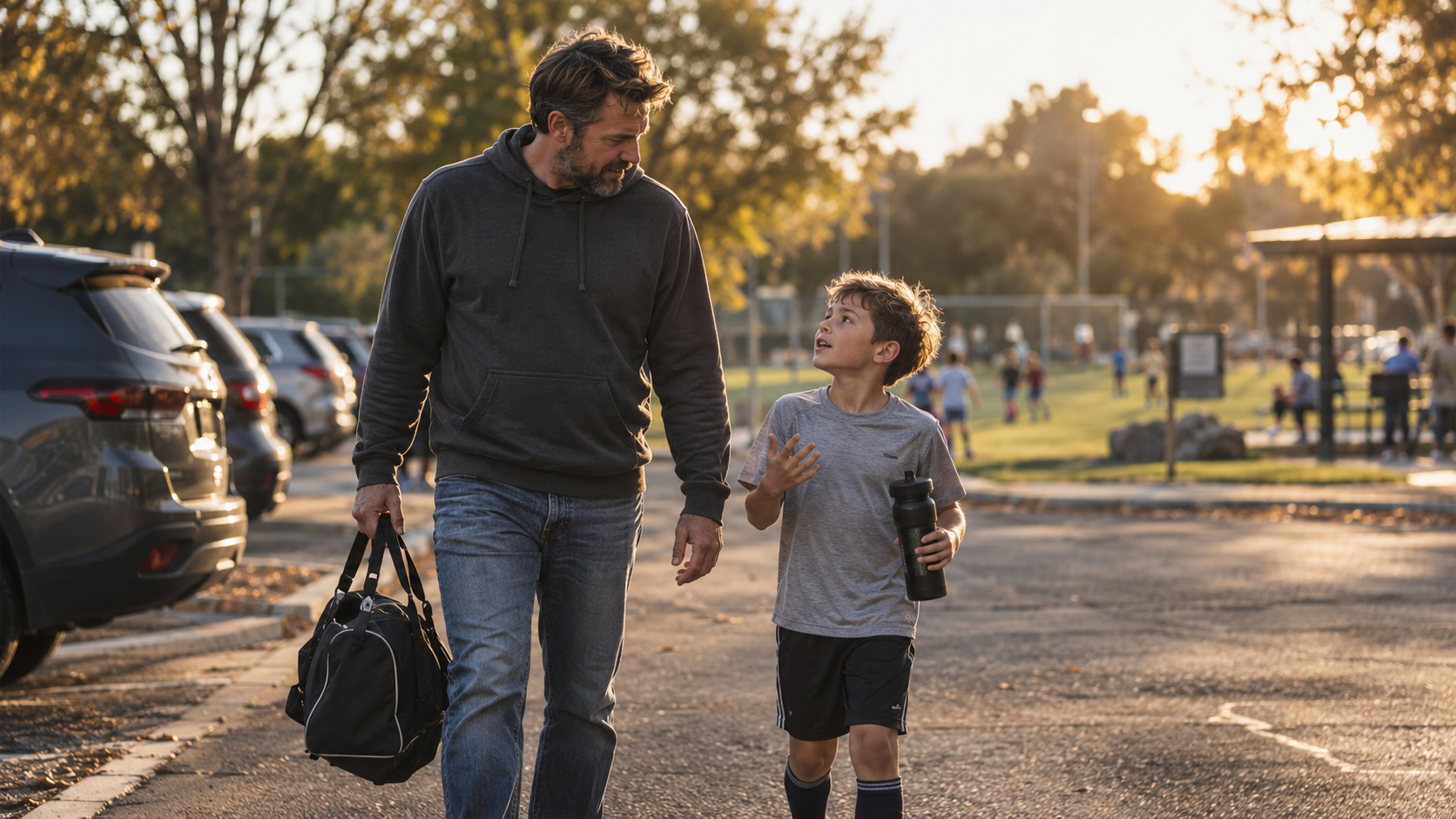
Subhead: Kids rarely remember the lecture. They remember whether their dad showed up — and that kind of presence can stay with them long after childhood.
Read Time: 3 min read
Ask an adult to describe their father, and you probably will not hear much about a specific piece of advice.
You are more likely to hear about a moment.
He came to the game after a double shift. He listened instead of immediately trying to fix the problem. He laughed at the same dumb joke every single time.
None of these are grand gestures. Most probably did not even feel important when they happened.
But those are often the moments that stay.
They become part of how someone remembers childhood — not because they were dramatic, but because they created a feeling of being noticed, supported, and able to count on someone.
Why These Memories Stay So Long
The way people remember their parents changes as they grow.
During childhood, parents are at the center of daily life. Later, friends, school, work, relationships, and other experiences take up more space.
But memories connected to a parent can stay unusually strong because they were formed during years when so much of a child’s understanding of relationships was still taking shape.
The relationship a child has with a father can influence more than memories of Dad himself.
A father who is warm, dependable, and involved can help shape what a child comes to expect from other close relationships: whether people can be trusted, whether someone will listen, and whether support will still be there when things become difficult.
That does not mean one childhood moment determines how someone will feel for the rest of their life.
It means those repeated experiences can become part of the way a child understands closeness, trust, and reliability.
And that may be why seemingly ordinary memories can still feel so clear decades later.
It’s Not About Grand Gestures
When people think about being a good dad, it is easy to picture the big things.
The family vacation.
The birthday surprise.
The championship game.
The graduation.
Those moments matter.
But much of fatherhood happens in far less dramatic places.
It happens during the ride home from school.
At the kitchen table while someone struggles with homework.
During bedtime.
While fixing something together in the garage.
Or in a five-minute conversation that a father may forget by the next morning, but a child remembers for years.
What matters is not being present for every second.
It is the pattern that develops over time.
A dad who is tired but still listens.
A dad who misses some things but keeps his word when it matters.
A dad who may not always have the right answer but makes it clear that his child can come to him anyway.
Children notice that kind of consistency.
They may not describe it that way while they are young, but they remember what it felt like.
The Ripple Effect Into Adulthood
The influence of a father does not necessarily stop when childhood ends.
The things children see at home can become part of what they carry into their own adult relationships.
A son may remember how his father handled disagreements.
How he treated his partner.
Whether he apologized.
Whether he showed affection.
Whether he made time for family even when work was demanding.
Years later, those memories can become examples of what to repeat — or sometimes what to do differently.
Some men grow into fathers and suddenly notice themselves doing the same small things their own dads once did.
Using the same expressions.
Making the same breakfast.
Teaching the same skill.
Repeating the same joke they once rolled their eyes at.
Others have the opposite experience.
They become parents and make a deliberate choice to give their children something they felt they did not have growing up.
Either way, the relationship with a father can continue shaping decisions long after someone has left their childhood home.
That is part of what makes fatherhood bigger than a collection of individual parenting moments.
Those moments can travel forward.
Kids Notice the Ordinary Things
Children are often paying attention to things adults do not realize they are watching.
They notice whether Dad puts his phone away when they start talking.
They notice whether he keeps a promise.
They notice how he reacts when someone makes a mistake.
They notice whether he comes home angry every night or finds a way to leave the bad day at the door.
They notice whether he says, “I’m proud of you.”
And they notice when he shows up.
Not every father can make every game, school event, dinner, or bedtime.
Work schedules do not always cooperate. Families have difficult seasons. People get tired. Parents make mistakes.
Being a good dad does not require being everywhere.
What matters more is whether a child grows up with a sense that their father wanted to be part of their life.
Why This Matters Beyond Any Single Family
There is a lot of pressure around fatherhood.
Provide enough.
Teach the right lessons.
Protect the family.
Set a good example.
Be strong.
Be available.
Get it right.
But children are not keeping a scorecard of perfect parenting.
What stays with them may be much simpler.
The dad who drove across town because they forgot something.
The dad sitting in the stands.
The dad who stayed awake until they got home.
The dad who knew when something was wrong even when they said everything was fine.
The dad who made them laugh when they needed it.
These moments are easy to overlook because they look like ordinary life.
That may be exactly why they matter.
A childhood is built from thousands of days that do not seem important while they are happening.
Years later, many of those details disappear.
The lecture fades.
The rule gets forgotten.
But sometimes what stays is much simpler:
The memory of a dad who kept showing up.