How Everyday Life Looks Different Across the Globe
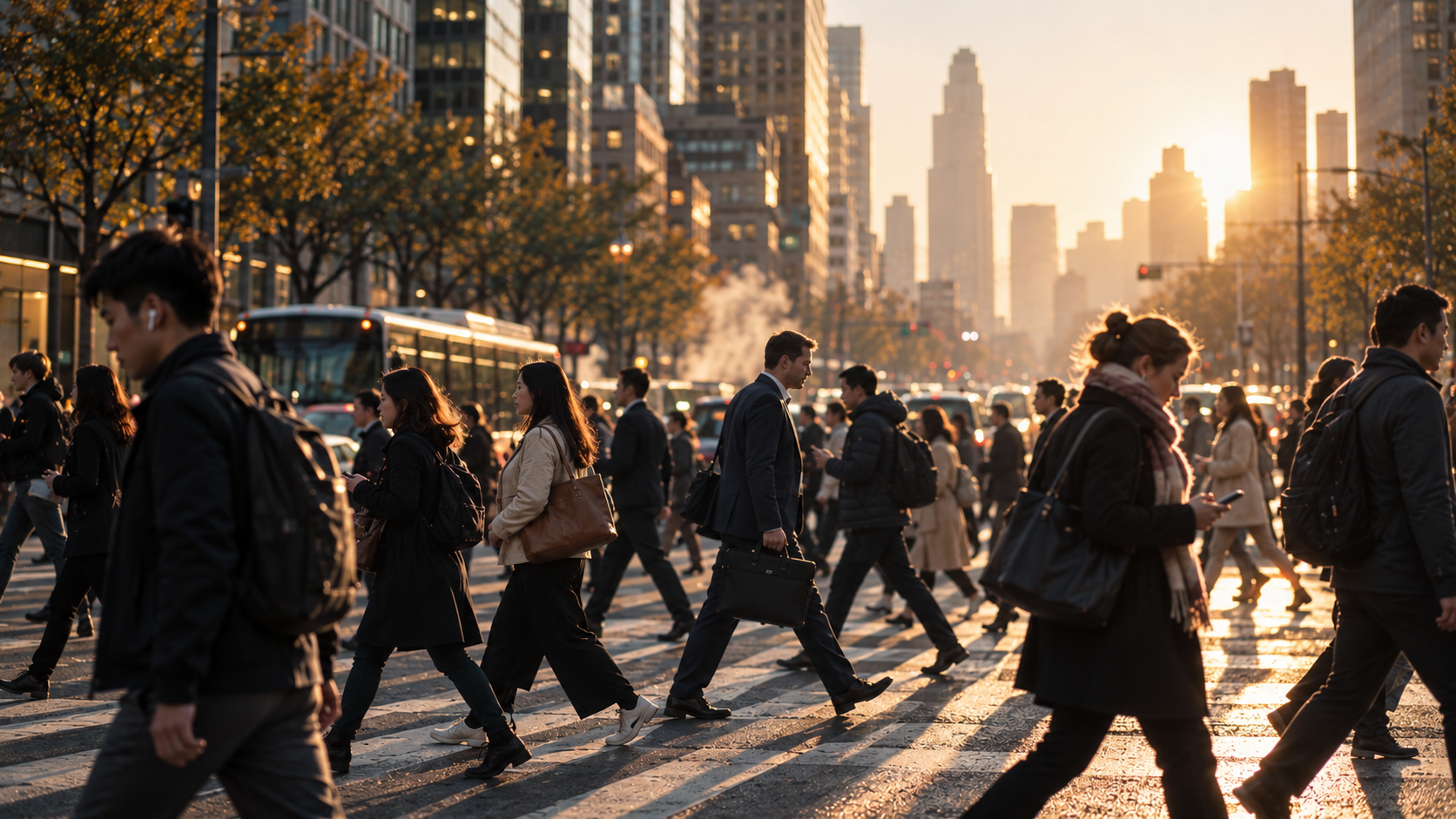
Subhead: From the morning commute to the end of the workday, daily routines can look very different depending on where you live.
Read Time: 3 min read
A normal weekday in one country may not feel normal at all somewhere else.
In one place, people may spend more time at work but less time commuting. Somewhere else, the workday may be shorter, but getting to and from work takes longer. After that comes dinner, errands, family responsibilities, and whatever free time is left.
Most of us do not think much about these differences. We simply get used to the way life works around us.
But step outside your own routine, and everyday life starts to look very different.
Some People Spend Much More Time at Work
Working hours are one of the clearest differences between countries.
In Mexico, workers spend more than 2,000 hours a year at work on average. In Germany, the number is much lower.
That difference adds up.
Over the course of a year, it can mean hundreds of additional hours spent working.
But longer hours do not always mean more gets done.
Technology, the type of work people do, workplace practices, and the economy all affect how much can be accomplished during the day.
So the numbers are not about who works harder.
They simply show that the workday does not look the same everywhere.
Getting to Work Can Take Another Hour
Then there is the commute.
For many people, the day starts well before they arrive at work.
In the United States, the average trip to work takes about 27 minutes. Going back home means many workers spend close to an hour a day just getting from one place to another.
For someone who lives close to work, that trip may take only a few minutes.
For someone living farther outside a large city, it can take much longer.
Traffic, housing prices, public transportation, and where jobs are located can completely change what the morning looks like.
Remote work has changed this for some people too.
One worker may still drive to an office five days a week. Another may commute only twice. Someone else may start work from a desk at home.
The job may be similar.
The day around it can be completely different.
The Workday Does Not End at 5
Getting home does not always mean the day is finished.
There is still dinner to make, groceries to buy, laundry to do, children to care for, and family members who may need help.
This unpaid work takes up a large part of everyday life.
Women, in particular, continue to spend more time on household and care work than men across many countries.
That means two people can work similar hours at their jobs but still have very different evenings.
One may have several hours to relax.
The other may begin another round of work at home.
Free Time Looks Different Too
What people do with the hours that remain also changes from place to place.
Family meals may be a bigger part of the evening in one country. In another, people may spend more time outside the home with friends.
Some countries have longer vacations or shorter working weeks. Others have cultures where staying late at work is more common.
Even something as simple as when people eat dinner can change dramatically from one place to another.
These small habits may not seem important on their own.
Put them together, and they create very different ways of living.
There Is No Single “Normal” Day
Wake up. Go to work. Come home. Eat dinner. Take care of a few things. Find some time to relax.
The basic pattern may sound familiar almost anywhere.
But the amount of time spent on each part can be completely different.
Where we live affects when we leave home, how long we work, how much time we spend getting around, and how much of the day is actually ours.
That is why everyday life around the world is so interesting to compare.
Everyone has 24 hours.
What happens inside those 24 hours depends a lot on where you call home.
