Why Countries Start the School Year at Different Times
World | 4 min read
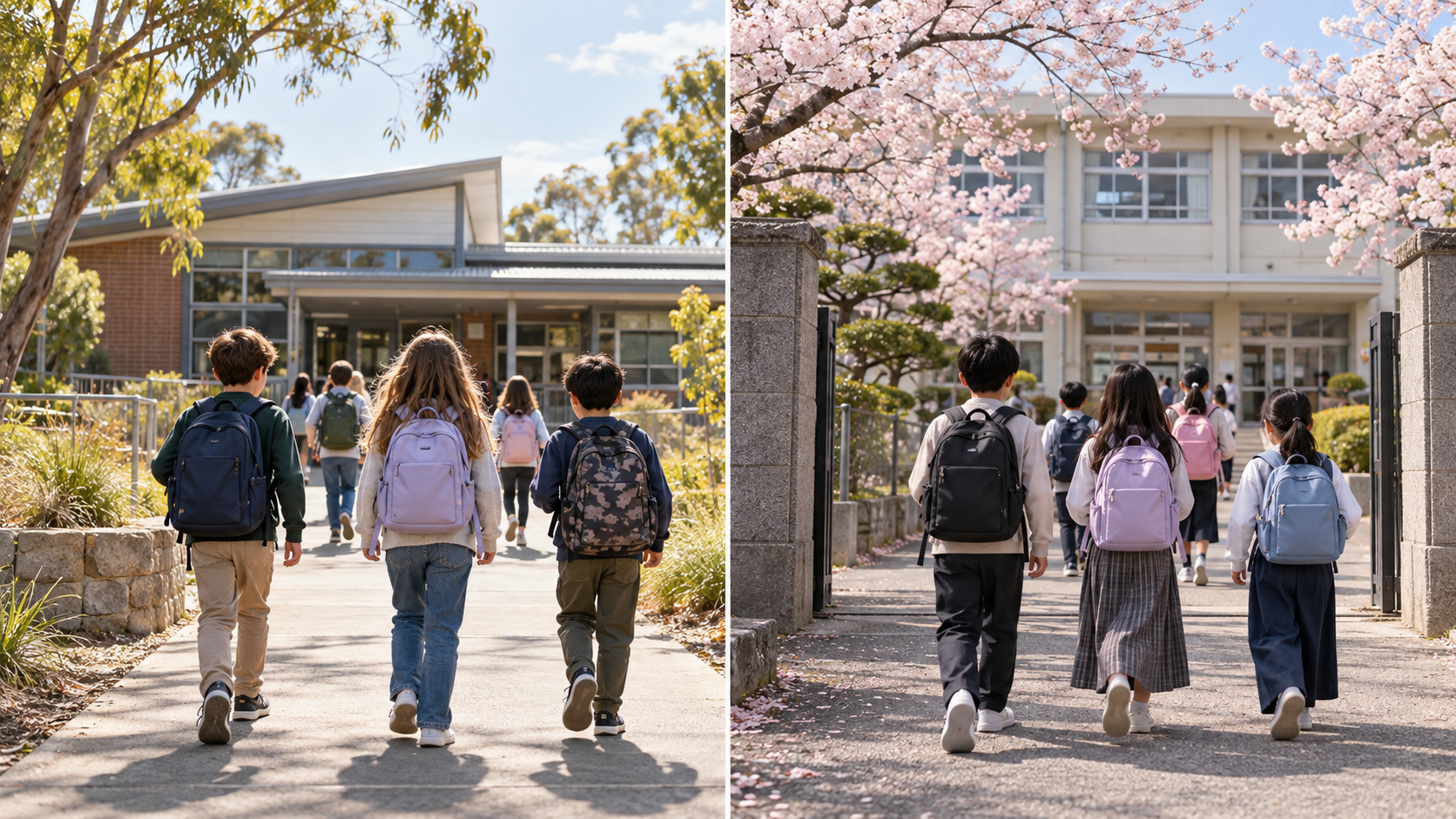
January in parts of Australia. April in Japan. A new school year does not arrive in the same season everywhere.
A child in Australia may begin the school year in summer. In Japan, students begin in April, during spring. Both are starting a new academic year, months apart.
Why school years start at different times has no single explanation. Seasons help explain some calendars. Government schedules and historical decisions help explain others. And a country’s familiar starting month may hide differences between regions or individual schools.
The dates become easier to understand when you look at specific places rather than search for one rule that fits them all.
Japan Starts in April
Japan’s school year begins in April and ends the following March. Its government fiscal year also starts in April, placing education and public administration on the same annual cycle. www.mext.go.jp
That makes April a recognizable point of transition. Students move into a new school year while government organizations begin a new financial period.
The spring setting is memorable. But cherry blossoms describe the scene, not a sufficient explanation for the calendar.
There is also a distinction between the official academic year and the first day children attend lessons. An academic year can begin on a legally defined date while opening ceremonies and classes follow the school’s schedule.
For parents checking a move, “April start” is a useful starting point. It is not the complete enrollment calendar.
Australia’s New School Year Arrives in Summer
In Australia, January and February fall in summer. A school year beginning around those months therefore occupies a different seasonal position from a September start in the Northern Hemisphere.
New South Wales provides a concrete example. Its public-school calendar places the long summer holiday across December and January, with the new school year beginning around late January or early February. education.nsw.gov.au
Even that needs a closer look.
Schools in the state’s Western Division start later than those in the Eastern Division. The published calendar also distinguishes staff development days from student attendance dates. A parent reading only the first date listed for a term could mistake a staff day for their child’s return date. education.nsw.gov.au
So “When does school start in Australia?” needs a second question: which state, and which school?
The Farming Explanation Is Too Simple
American summer vacation is often explained as a break created so children could help on farms.
That is an appealingly short answer. It is also an unreliable explanation on its own.
Historical accounts describe different rural and urban school schedules before the modern calendar became established. Agricultural work influenced schooling in some communities, but the familiar American summer holiday cannot simply be traced to one nationwide harvest break. PBS’s examination of the subject specifically challenges that common account. www.pbs.org
This matters beyond American history. It is easy to see a calendar and invent a reason that sounds sensible: farming, heat, or a rainy season. A convincing explanation needs evidence from the place being discussed.
The month tells you when school begins. It does not automatically tell you why.
Opposite Seasons Explain Only Part of the Difference
Australia and Japan illustrate the limits of geography.
Australia’s early-year start falls in the Southern Hemisphere’s summer. Japan’s April start falls in the Northern Hemisphere’s spring. They do not follow a shared seasonal starting point.
Weather can matter to school planning, but the hemisphere alone does not determine an academic year. A calendar also has to work within the education system that uses it.
Once families and institutions organize around an established schedule, changing it involves more than moving a date. Enrollment arrangements must still work, and students need a workable transition between school years.
That is why a comparison of school calendars should separate two questions: what dates schools currently follow, and what documented history explains those dates.