Why Food Tastes Different When Someone Else Makes It for You
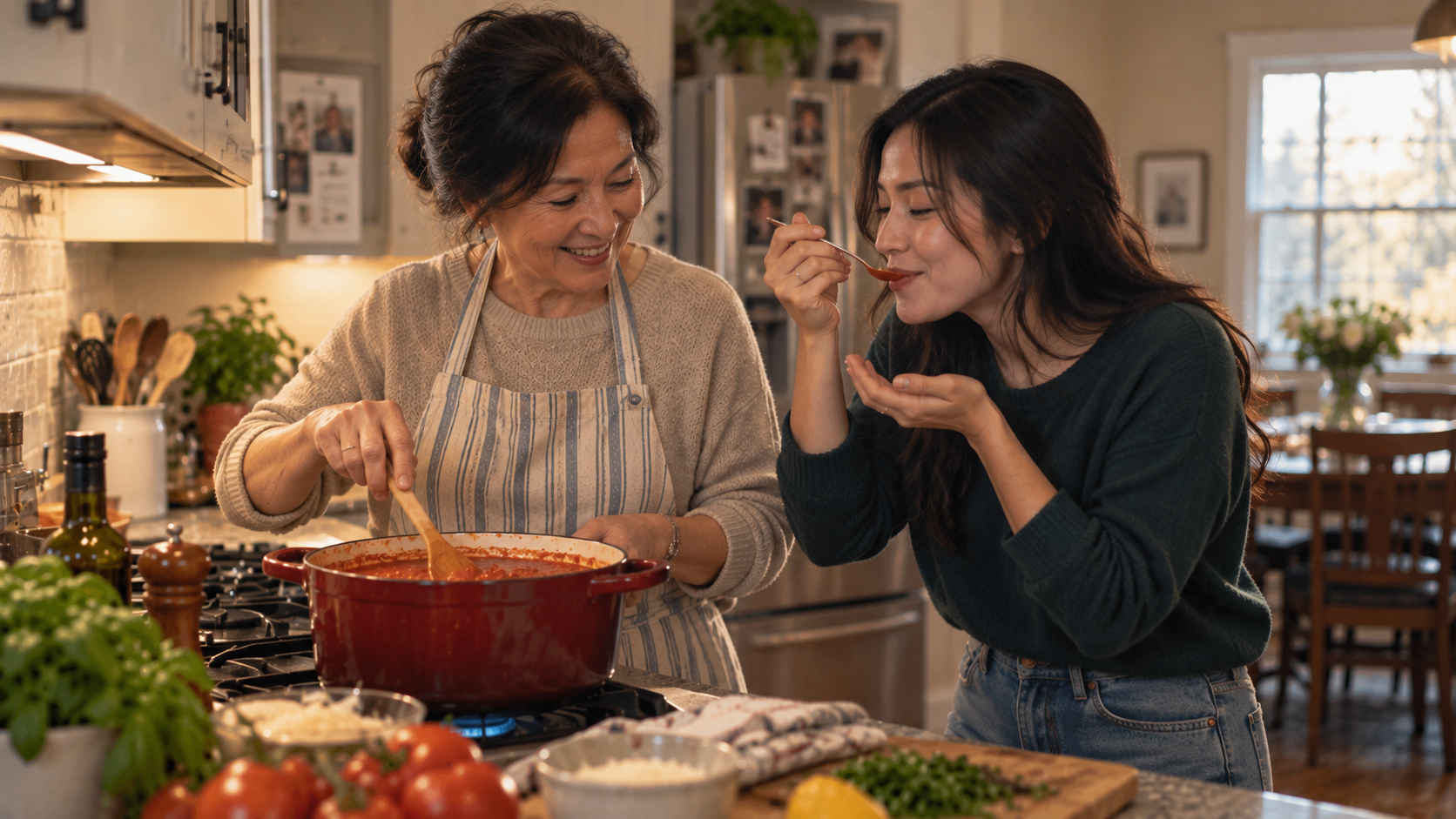
Subhead: You can use the same ingredients, follow the same recipe, and cook it in the same kitchen. Somehow, when someone else makes it, the food can still taste different.
Read Time: 3 min read
You know exactly how your mom makes her spaghetti.
You have the recipe. You buy the same sauce, the same pasta, and the same ingredients. You follow every step she showed you.
Then you take the first bite.
It’s good.
But it doesn’t taste like hers.
This happens with all kinds of food. Your dad’s Sunday breakfast. Your grandmother’s soup. A sandwich from the little place you’ve been visiting for years. Even something as simple as coffee can taste different when another person makes it for you.
Part of the reason is that recipes don’t tell the whole story.
A recipe might say to cook the onions for five minutes. Someone who has made the dish for 20 years may not look at the clock. They look at the onions. They know the color they want, the smell they’re waiting for, and exactly when to add the next ingredient.
They may use a little more salt than the recipe says. They may keep the pan on the heat another minute. They may add something they forgot was even part of the recipe because they’ve been doing it for so long.
Ask Grandma how much seasoning she uses and you might hear, “Enough.”
That’s not very helpful when you’re standing in your own kitchen with a measuring spoon.
But it’s often how experienced home cooks actually cook.
There is another reason food can seem different when someone else prepares it.
You weren’t standing over the stove making it.
When you cook dinner yourself, you’ve already been around the food for 30 minutes or an hour before you finally sit down to eat. You’ve smelled the garlic cooking. You’ve tasted the sauce. You’ve handled the ingredients. You may have taken a bite here and there while preparing everything.
By the time the plate reaches the table, the meal isn’t completely new to your senses.
When someone else cooks for you, the experience is different.
You walk into the kitchen and smell dinner.
Then the plate is placed in front of you.
That first bite really is your first experience with the finished meal.
Sometimes that’s enough to make it seem better.
Then there is the situation itself.
A grilled cheese sandwich your mother made when you were home sick from school may never taste exactly the same when you make one as an adult.
The bread can be the same.
The cheese can be the same.
The pan can even be the same.
But you’re not eight years old anymore, sitting on the couch under a blanket while someone takes care of you.
Food has a strange way of holding onto the moments around it.
That’s why people can spend years trying to recreate a family recipe and still say something is missing.
Sometimes something really is missing. Maybe Grandma used a different brand. Maybe she cooked at a lower temperature. Maybe she never told anyone about the spoonful of butter she added at the end.
But sometimes the missing ingredient isn’t in the kitchen.
It’s the person.
It’s the house.
It’s the sound of everyone talking in the next room.
It’s knowing you didn’t have to cook.
It’s being handed a plate by someone who already knows exactly how you like it.
That doesn’t mean your version is worse.
Over time, your version may become its own thing.
You might change the seasoning. Add another ingredient. Cook it a little differently. Years later, your children might try to make the same dish and tell you theirs doesn’t taste like yours.
And you’ll probably tell them you don’t do anything special.
You just make it the way you always have.
Maybe that’s the funny thing about cooking.
We think we’re passing down recipes.
A lot of the time, we’re passing down people, places, habits, and memories too.