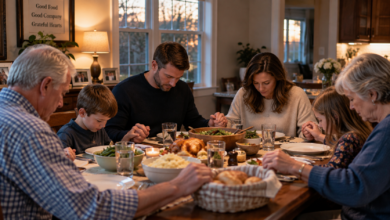
Who in Your Family Knows the Story Behind a Holiday Tradition?
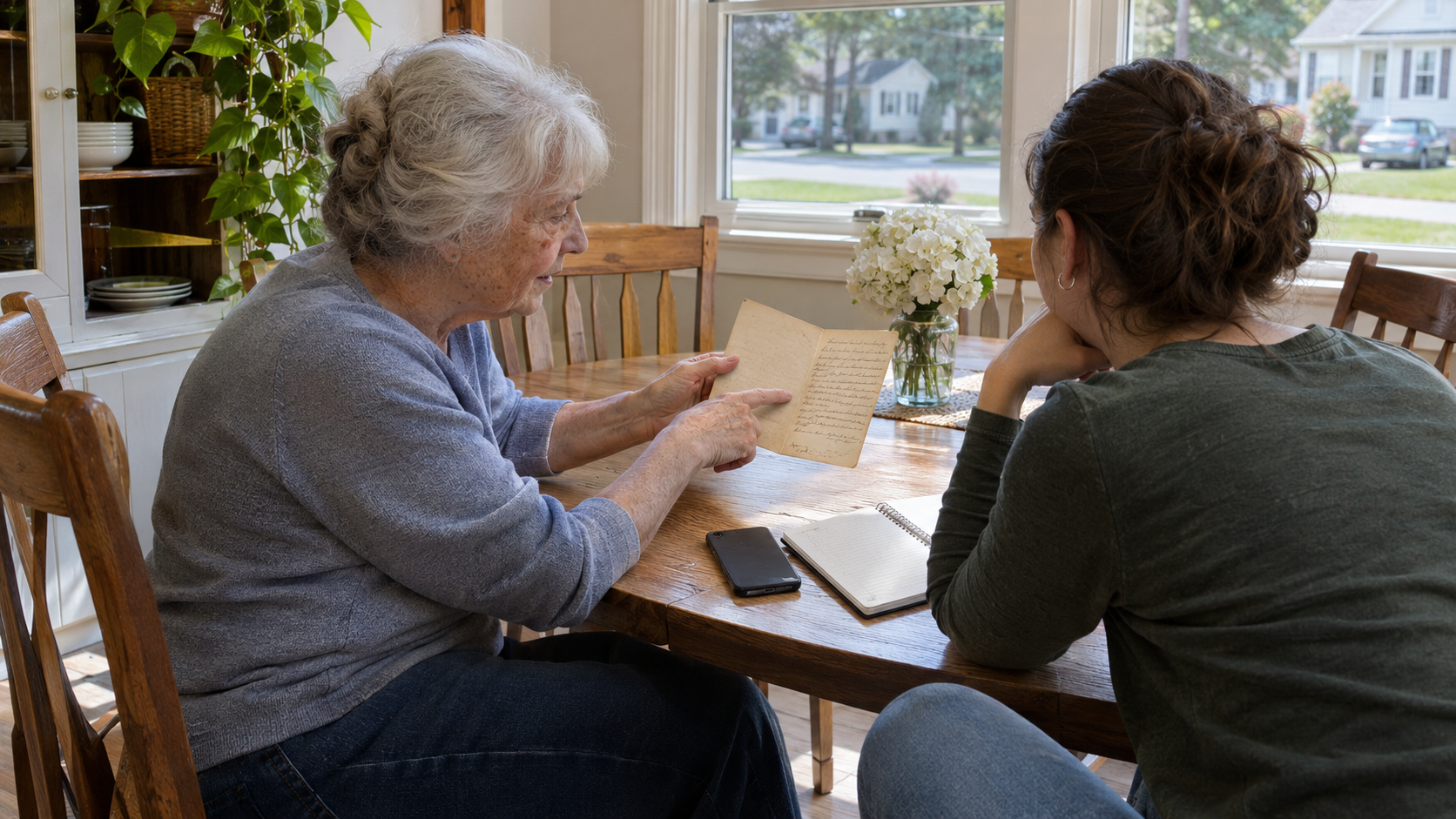
A familiar prayer or holiday custom can be the start of a conversation worth recording in a relative’s own words.
Zandra Vranes was recording an oral history with her grandmother. In an account published by The Church of Jesus Christ of Latter-day Saints, Vranes explained that she was there to listen to her grandmother’s stories and keep track of them. Dates and documents were secondary. The same article features Bonsu, who worked on oral history projects and emphasized finding the person who remembers what others in the family may have forgotten. africasouth.churchofjesuschrist.org
That person might be the aunt who still says a holiday prayer in the language she grew up speaking. Or it might be a cousin who remembers why everyone started gathering at a different house. You can start with one custom and ask the person who remembers it to tell you about a particular holiday.
Start with one thing your family still does
Think of something you’ve seen a relative do more than once. It could be a blessing before a meal or a song someone starts when the family gathers. If there’s an object tied to it, like a handwritten prayer card, bring it along or ask if your relative has a copy. You’ll have something to talk about as soon as you sit down.
Ask who taught them the words or showed them what to do. If they remember doing it as a child, ask where they were and who was there. A question about one room or one person gives them a place to begin. They can tell you what they remember without having to explain the whole history of the holiday.
Sometimes the person who leads a custom now learned it fairly recently. They may know why the family keeps it up, while an older relative remembers how it started. Both accounts can belong in the family’s record. Write down whose memory you’re hearing and how that person came to know the custom.
Ask before you record
Tell your relative what you’d like to keep and who you’d like to share it with. Someone may be comfortable letting you record a conversation for the family and prefer that it stay off social media. They may also be happy to explain a prayer while keeping the words of the prayer itself private. Ask before you turn on the recorder, and pause if they want to tell you something off the record.
A phone on the table can be enough. Move it away from clinking dishes or a television. Record a short test and play it back. If you’re sitting across from each other, check that you can hear both voices without leaning in every time someone speaks.
If your relative would rather have you take notes, write down a few of their exact words when you can. Read back anything you’re unsure of while you’re still together. That gives them a chance to correct a name or spell a word you’ve only ever heard aloud.
Let the person tell it the way they remember it
If a relative begins with the year the family moved or the person who used to host, give them time to finish. A detail that seems off to the side may explain why the custom changed. You might learn who took over saying the blessing when someone could no longer travel, or why the family began meeting at a different time of day.
When a relative describes what the custom means, keep their explanation tied to their experience. You could ask what they remember thinking about it as a child and whether they see it differently now. If they use a word you don’t know, ask them how they would explain it to a younger family member. Their answer can stay with the recording, alongside the word as they say it.
Another relative may remember the same holiday differently. If you record both accounts, label each one with the speaker’s name. If nobody remembers exactly when something began, leave that part open. A recording can preserve what someone remembers without settling every detail.
Give the recording a name someone will recognize
Afterward, label the file with the speaker’s name and the custom you discussed. Add the recording date and a short note about what’s in it. A label such as Aunt Rosa remembers who taught her the holiday blessing gives a family member a better idea of what they’re opening than a file called Recording 1.
If your relative wants a copy, ask how they’d like to receive it. They may prefer a written version they can read and correct. If you make a transcript, keep the original recording with it so the family can still hear how they told the story. Share it with the people you agreed on, especially if the conversation includes names or memories they asked you to keep within the family.
Before you put the phone away, ask who else might remember the custom. Write that name beside the file. At the next gathering, you’ll know who to ask and which part of the story you’d like to h