AI-enhanced hotel photos: one in five images on booking platforms show signs of AI manipulation | News
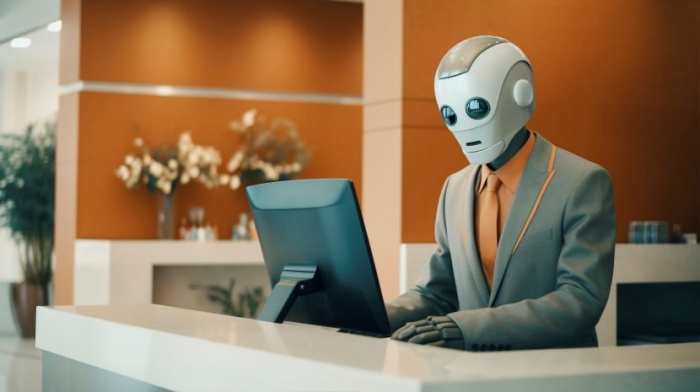
One in five hotel photos on major booking platforms show evidence of being AI-generated or AI-enhanced. This is evident from an analysis of 25,550 images used by hotels to advertise their rooms, facilities, restaurants and amenities. The research was conducted by Berlin-based marketing agency ABCD Agency in collaboration with German forensic AI verification provider ContentGuard.me.
Hotel photos are one of the most decisive factors when booking accommodation online. Yet there are growing signs that the images travelers rely on are no longer just traditional retouching, but are increasingly being created or modified with the help of artificial intelligence.
In a sample of 100 randomly selected hotels, each spread over seven destinations, a total of 25,550 hotel photos were analyzed in May 2026. Among popular summer holiday destinations such as Crete, Mallorca, Sicily and Alanya.
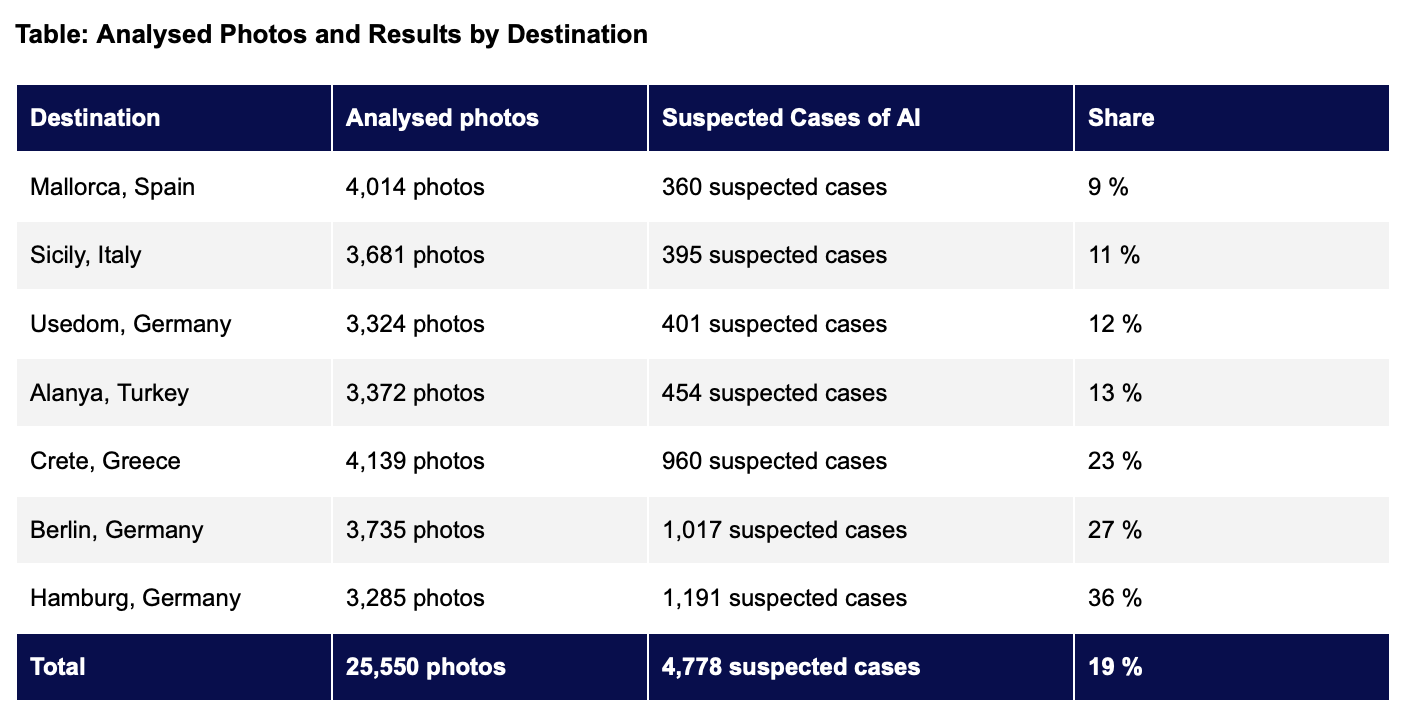
The result: About 19% of all images – a total of 4,778 photos – contained at least one signal typically associated with AI generation or AI editing.
These signals can appear in technical marks such as file metadata, or as visual anomalies in the image itself – including inconsistencies, irregular pixel patterns, or detail errors.
Crete tops the list of suspected cases of AI
The sample showed a considerable spread among the classic holiday destinations. The Greek island of Crete had the highest percentage of flagged photos, with 23% of images analyzed – 960 out of 4,139 – showing at least one indicator of possible AI involvement. This means that almost one in four hotel photos in Crete has raised a red flag.
Mallorca came out relatively well, with around 9% of photos highlighted (360 out of 4,014). In the Turkish resort of Alanya this percentage was 13% – roughly one in eight images. The Italian island of Sicily came in at 11%, or about one in nine.
Why this matters: Photos drive decisions worth thousands
Booking a trip has never been easier. A few clicks can entice travelers to take a holiday costing several thousand euros, pounds or dollars. Many consumers quickly compare options, make decisions under time pressure and rely heavily on images.
When hotel photos are AI-optimized or AI-generated, expectations can be distorted in critical ways:
Room size and proportions: AI enhancement can enhance wide-angle effects, making rooms, pools and facilities appear larger than they really are.
Furnishings and condition: Furniture, bathrooms and outdoor areas may appear newer, cleaner or more luxurious than they actually are.
Setting & Atmosphere: Lush vegetation, clear skies or extremely blue water can create an idealized impression that rarely matches what guests find upon arrival.
These improved images create expectations that reality often cannot meet. The result: disappointment on arrival, complaints and a long-term erosion of trust in both platforms and hotels that rely on credible visual content.
High rates for city destinations
The analysis also covered two city destinations in Germany and the results were striking. In Hamburg, 36% of the photos analyzed were flagged (1,191 out of 3,285). In Berlin this figure was 27% (1,017 out of 3,735).
One possible explanation: City hotels often use additional images that do not show the property itself, but instead show iconic landmarks such as Berlin’s TV Tower. It’s more likely that these types of scenes are generated by AI and the results may be biased upwards.
However, the core concern remains: when photos of hotel rooms, bathrooms, lobbies or amenities are enhanced by AI, guests risk paying for an experience that does not reflect reality.
Jens Kramosch, deepfake expert and founder of ContentGuard.me: “Hotel photos have always been retouched to some extent. But AI takes this to a whole other level. When images are no longer just polished but fundamentally changed, there is a risk of crossing the line from marketing to deception. Travelers need to look closer and platforms need to start transparently labeling AI-edited content.”
Robin Wilfert, founder of ABCD Agency, warns: “When you book a trip, you buy a promise. The photos travelers use to choose a hotel are the most important part of that promise. AI should not create a gap between what is shown and what is real.”
Methodology
In May 2026, 100 randomly selected hotels were analyzed in each of the seven destinations mentioned above (700 hotels in total). A total of 25,550 hotel photos (not video content) were examined using AI-powered forensic analysis by ContentGuard.me. The analysis evaluated both technical indicators in file metadata and visual anomalies in the images themselves, such as inconsistencies and irregular pixel patterns. A photo was flagged as a suspected AI case when at least one signal or marker was detected. This analysis does not distinguish between fully AI-generated images and AI-enhanced images.