study finds women don’t have much choice
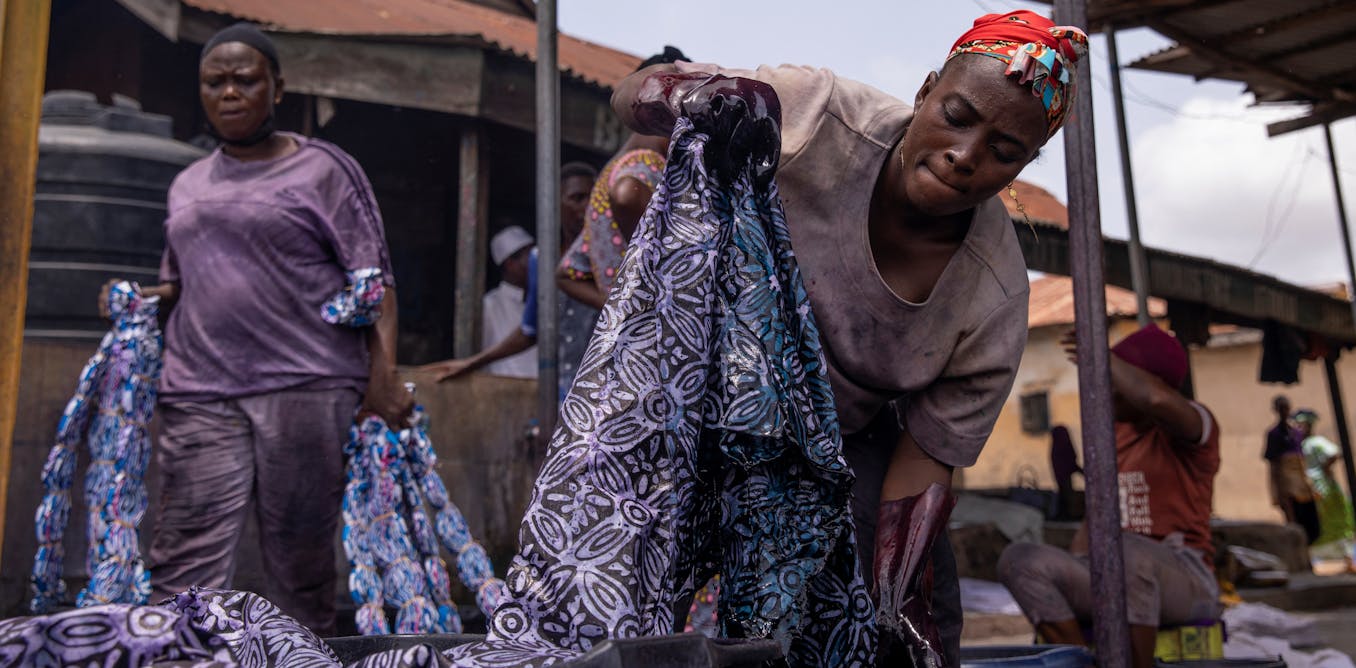
Nigerian women of working age are mostly (90%) self-employed. By comparison, self-employment accounts for less than 16% of employment in high-income countries such as the United States, Germany and the United Kingdom. It is far lower in middle-income countries like South Africa and Turkey too.
Official statistics show that self-employment in Nigeria is concentrated in the northern regions. And there’s a gender difference: women make up the majority of those working for themselves (Figure 1).
What these numbers do not explain is why women are far more likely than men to operate businesses from their homes, or whether those businesses generate meaningful economic returns.

Authors’ calculations from the Annual Nigerian Labour Force Survey Report (National Bureau of Statistics, 2023), accessed at nigerianstat.gov.ng.
As economists working on labour, gender, energy and development, we addressed these questions in a recent paper.
Using nationally representative household data from 2010 to 2019, the study examines why Nigerian women run enterprises from their homes. These kinds of operations include selling goods from a front room, preparing food at home, or offering haircuts, beauty services, laundry and dry cleaning, and shoe repair. They also make textiles, crafts, garments, shoes and cosmetics at home rather than in shops, kiosks or workshops.
The findings challenge the idea that home-based self-employment is mainly about personal preference or flexibility.
Childcare responsibilities, housing access, electricity and cultural norms strongly shape women’s work location. These insights reveal that supporting women in business must go beyond training or microfinance, and remove structural barriers.
Childcare limits women’s workplaces
We first identified factors associated with operating home-based businesses, using data (2010-2019) from national surveys that follow the same households over time.
We then examined how individual, household and contextual factors shape the likelihood of operating a business from home. We found that childcare was the strongest factor influencing women’s choice of work location.
The presence of young children doesn’t much affect where men work. For women, however, having young children makes it more likely they will run a business from home.
In Nigeria, women shoulder most of the unpaid domestic labour, including childcare, cooking and cleaning. Home-based businesses allow women to earn income while doing that labour.
For many women, home-based work may not be the most attractive option. Rather, the patterns we saw in the data suggest that it’s a way to reconcile income-earning with unpaid domestic responsibilities. Other research into women’s experiences has also shown that working from home may be a necessity rather than a choice.
Why home ownership doesn’t benefit women equally
Homeowners who operate home-based enterprises are better positioned to use property as collateral, access credit, expand workspace, or invest in equipment. They are able to turn housing into productive capital.
However, these advantages are not equally accessible to women.
Only 8.2% of women aged 20-49 are sole owners of land, compared with 34.2% of men, according to World Bank research into gender disparities in property ownership in sub-Saharan Africa.
The Nigerian constitution grants women equal rights to own, inherit and manage property. But many face legal, financial and social barriers that limit their actual control over assets.
Even in owner-occupied households, customary and patriarchal practices can mean that ownership doesn’t translate into decision-making power. Consequently, the same asset generates different economic returns for men and women. It confines women to lower-return home-based activities.
We found that 67% of female homeowners operate home-based enterprises compared with 33% of male owners. Most men who own homes work away from home.
Geography and social norms matter
We found that home-based enterprises are concentrated in poorer regions where returns are low, particularly in northern Nigeria, as shown in figure 2.
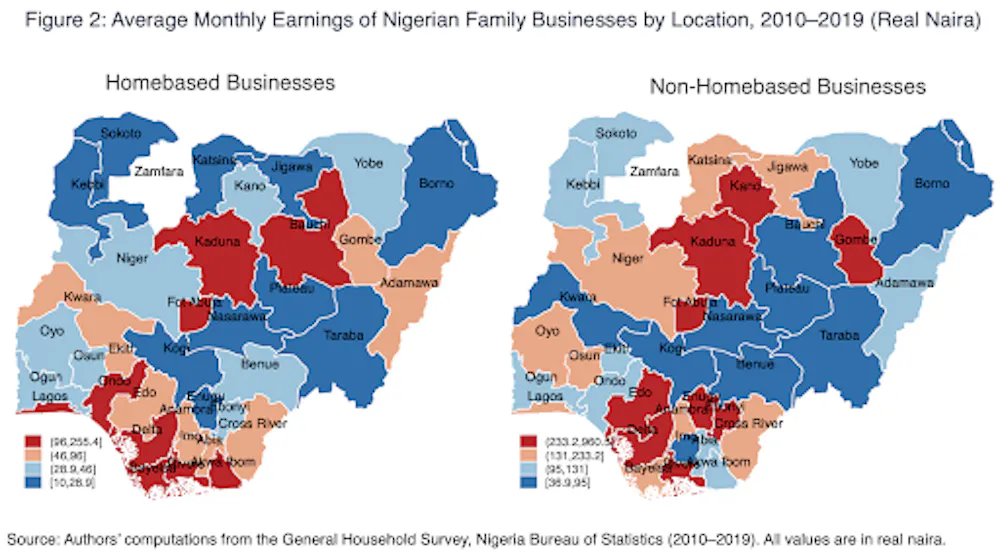
Even after accounting for income and education, women in northern Nigeria are far more likely to run businesses from home than women in the south. Cultural and religious norms that restrict women’s mobility and public participation probably play a central role.
This complicates global policy narratives that frame home-based work as inherently empowering. In Nigeria, it often reflects the need to juggle paid work with household obligations under restrictive conditions. These businesses tend to cluster in low-entry sectors, offer limited skill development, and have little growth potential.
Education helps, but only up to a point
Education and household income do expand women’s options, but their effects are limited. Our study shows that better-educated women are less likely than equally educated men to remain in home-based businesses when alternatives are available.
As household income rises, women are also less likely to operate enterprises from home. Importantly, observable characteristics do not explain the full gender gap. The study finds that less than half of the difference in home-based self-employment can be attributed to education, household size, marital status and housing. The rest likely reflects deeper structural forces that shape outcomes differently for men and women. These are forces like social norms, unequal access to finance, gendered returns to assets, and expectations around unpaid care work.
What this means for policy
Promoting home-based self-employment as a route to women’s economic empowerment can be misleading. When women are pushed into home-based enterprises because childcare is expensive, institutions and property rights are weak, or finance is inaccessible, entrepreneurship becomes a response to constraint, not opportunity.
Policies that reduce childcare costs, strengthen women’s property and inheritance rights, and improve access to credit are likely to do more to expand women’s choices than entrepreneurship programmes alone.
Digital infrastructure can help some home-based businesses reach wider markets, but only if deeper barriers are addressed. And because constraints vary across regions, one-size-fits-all solutions are unlikely to work.
More than flexibility
Home-based self-employment in Nigeria reflects deeply gendered expectations about work and care. Many women work from home not to assert independence, but because they have limited options.
Recognising this distinction matters. Celebrating women’s “flexibility” without addressing the constraints behind it risks turning resilience into a permanent requirement. A more equal future is one in which women can choose where and how they work, rather than adjusting their livelihoods around structural barriers.
Source link