How Couples With Different Faiths Build a Life Together
Subhead: Falling in love is one thing. Building a home together can mean figuring out holidays, family traditions, prayer, and what to teach the kids when two people grew up believing different things.
Read Time: 4 min read
Two people can agree on where they want to live, how they handle money, what they want for dinner, and what kind of future they hope to build together. Then December arrives. One person grew up celebrating Christmas. The other didn’t.
Or Friday night means something important in one family while Sunday morning has always belonged to the other. One person prays before eating. The other never did. One family expects a religious wedding. The other has its own traditions.
For couples from different faith backgrounds, these aren’t always big problems. Sometimes they’re simply questions that need answers. What holidays will we celebrate? Will we attend religious services? What happens when our parents visit? If we have children, what will we teach them?
Those questions can feel small when two people first start dating. They can become much more important when they begin building a life together.
For many couples, the answer isn’t choosing one person’s entire way of life and leaving the other’s behind. It’s learning which traditions matter most to each person and finding a way to make room for both.
That might mean celebrating Christmas with one side of the family and another religious holiday with the other. It might mean attending a church, mosque, synagogue, temple, or another place of worship together on important occasions, even if only one person practices that faith.
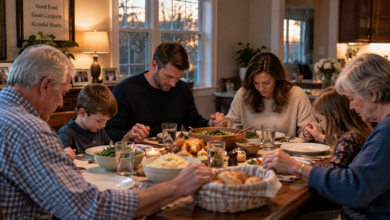
Sometimes it is much simpler. One partner may quietly pray while the other waits before starting dinner. One may follow certain dietary rules, and the other learns which foods to keep in the house.
These everyday choices can say a lot about respect.
But not every difference is easy. A holiday can carry memories from childhood. A religious ceremony may matter deeply to a parent or grandparent. A person who rarely talked about faith while dating may discover that it becomes more important when they get married or start thinking about children.
That’s when couples often have to talk about things they may have avoided earlier.
Children can bring some of the hardest questions. Will they be raised in one faith? Will they learn about both? Will they attend religious services? Will they be baptized or take part in another religious ceremony? What will they be told when they ask what their parents believe?
There isn’t one answer that works for every family.
Some couples choose one faith for their children while making sure they understand the other parent’s background. Some introduce both traditions and allow their children to make more of their own choices as they get older. Others create a home where religion is present but not strongly practiced.
Whatever they decide, the conversation usually works better when it happens before relatives begin making the decision for them.
Extended family can have strong opinions. A grandmother may worry that a family tradition will disappear. Parents may have imagined their child’s wedding a certain way for years. Relatives may wonder how future grandchildren will be raised.
Those feelings can be real without giving relatives control over the couple’s home.
The couple eventually has to decide what belongs to their parents’ traditions and what belongs to the life they are creating together.
That doesn’t mean faith has to become something they avoid. In some relationships, having different beliefs actually leads to more conversations about religion. Instead of assuming their partner believes the same thing, they have to ask.
Why is this holiday important to you? Why do you pray? Why don’t you? Why does this tradition matter to your parents? What would you want our children to understand about your faith?
Those conversations can reveal things that aren’t obvious from the outside.
Two people may use different religious words but share many of the same ideas about family, generosity, honesty, responsibility, forgiveness, and how they want to treat other people.
They may also discover differences that cannot simply be ignored. That’s part of the conversation too.
Building