Why Some Families Still Pray Before Every Meal
Subhead: For many families, saying a prayer before dinner is a simple tradition that brings everyone together and reminds them to be thankful for what they have.
Read Time: 3 min read
Dinner can be a busy time in an American home. Someone just got home from work. The kids are talking about school. A phone is buzzing on the counter. The television may still be on in the other room. Everyone is hungry, and someone probably has somewhere else to be later.
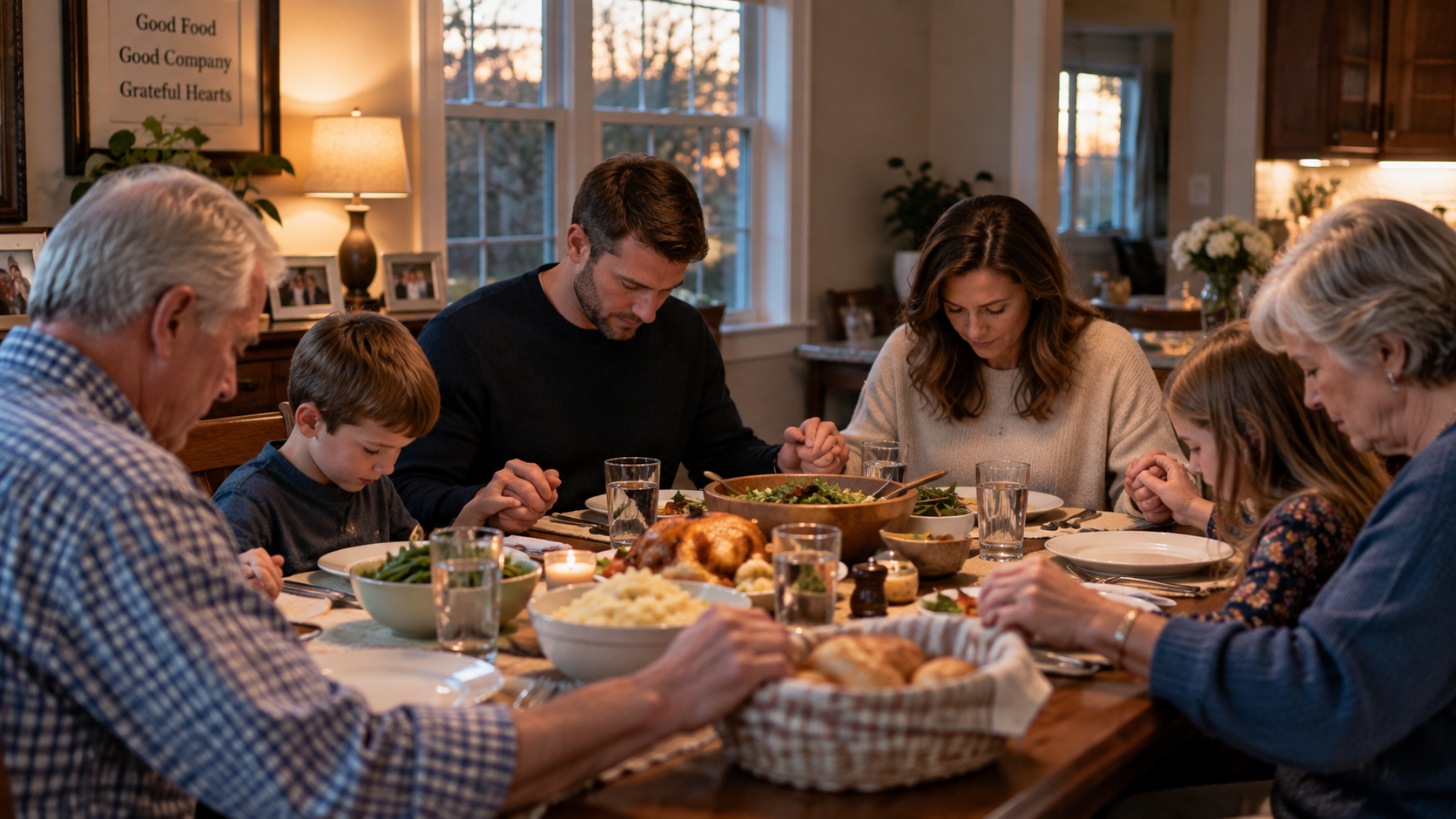
But in some homes, there is a moment when all of that stops. The family sits down. Heads bow. Someone says a prayer. It may take only 20 seconds.
For families who have done this for years, it doesn’t feel unusual. It’s simply part of dinner, just like setting the table or asking someone to pass the potatoes. But that short prayer can carry years of family history with it.
For many families, praying before a meal begins with something simple. Thank you for the food. Thank you for the people sitting here. Thank you for another day.
For religious families, that thanks is directed to God. Some families also pray for relatives, friends, neighbors, or someone going through a difficult time. The meal itself doesn’t have to be special. It can be Thanksgiving dinner with a table full of food, or it can be takeout on a Wednesday night.
The point is taking a few seconds to recognize that having food on the table is something worth appreciating. That small pause can easily disappear from modern family life. People eat in the car. Kids eat before practice. Parents eat after getting home late. Sometimes everyone is sitting at the same table but looking at different screens. A short prayer asks everyone to stop for a moment.
Young children may not understand every word of a prayer. They do understand routines. They know Grandpa always bows his head before eating. They know Mom waits until everyone is sitting down. They know Dad says the prayer on Sunday. Maybe one of the kids gets excited when it’s finally their turn to say it.
These small things become part of what home feels like. Years later, that child may be sitting at a table in a home of their own. They have a job now. Maybe they’re married. Maybe there are children sitting beside them. Then they hear themselves saying words they first heard at their parents’ table.
That’s how many family traditions continue. Nobody sits a child down and says, “One day this will be your job.” They simply grow up around it.
There isn’t one way families pray around food. Christian families may say grace before dinner. Jewish families have blessings connected with food and meals. Muslim families commonly remember God before eating and give thanks afterward.
Even families within the same religion may have completely different traditions. One family may repeat the same prayer every night. Another may ask a different person to pray each time. Some prayers are only a sentence. Others include people the family is worried about.
Kids sometimes say funny things. Someone forgets what they wanted to say. A little brother opens his eyes halfway through to see if everyone else still has theirs closed. It doesn’t always look perfect. That’s part of what makes it a family tradition rather than a ceremony.
There are dinners when being thankful comes easily. Someone got a promotion. A child came home from college. The whole family is together for a holiday.
Then there are other nights. Someone lost a job. A family member is sick. Money is tight. There was an argument before dinner. Someone who used to sit at the table isn’t there anymore.
Some families still say the same prayer. It doesn’t mean the problem disappeared. It doesn’t mean everyone at the table suddenly feels better. For people who believe in prayer, it is simply something they continue to do when life is good and when life isn’t.
Sometimes keeping one familiar routine is important when everything else feels different.
Not every child raised in a religious home will practice faith exactly like their parents. Some become more religious as they get older. Some become less religious. Some start asking questions. Others marry someone who grew up with different traditions.
Parents can’t know exactly what their children will believe when they become adults. What they can give them is an understanding of why their family did certain things.
Instead of only saying, “We pray because that’s what we do,” parents can explain what the prayer means to them. Maybe it’s about thanking God. Maybe it’s about remembering that food shouldn’t be taken for granted. Maybe it’s about thinking of people who don’t have enough. Maybe it’s one of the few times each day when the entire family is quiet together.
Children may eventually decide how much of that tradition they want to carry into their own homes.
Family life changes quickly. Children grow up. People move away. Parents get older. The dinner table gets bigger for a while, then sometimes smaller.
But certain things have a way of staying.
A familiar prayer. Grandpa’s voice. Mom asking everyone to put their phones down. A child waiting impatiently because the food smells good.
Then, years later, that child may be the parent asking everyone to wait before eating.
The food will be different. The house may be different. Some of the people around the table will be different too.
But for a few seconds, everyone stops. They give thanks. Then they eat.
For some families, that’s all it takes to keep a piece of home going from one generation to the next.