Revealed: Northern Hemisphere destinations with the best conditions during the summer solstice | News
Although the summer solstice is often associated with druids, hippies and sun salutations, new research from walking holiday specialist Inghams Walking shows it is also one of the most rewarding times of year to travel in the Northern Hemisphere, thanks to the long daylight hours, good visibility and stable temperatures.
The solstice, also known as ‘midsummer’ in some countries, is an astronomical event that marks the longest day and shortest night of the year and occurs when one of the Earth’s poles is at its maximum tilt toward the Sun.
For those looking to take advantage of these conditions during the 2026 solstice (which falls on Sunday 21 June), the walking holiday specialists analyzed historical meteorological data for Northern Hemisphere destinations, comparing factors such as cloud cover, rainfall, daylight hours, temperature, humidity and visibility to identify the best destinations to experience it.
The researchers then created an average score out of 100 to determine an overall “Summer Solstice Score” for each destination, with Bergen, Norway, scoring the highest, making it the standout destination in the Northern Hemisphere to experience the solstice at its best.
From hidden gems in Italy’s Dolomites and remote Portuguese islands to northern cities with the midnight sun, the research highlights a diverse mix of solstice destinations for every type of traveler.
The top 20 destinations in the Northern Hemisphere with the best summer solstice conditions
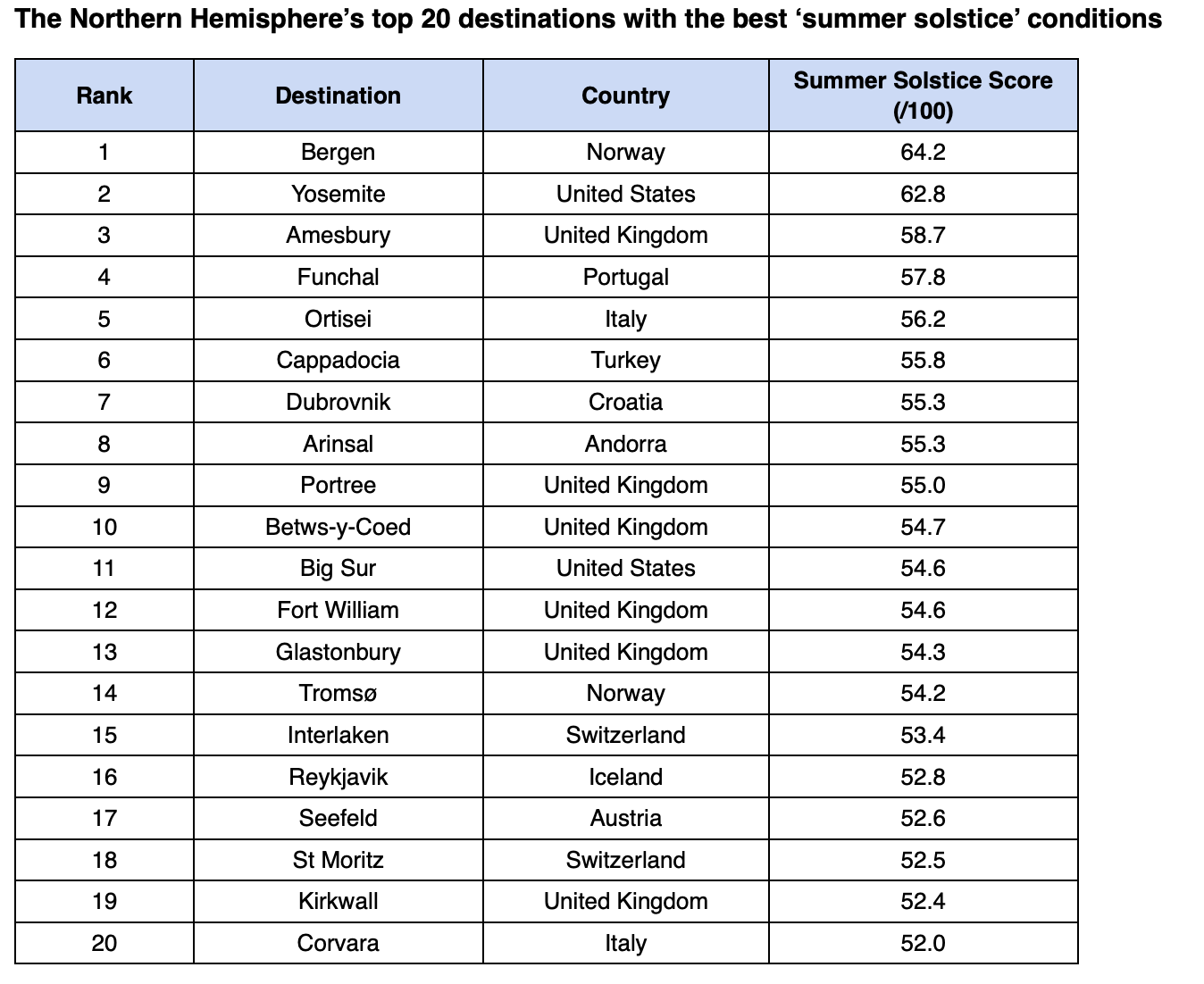
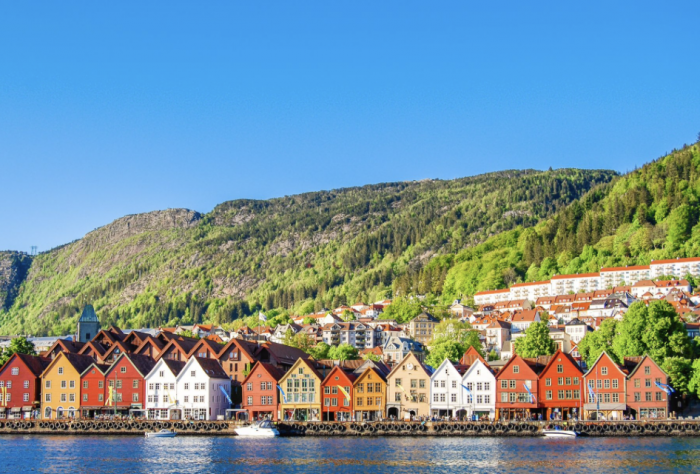
According to the research, Bergen in Norway generally has the best conditions for celebrating the summer solstice. With one of the best visibility levels of any destination in the study, in addition to an average of approximately 19 hours of daylight, travelers are almost guaranteed dramatic, expansive golden hour views as they explore this city.
However, this destination offers more than just a picturesque cityscape; it is surrounded by seven mountains, making it the perfect base for a walking holiday. Travelers can spend their days exploring Norway’s colorful streets and historic harbor, before taking day trips to some of the country’s most famous fjords, including the Sognefjord and Hardangerfjord.
Yosemite in the United States ranks second for summer solstice conditions, followed by Amesbury in the United Kingdom.
Interestingly, Amesbury is home to the world famous Stonehenge, already highly regarded for its summer solstice celebrations. Last year alone, 25,000 people visited Stonehenge during the summer solstice.
The ancient structure was built to align with the sun on the solstices, rising behind the Heel Stone in the northeastern part of the horizon, with its first rays shining into the heart of Stonehenge. During the winter solstice, the sun sets in the southwest of the stone circle, providing a new opportunity for travelers to visit this destination.
Another notable destination is Tromsø in Norway, which ranks 14th. During the summer solstice, Tromsø experiences 24 hours of daylight (known as the midnight sun), when the sun remains continuously above the horizon. This makes it an excellent choice for energetic travelers looking for flexibility, with 24-hour activities such as hiking and fishing.
For travelers looking for a little more warmth on their summer solstice travels, Inghams Walking’s research found that Funchal on the Portuguese island of Madeira has the fourth best conditions in the Northern Hemisphere to experience the summer solstice. With average June temperatures around 21°C, travelers can explore the busy streets of the city while enjoying delicious food and wine, or travel a little outside the city to visit Madeira’s famous levadas.
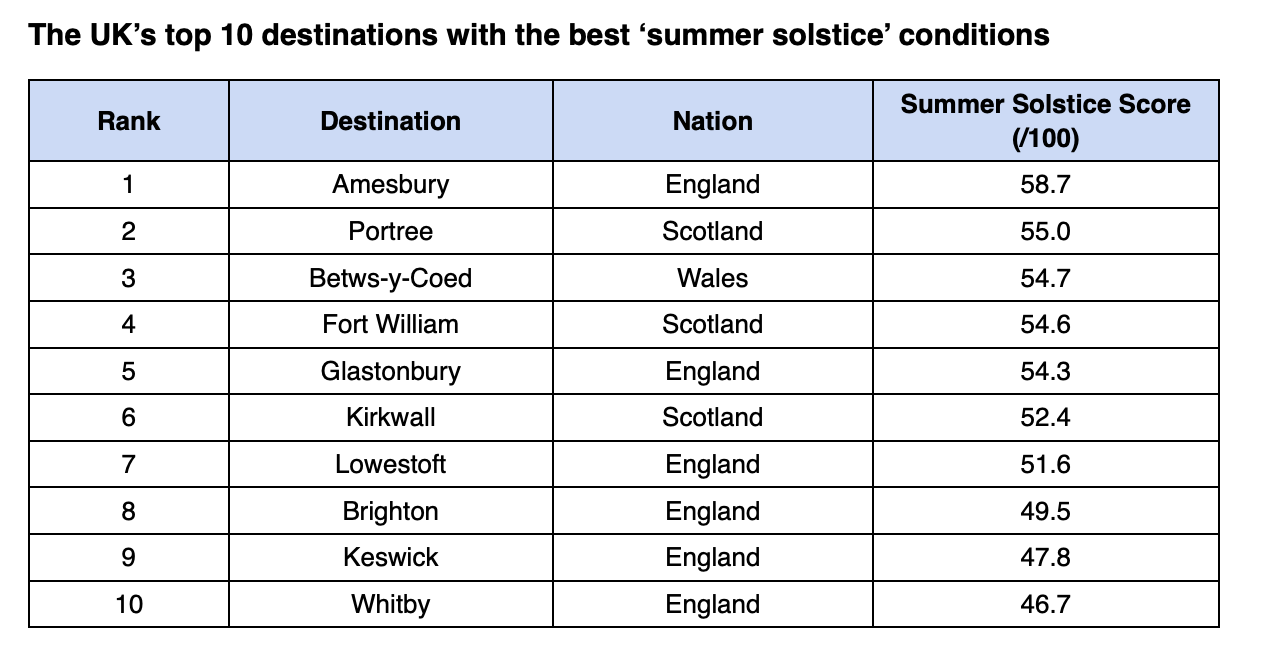
While Scandinavian destinations may offer the longest daylight hours, the research found that British locations also rank highly for conditions during the summer solstice – thanks to a balanced combination of longer days, moderate temperatures and generally favorable visibility.
For those wanting to enjoy the summer solstice in Britain, Inghams Walking has also studied some of the most popular summer solstice destinations in Britain to reveal where conditions are likely to be best for the June celebrations.
Fittingly, the research found that Amesbury – home to Stonehenge – is the best place in Britain to enjoy the summer solstice. However, for those looking for a less crowded or quieter way to celebrate the occasion, the research also highlights several scenic alternatives in the UK.
Portree on the Isle of Skye in Scotland is not far behind in second place. As the island’s main town, it benefits from almost 18 hours of daylight in June, with sunsets until 10:30 pm – making it the ideal base for visiting major attractions such as the Old Man of Storr or Kilt Rock.
Other British destinations include the picturesque Welsh village of Betws-y-Coed, where travelers can explore the very best of Snowdonia National Park, and the world-famous music festival town of Glastonbury in south-west England.
Those looking for a solstice escape from the city can head to the seaside resort of Brighton, where a good chance of clear skies and mild temperatures makes it a good option for experiences full of sun, sea and sand.
Laura Mason, Head of Destinations at Inghams, comments: “The summer solstice is not just about traditional or spiritual celebrations, it also offers a rare period when travelers can explore destinations for longer, in brighter and more comfortable conditions than almost any other time of year.
“While the research shows that some popular summer solstice locations are highly ranked, it also highlights some lesser-known hidden gems for travelers looking for a peaceful trip to the summer solstice.
“These locations give travelers the chance to explore the destinations late into the evening, whether that means walking, sightseeing or simply enjoying the scenery without feeling rushed or restricted by the clock.”