How Prince William showed years ago how he plans to rule
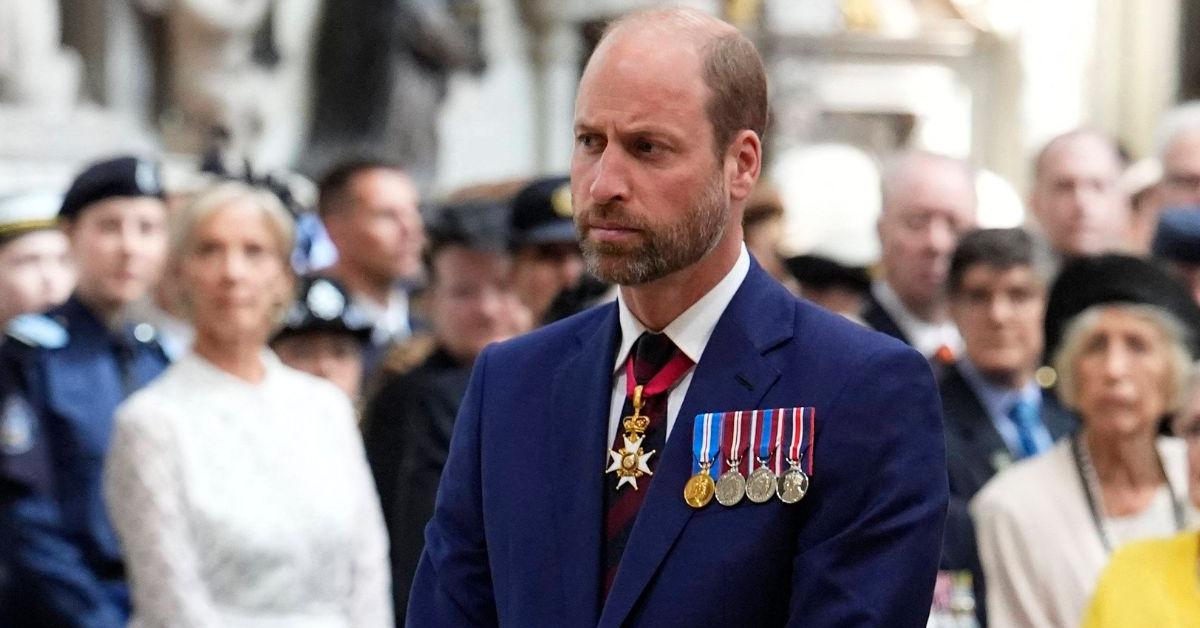
Prince William signaled how he plans to rule as a future king by rejecting one of the monarchy’s greatest royal traditions and refusing to repeat the Prince of Wales’ lavish investiture ceremony that defined his father King Charles’ rise to prominence.
RadarOnline.com can reveal that William, 43, has quietly rejected plans for a formal investiture after inheriting the title Prince of Wales in 2022 following the death of Queen Elizabeth II and Charles’s accession to the throne – with insiders saying it was a “show of strength” and an early signal of how he planned to rule once he fulfilled his destiny by being crowned.
Unlike his father, Charles, 77, whose elaborate 1969 investiture at Caernarfon Castle in Wales was broadcast to hundreds of millions around the world, William instead opted for a much more subdued approach focused on local visits alongside his wife, Princess Catherine, 44.
Royal insiders and biographers have now told us that the decision reflected William’s determination to “modernize” and “slim down” the monarchy and move away from what some younger royals see as outdated pomp and circumstance.
A palace source said: ‘William personally felt that recreating the kind of grand investiture staged for Charles in 1969 would have sent the wrong message about the monarchy at a time when the public expects much greater humility and modernity – and less lavish spending of taxpayers’ money – from the royal family.
“He believes the enormous ceremonial pageantry belongs to a previous generation and is increasingly out of step with the way younger people view public institutions.”
The source added: ‘William’s priority is to build a monarchy that feels accessible, relevant and connected to everyday life, rather than one defined by extravagant rituals and displays of inherited privilege. William is very aware that public trust now depends much more on authenticity and service than on spectacle.
‘The rejection of the traditional investiture was interpreted by many in the palace as a hugely symbolic moment, as it made clear that William is willing to reshape aspects of royal life rather than simply maintain every convention for the sake of tradition.
The insider noted: ‘It was recognized internally that this decision was a very sharp contrast to Charles’ generation. William is willing to question whether certain ceremonies still hold significance with the public, and if he thinks they no longer do, he doesn’t hesitate to quietly cast them aside in favor of something more subdued and contemporary.”
Instead of recreating his father’s heavily choreographed ceremony at St David’s Cathedral or Caernarfon Castle, William and Catherine carried out quieter engagements in Anglesey and Swansea, locations with personal significance for the couple after living in Anglesey for three years following their wedding in 2011.
The investiture of Charles as Prince of Wales remains one of the defining royal spectacles of the late 20th century.
During the ceremony, Queen Elizabeth II presented him with the sword, crown, ring, staff and mantle of the Prince of Wales in front of a worldwide television audience estimated at more than 500 million people.
Another palace insider said William increasingly believes the monarchy’s survival depends on appearing less extravagant and more in touch with ordinary life.
The source added: ‘William is acutely aware that younger generations no longer automatically embrace the monarchy in the way previous eras did, and he believes public expectations have fundamentally changed. Lavish ceremonies and large-scale royal pageantry can now risk feeling disconnected from the realities of ordinary people, especially at a time when many families are struggling financially.
‘There is a strong feeling among William that the future survival of the monarchy depends on showing restraint, practicality and a better understanding of the national mood, rather than relying on grandeur or royal traditions.’ William wants the institution to radiate competence, empathy and relevance, rather than seeming trapped in centuries of extensive tradition. He believes the monarchy must evolve into something more streamlined and emotionally aware if it wants to maintain public support for decades to come.
“Instead of endless ritual and formality, William’s vision is for a royal family that seems approachable, purposeful and connected to modern Britain. He now sees that as far more valuable than ceremonial excesses or displays of inherited privilege,” the insider continued.
“He and Catherine have increasingly emphasized a smaller-scale, family-oriented approach to royal life, as William gradually prepares for his future role as king.”