War in the Middle East leads to a drop in demand for air passengers by 3.4% in April | News
The International Air Transport Association (IATA) has released data on global passenger demand in April 2026:
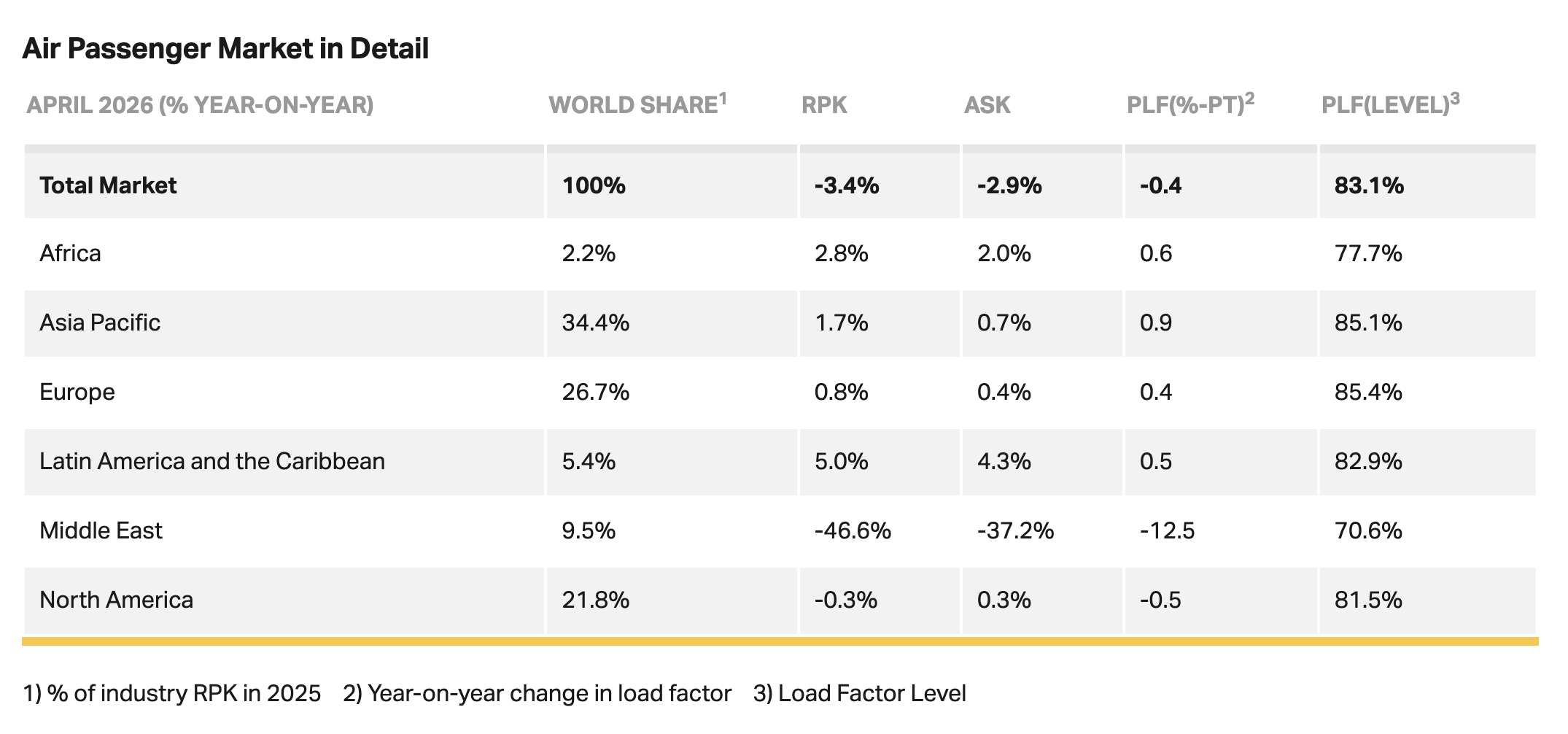
Total demand, measured in revenue passenger kilometers (RPK), decreased by 3.4% compared to April 2025. Excluding the Middle East, demand increased by 1.2%. Total capacity, measured in available seat kilometers (ASK), decreased by 2.9% year-on-year. The occupancy rate was 83.1% (-0.4 ppt compared to April 2025).
International demand fell by 5.3% compared to April 2025. Excluding the Middle East, demand grew by 1.9%. Capacity decreased by 5.1% year-on-year and occupancy rate stood at 83.9% (-0.2 ppt compared to April 2025).
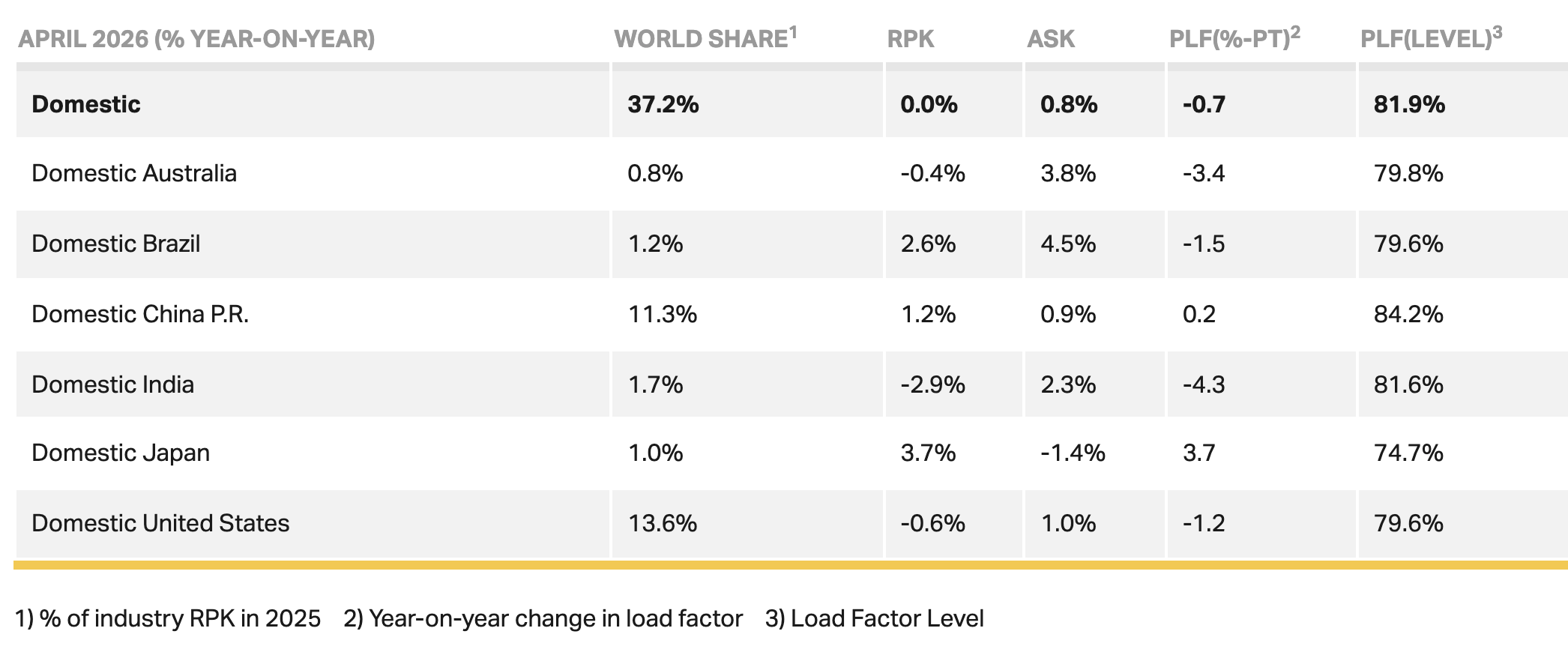
Domestic demand remained flat compared to April 2025. Capacity increased 0.8% year-on-year. The occupancy rate was 81.9% (-0.7 ppt compared to April 2025).
“The 46.6% drop in demand for airlines in the Middle East due to the war in the region was so acute that overall demand fell by -3.4%. The situation for air transport remains highly volatile. The cost of jet fuel more than doubled in April, driving up airfares. Future schedule data shows reduced supply in the coming months, indicating that airlines are seeking to balance high fuel costs and weaker demand.” said Willie Walsh, Director General of IATA.
Regional breakdown – international passenger markets
International RPK fell 5.3%, while capacity fell 5.1%. However, this decline was caused by a continued strong decline in demand for Middle Eastern airlines. Excluding the Middle East, the RPK rose 1.9%. North America was flat and all other regions reported growth.
Asia Pacific airlines achieved a 3.0% year-on-year increase in demand. Capacity increased by 0.7% year-on-year and occupancy reached 87.5% (+1.9 ppt compared to April 2025), a record high for April. There was a notable slowdown in traffic on the Japan-China corridor due to ongoing political tensions.
European airlines saw demand increase by 0.9% year-on-year. Capacity increased by 0.3% year-on-year and occupancy rate reached 84.9% (+0.6 ppt compared to April 2025). Direct traffic between Europe and Asia increased by 15.3% as it replaced traffic through the Middle East.
North American airlines saw demand increase 0.0% year-over-year. Capacity decreased by 1.1% year-on-year and occupancy rate stood at 83.9% (+0.9 ppt compared to April 2025).
Middle Eastern carriers saw demand decline by -48.1% year-on-year. Capacity fell by 38.4% year-on-year and occupancy was 70.1% (-13.1 ppt compared to April 2025). Traffic was affected by the ongoing war in Iran, although the decline slowed slightly compared to March, when an uneasy ceasefire took effect.
Latin American airlines achieved an 8.9% increase in demand year-on-year. Capacity increased by 7.2% year-on-year. The occupancy rate was 84.6% (+1.4 ppt compared to April 2025).
African airlines saw demand increase 2.2% year-on-year. Capacity increased by 1.2% year on year. The occupancy rate was 77.9% (+0.7 ppt compared to April 2025).
Domestic passenger markets
Domestic RPK was flat in April compared to April 2025. Growth in Brazil, China and Japan was offset by declines in Australia, India and the United States. Capacity utilization fell in most major markets, with the exception of China and Japan, although it should be noted that capacity in the Japanese market has declined for eight months in a row.