Reporters from OPB talk covering green energy in the Northwest
In their 2025 series “Power Struggle,” Tony Schick and Monica Samayoa of Oregon Public Broadcasting found legislators who had supported green energy initiatives in Oregon and Washington knew little about how to connect wind and solar sources to the existing power grid.
“One of the most shocking things for me, while we were reporting on this, was talking to legislators and finding out they weren’t talking to the most important entity to talk to if they want to connect these renewables on the grid, which is the Bonneville Power Administration,” Samayoa said during a recent webinar with The Journalist’s Resource.
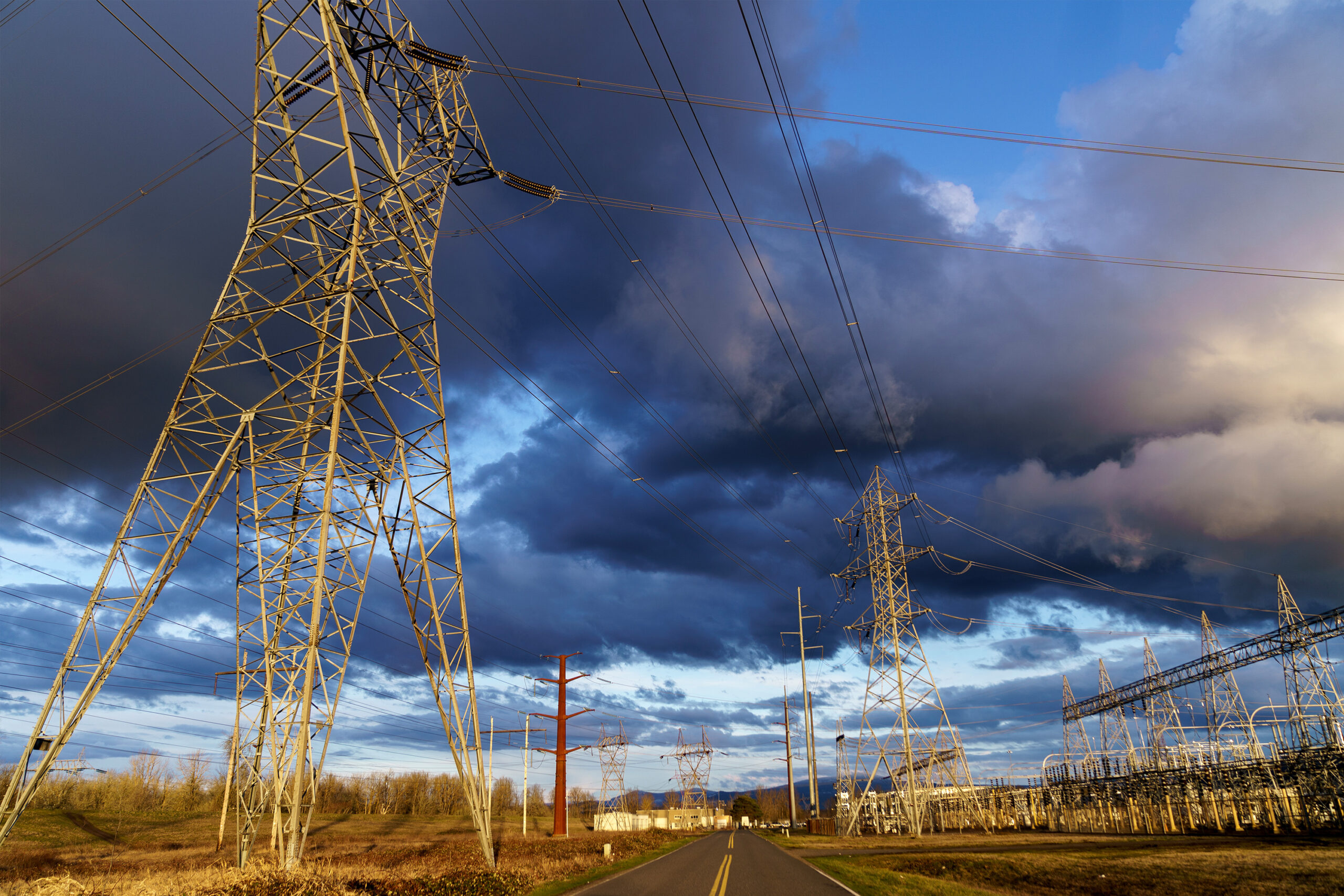
In “Power Struggle,” Samayoa and Schick write that “Bonneville, under a setup that is unique to the Northwest, owns most of the power lines needed to carry green power from the region’s sunny and windy high desert to its major population centers. Bonneville has no state or local representation within its federally appointed bureaucracy and, by statute, operates as a self-funded business.”
The series, produced in partnership with ProPublica’s Local Reporting Network, found Oregon and Washington trailed almost every other state in bringing new renewable energy online. This, despite commitments from Oregon and Washington to go 100% green. The reporting led authorities in Washington to fast track renewable energy projects and Oregon to do the same for solar and wind permits.
I recently spoke with Schick and Samayoa for a behind-the-scenes look at how they reported the series and explained highly technical energy infrastructure concepts to a broad audience. Watch our conversation:
Keep reading for three quick takeaways if you don’t have time to watch the whole hour.
1. Pursue unanswered questions raised during prior reporting.
Schick has been reporting on salmon in the Pacific Northwest for years — from economic inequities related to decimated salmon populations to federal subsidies that failed to increase their numbers to the history of salmon in the region as told through the voices of one Yakama Nation family.
While covering endangered salmon in the Snake and Columbia Rivers, Schick reported that the administration of then-President Joe Biden was considering removing some hydroelectric dams whose construction had depleted salmon in the rivers decades prior.
“Which led to the question of, how do we replace the power from those dams?” Schick said. “Which led to questions about how we are adding renewable energy and our capabilities of adding renewable energy in the Northwest.”
Those questions then led Schick to discover that droughts in the Northwest had cut output from hydroelectric dams, and there weren’t enough renewable energy sources to make up the deficit. Instead, Oregon and Washington turned to power supplied by coal and gas sources. Carbon emissions from energy were, in fact, increasing in the region, contrary to much of the country, Schick said.
“I was just really interested in why that was the case,” he added.
That’s when Schick turned to Samayoa, who covers energy and climate change, for help understanding regional energy systems.
“Each state, Oregon and Washington, has renewable energy goals to meet by mid-century,” Samayoa said. “And what that means is, by that time, our electric utilities need to deliver carbon-free electricity, meaning no coal, no natural gas, just wind and solar.”
But the states were missing important benchmarks, exacerbated by dwindling federal support for carbon-free electricity. For example, last year the federal government rescinded Oregon’s authority to build offshore wind farms.
2. Compare systems elsewhere to show how other locales provide services.
Most other parts of the country use a central energy operator called a regional transmission organization that covers multiple states over a large area, Schick and Samayoa reported. Texas uses a regional grid operator, spends more than Bonneville on infrastructure upgrades, and spreads those costs across more customers, they found.
“Texas brought more energy online in the past two years than any other power region,” Schick and Samayoa wrote. “That’s helped the oil and gas powerhouse become the country’s biggest producer of wind and solar energy.”
They also looked into the Midcontinent Independent System Operator, a transmission organization that supplies power throughout the Midwest and part of Canada. It has “a very diverse profile in terms of where they’re getting their energy at different times,” Samayoa said.
The comparisons to other energy systems showed there were alternative, effective ways to bring green energy into regional power grids. Bonneville recently rejected joining an energy market based in California “that advocates described as the Northwest’s best bet at accelerating the adoption of renewables,” Schick and Samayoa reported.
Bonneville, a federal entity, told the reporters it was unfair to compare it with regional operators.
“I think there’s something to that, but one of the points of the piece was — the fact that it’s apples and oranges is kind of the point, because so many people are saying that the way that these projects are funded in other regions allows for better maintenance and expansion of the grid,” Schick said during the webinar.
3. Track important facts and the reporting behind them.
Schick and Samayoa created a spreadsheet with key facts and the data supporting those facts. Part of their reporting included filing Freedom of Information Act requests to obtain data on how long energy projects stayed in Bonneville’s review queue, information that other energy entities made public.
When Bonneville pushed back on their reporting, such as the comparisons to regional operators, Schick and Samayoa were ready with their findings. That included independent analysts telling them that Bonneville’s recent infrastructure investments weren’t especially forward looking, but rather long overdue, Schick said.
“When we were vetting the project, we just wanted the actual assertion from the story in [the spreadsheet] and the data that was backing it up,” Schick said.