More than half of Haitians still face a food crisis
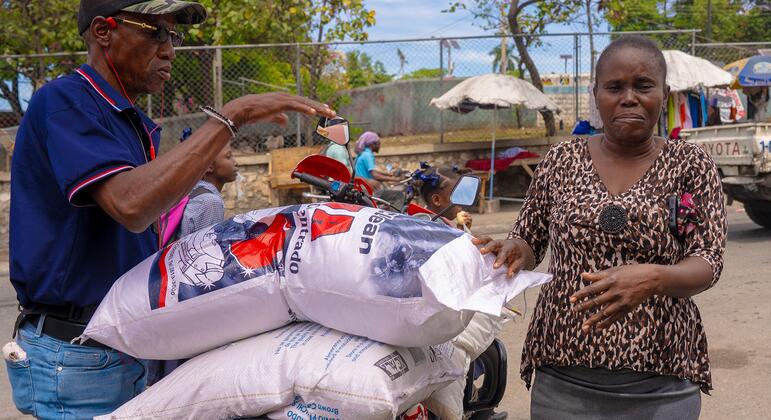
The update came on Friday in a World Food Program publication (WFP), which has worked with the government and partners to help 2.7 million people in Haiti by providing emergency food assistance, school meals, social protection programs and assistance to small farmers.
“These small improvements in food security figures should not lead to complacency,” warned WFP Haiti Country Director Wanja Kaaria. “Increased fuel prices and the resulting rise in food costs threaten to reverse these gains, pushing already vulnerable families deeper into crisis and further destabilizing the situation.”
For almost a decade, Haiti has experienced a deepening food security crisis, driven by violence related to armed groups, political unrest, economic crisis and a high degree of vulnerability to extreme weather, such as Hurricane Melissa that hit the south in late 2025.
The aid is distributed by the World Food Program in a neighborhood in central Port-au-Prince.
WFP calls for robust action and financing to provide emergency assistance and invest in long-term solutions to tackle food insecurity that affects more than one in two Haitians. “Tackling hunger is critical to restoring stability in Haiti,” said Ms. Kaaria. “We cannot build peace if families have nothing to feed their children.”
WFP needs $332 million to continue its critical activities over the next 12 months and, if sufficient funding is available, plans to reach more than 2.7 million people with critical emergency assistance and resilience-building support. The $880 million humanitarian response plan for Haiti is just under 20 percent funded, while only $172 million has been received.
Violence and displacement spread across the country
Armed attacks earlier this week displaced hundreds of people from the South-East department. According to the International Organization for Migration (IOM), the violence on April 13 in the municipality of Marigot displaced more than 1,300 people.
IOM notes that this is the first time that displacement of this scale, directly linked to armed attacks, has been recorded in the South East Department, an area that has previously served as a holding zone for people displaced by violence elsewhere in the country. More than 165,000 men, women and children are currently housed privately in the department.
The conflict has displaced more than 1.4 million people in Haiti, leaving about 300,000 people living in overcrowded and unsanitary temporary shelters in the capital Port-au-Prince.