IATA AGM 2026: Asia-Pacific aviation growth faces a trillion-dollar test | News
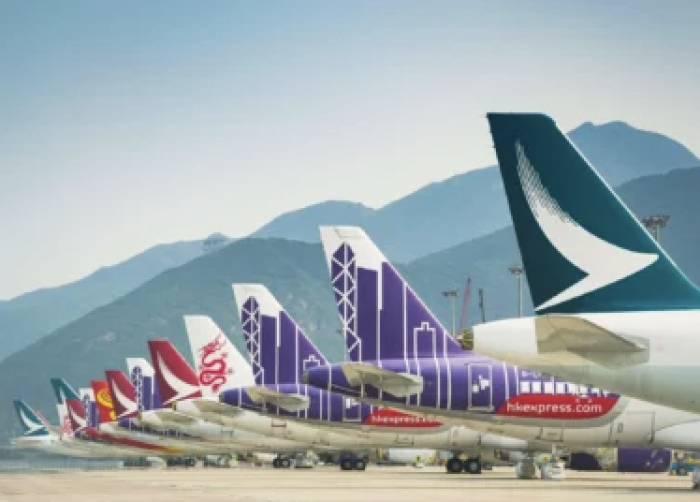
For decades, aviation executives have talked about the “Asian Century.”
At this year’s IATA Annual General Meeting in Rio de Janeiro, the numbers suggest the century has arrived.
Over the next two decades, Asia Pacific is expected to add 2.4 billion passengers, from 1.7 billion travelers in 2024 to 4.1 billion in 2044. That represents 41% of all global passenger growth and a compound annual growth rate of 3.8%.
No other region comes close.
The challenge is that growth in itself is not a strategy.
Listening in Rio to Sheldon Hee, IATA’s regional vice president for the Asia-Pacific region, a more nuanced picture emerged. The region’s aviation industry is no longer wondering whether demand will come. It questions whether governments, airports and regulators can keep up with this pace.
The central question facing Asia-Pacific aviation becomes remarkably simple:
Can infrastructure, policy and sustainability scale up as quickly as passenger demand?
The largest aviation construction project in history
The aviation industry has never attempted anything on the scale that is now underway in the Asia-Pacific region.
More than half of the projected $2.4 trillion in airport investments in the world through 2040 is expected to be invested in the Asia-Pacific region.
The list of projects reads like a catalog of future megahubs.
Singapore Changi aims for an annual capacity of 140 million passengers. Delhi is aiming for 150 million. Bangkok plans to reach 150 million by 2033. Incheon will exceed 100 million. New Manila and Long Thanh in Vietnam are being built as brand new aviation cities.

The scale is breathtaking.
But what makes the story particularly interesting is that the IATA is not primarily concerned about a lack of investment.
She is concerned about the way these investments are managed.
Behind the construction announcements lies a growing concern about consultation processes, economic regulation and whether airports are incentivized to build efficiently or simply build bigger.
The industry’s concern is not the existence of mega-airports.
It’s the possibility of mega costs.
The congestion paradox
One of the most striking slides presented in Rio contained a warning that would have surprised many observers.
Even after unprecedented airport expansion programs, congestion is expected to return.
IATA’s forecasts indicate that while major infrastructure projects will provide temporary relief, airport congestion along key gateways to Asia and the Pacific could rebound sharply by 2040. The proportion of airports operating above optimal capacity remains worryingly high despite massive investment programmes.
The implication is profound.
Building more infrastructure alone will not solve Asia’s capacity problem.
The sector increasingly believes that the answer lies in productivity rather than concreteness.
Better lock management. More efficient airspace. Improved runway use. Smarter operational coordination. Biometric processing. Digital identity systems. Automated passenger travel.
In many ways, Asia Pacific is facing the same demands that cities around the world face.
Can technology unlock capacity faster than infrastructure can be built?
The answer can determine whether future growth becomes a competitive advantage or a limitation.
When airports become monopolies
Perhaps the most politically sensitive discussion in Rio was about the airport economy.
As governments increasingly privatize aviation infrastructure and look for private capital to finance expansion, airlines are increasingly concerned about the consequences.
IATA has highlighted examples across the region where airport charges have risen sharply without what airlines consider adequate transparency or consultation. The recent 53% increase in fares for international passenger services in Thailand was cited as an example.
The industry’s broader concern centers on market power.
Airports are often natural monopolies. Passengers rarely choose destinations based on airport operators. Airlines cannot easily move major hubs. This gives airport owners significant pricing power.
The briefing highlighted growing concerns about cross-subsidization between airports, bundled airport ownership structures and concession agreements that lock in future fare increases while requiring passengers to effectively pre-finance future investments.
The Manila Airport privatization model was highlighted as a case study that captured the industry’s attention due to revenue sharing arrangements and predetermined passenger fee increases.
These costs are important for airlines that already operate with small margins.
Especially in a region where ticket affordability remains critical to unlocking future demand.
Taxation: an old debate returns
If infrastructure represents one battlefield, tax represents another.
The IATA used the AGM to reiterate one of its longest-standing policy positions: aviation taxes often damage connectivity more than they benefit public finances.
The organization pointed to ICAO principles that call for reducing and ultimately eliminating taxes on international air transport, arguing that excessive taxes increase travel costs, reduce demand and can divert traffic to competing hubs.
Europe provided a useful case study.

According to IATA, Sweden’s aviation tax contributed to route losses and weaker market performance before it was finally abolished in 2025.
Asia-Pacific governments are closely monitoring the situation.
The region’s aviation sector already contributes around 2.5% of GDP and supports 2.2% of employment. For every dollar of value generated directly by aviation, another $3.70 is created elsewhere in the economy.
That economic multiplier effect explains why the tax debates remain so controversial.
Governments see revenue.
Airlines see connectivity.
Both often look at the same numbers and come to completely different conclusions.
The danger of regulating growth
One theme emerged repeatedly during the briefing: overregulation.
It is not necessarily about the regulations themselves.
It is a regulation in response to symptoms rather than causes.
As the number of passengers increases, capacity becomes limited. The delays are increasing. Service standards become more difficult to maintain. Customer complaints are increasing. Governments respond with tariff controls, compensation rules and operational penalties.
The industry argues that this risks treating the consequences rather than the underlying problems.
Airlines would prefer that governments focus on improving network performance, infrastructure capacity and operational coordination, rather than imposing increasingly coercive consumer regulations.
There is also a uniquely Asian dimension to the challenge.

Many markets are welcoming millions of new fliers into the aviation system. Expectations are evolving quickly. Service models vary greatly between low-cost airlines and full-service airlines. The diversity of the region makes one-size-fits-all regulations particularly difficult.
The risk is that well-intentioned regulations may inadvertently restrict the connectivity they seek to protect.
The awkward math of sustainability
Despite all the discussion surrounding airports and regulations, the most sobering figures presented in Rio related to sustainable aviation fuel.
Despite years of focus on the sector, SAF remains virtually invisible within the global fuel mix.
Production is expected to reach 2.4 million tons in 2026, representing just 0.8% of global aviation fuel consumption.
The problem is not ambition.
It’s economics.
IATA states that production growth is already slowing as policy frameworks remain insufficient to fully utilize installed production capacity. The organization has revised downwards a number of forecasts as projects struggle to reach commercial scale.
Still, Asia-Pacific could ultimately hold one of the strongest long-term positions in the world.
The region has 28 announced SAF projects targeting approximately seven million tonnes of renewable fuel capacity by 2030.
More importantly, Asia has abundant raw materials.
India, China, Indonesia and Malaysia are emerging as critical future SAF production centres, while ASEAN countries collectively have some of the strongest long-term biomass potential in the region.
The sector’s message to policymakers is clear.
Build supply before imposing demand mandates.
Otherwise, airlines risk having to purchase fuels that are simply not available in sufficient quantities.
The region that will determine the future of aviation
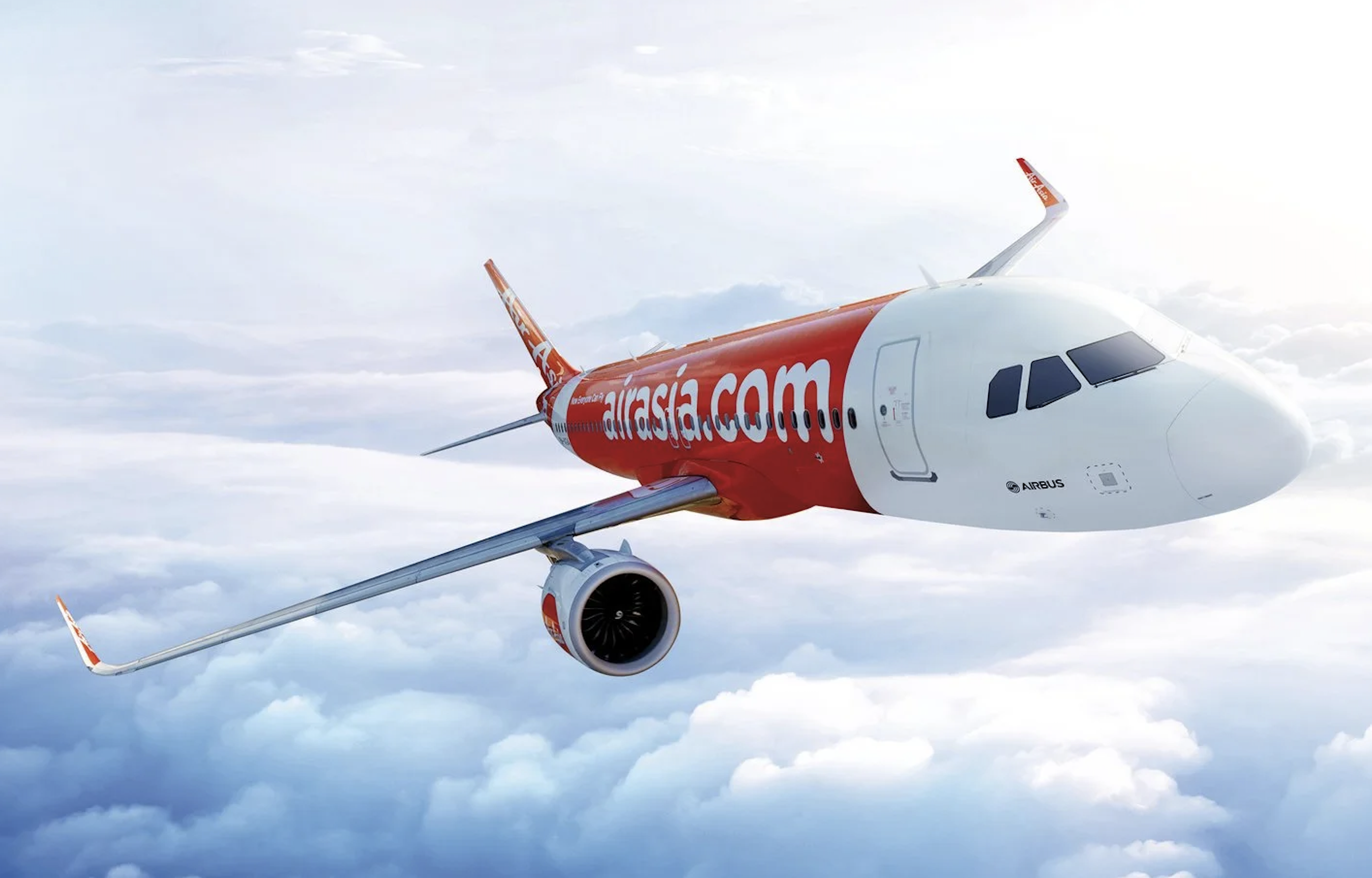
The Asia-Pacific story is no longer about catching up.
It’s about setting the pace.
The region will account for almost half of global passenger growth. It builds the world’s largest airports, creates the next generation of aviation infrastructure and increasingly shapes the sustainability agenda.
Yet success is far from guaranteed.
The Rio briefing revealed a region facing a fascinating paradox.
Demand is plentiful.
Capital is available.
Governments are largely supportive.
But the biggest challenges for aviation are becoming increasingly structural.
How do you expand capacity without creating monopolies? How do you regulate fairly without limiting growth? How can you decarbonize affordably? How do you build airports fast enough for billions of new passengers?
The answers to these questions will be important far beyond Asia and the Pacific.
Because if this century truly belongs to Asia, the future of aviation may depend on how effectively the region solves these problems first.