How Immigrant Families Keep Their Food Traditions Alive in America
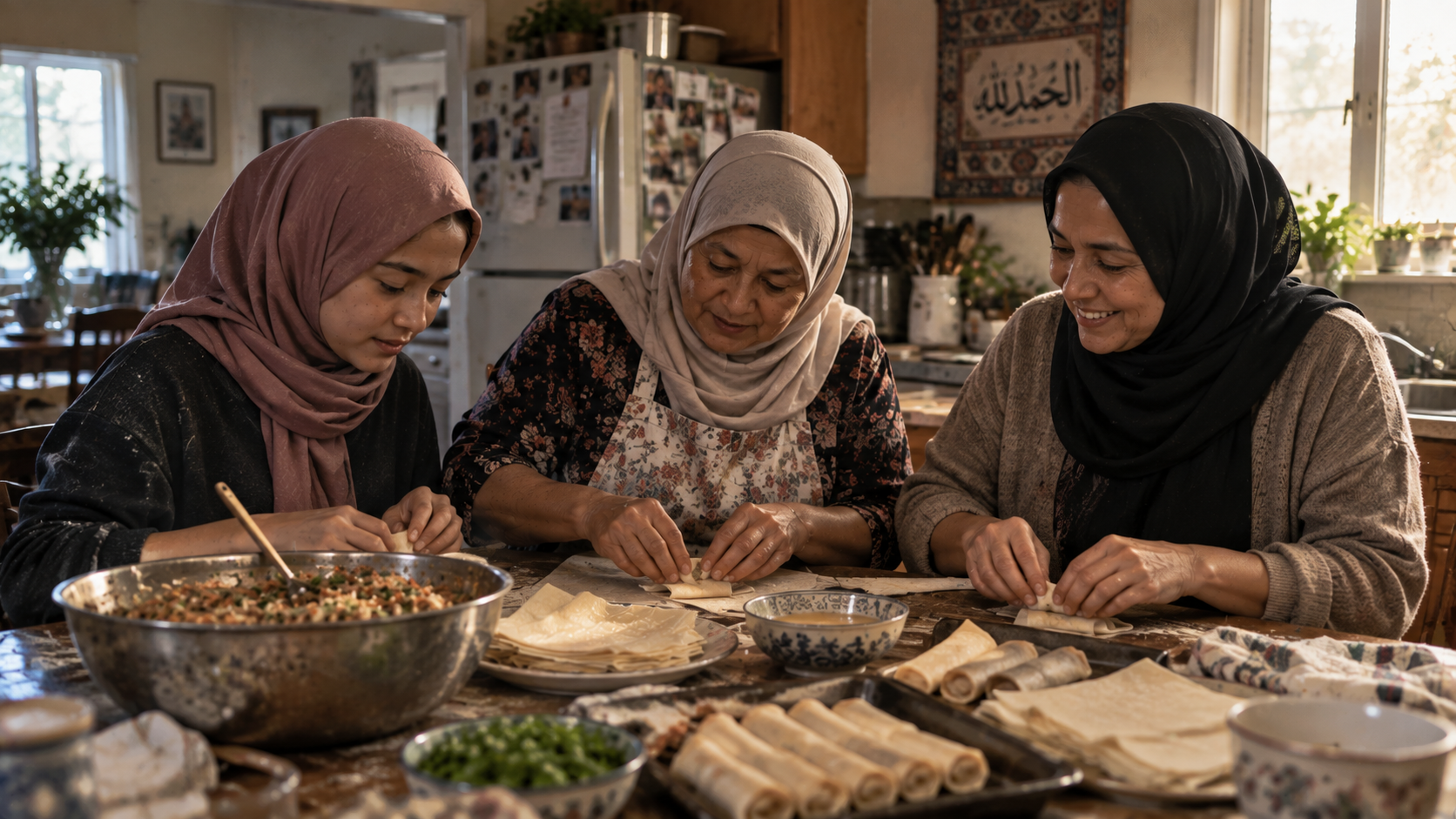
Subhead: Families may leave behind a country, a neighborhood, and the kitchen they grew up in. But many of the foods they bring with them find a new home in America.
Read Time: 4 min read
Moving to another country changes a lot of things. The language around you may be different. The grocery stores are different. The streets don’t look the same. Family members who once lived nearby may now be thousands of miles away.
But then someone starts cooking. Garlic hits a hot pan. Rice begins steaming. Dough is rolled across a kitchen counter. A pot starts to smell exactly like something a grandmother used to make. For a little while, home doesn’t feel quite so far away.
This happens in immigrant families across America every day. A family from Mexico may still make tamales the way relatives taught them. A Filipino family may have adobo cooking on the stove. An Indian family may keep containers filled with the spices they use every week. An Italian family may still make sauce from a recipe that arrived in America generations ago.
The dishes are different, but the reason families keep making them can be surprisingly similar. Food is one of the easiest pieces of home to carry with you.
You can’t bring your old neighborhood. You can’t pack up the market you visited every weekend or bring every relative with you. But you can remember how something tasted.
For the first generation, cooking familiar food can be a way of holding onto a place they left behind. They know which dishes belong at birthdays, which foods appear during religious holidays, and what gets made when the whole family comes over.
Then children grow up in America. They eat the food their parents make at home, but they also grow up with pizza nights, school lunches, burgers, cereal, takeout, and whatever their friends are eating.
That can create a kitchen that looks a little different from the one their parents knew. A child may want a peanut butter sandwich for lunch and rice with dinner. They may complain about a traditional dish when they’re ten and start asking their mother for the recipe when they’re twenty five.
Sometimes appreciation takes time.
There can also be moments when children feel uncomfortable about food that makes their family different. A lunch packed from home may smell unfamiliar to classmates. A child may ask for the same packaged snacks everyone else brings to school instead.
Years later, that same person may miss the exact food they once wanted to replace. Growing up has a funny way of changing what feels embarrassing into something worth protecting.
Keeping food traditions alive in America isn’t always simple. Some ingredients are difficult to find. Others taste different from what was available back home. Families learn which American grocery stores carry what they need. They drive farther for certain spices, visit international markets, order ingredients online, or find substitutes.
Recipes change too. Maybe the right kind of fish isn’t available, so another one takes its place. Maybe a traditional vegetable is hard to find. Maybe the family starts using an American appliance that Grandma never had.
At some point, the recipe becomes both old and new. It still belongs to the family’s culture, but it has also adapted to the place where the family now lives.
That’s how food traditions survive. They don’t always stay exactly the same. They adjust.
The bigger challenge sometimes comes when the person who knows the recipe gets older. Many family recipes were never written down. Someone cooks from memory. They know how much flour to use by the way the dough feels. They know when the soup is ready by its smell.
Then a son or daughter realizes they don’t actually know how to make it. That’s when the questions start. How much did you put in? How long do you cook it? What kind of spice was that? Can you show me one more time?
A recipe that once seemed ordinary suddenly becomes something the family doesn’t want to lose.
Food also changes when families from different backgrounds come together. Someone marries into another culture. Children grow up with grandparents from two countries. Thanksgiving dinner may sit next to dishes that would never have appeared on a traditional American holiday table decades ago.
The result doesn’t have to be one culture replacing another. Sometimes both stay.
Turkey sits beside lumpia. Mashed potatoes share the table with biryani. A family celebrates an American holiday using recipes that traveled thousands of miles to get there.
After enough years, nobody at the table thinks the combination is unusual. It’s simply what their family eats.
That is part of the larger American food story. Many foods that now feel familiar in the United States arrived because someone brought a recipe, opened a restaurant, cooked for neighbors, or taught their children what they had learned back home.
The next generation changed some things. The generation after that changed a few more. But something remained.
Sometimes keeping a connection to where your family came from doesn’t require a plane ticket. Sometimes it begins when someone walks into the kitchen and starts cooking.