Copenhagen expands CopenPay year-round and receives tourism rewards worldwide | News
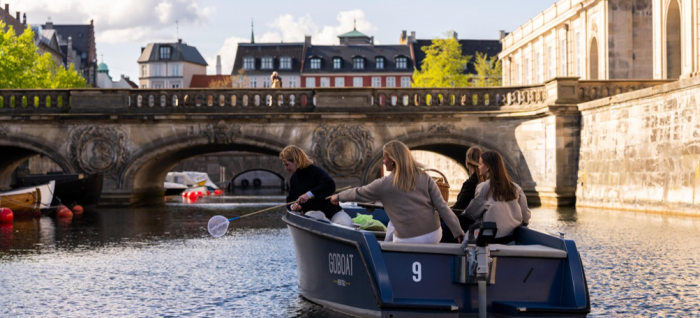
Hop on your bike and earn a cup of coffee. Collect trash and get a free kayak tour. Come by train and experience a sauna experience. CopenPay returns this summer, with no end date, and the popular tourism rewards program is back to change the way tourists explore Copenhagen, with positive promotions replacing traditional attractions.
“At a time when tourists around the world are often the target of criticism, Copenhagen CopenPay offers a new way for tourists to interact with the city in a positive way,” said Rikke Holm Petersen, director of behavior at Wonderful Copenhagen. “Inspiration and contribution seem to be the new souvenir.”
According to a study by Booking.com (2025), 69% of tourists want to do something positive for the destination they visit[1]and more than 30,000 tourists have already participated in CopenPay activities. The initiative has received global recognition, including being named one of the best inventions in the world in 2025 by TIME Magazine, while the European Commission has highlighted it as “a transition path for tourism.”
“CopenPay is a modern fairy tale,” says Rikke Holm Petersen. “A somewhat crazy idea: that tourists would spend part of their precious vacation doing something good for the city – such as collecting litter – in exchange for experiences. And just like in a fairy tale, the idea turned out not to be so crazy after all.”
New research: tourists are not motivated by rewards, but by the experience
A new assessment of visitor behavior by analytics firm Maple reveals a surprising insight: Tourists are motivated more by the positive actions they take than by the rewards they receive.
Only 23% say they are motivated by the reward itself. In contrast, almost half – 48% – say their primary motivation is the opportunity to have a unique, meaningful and educational experience. Additionally, seven in ten participants say they have changed their habits at home.
This insight challenges conventional thinking about behavior change in tourism. Rather than incentives alone driving action, it’s the experience itself that really motivates visitors.
More unique experiences added throughout the city
Based on these insights, CopenPay is expanding its range of experiences, making the program even more attractive and distinctive.
Visitors can take part in a growing number of practical exchanges throughout the city: collect a bag of waste and get a free organic meal at BaneGaarden, upcycle worn-out clothes for free at Designmuseum Danmark, or come by bike and get access to concerts and discounts at cultural events.
“Our ambition is to make positive engagement with the city something that people actively seek out and to give our visitors experiences and lessons that they can take home. Last year, seven in ten said they changed their habits after returning home,” says Rikke Holm Petersen.
Transport is a cornerstone of CopenPay
A journey starts at home, and that also applies to CopenPay. That is why transport plays a central role. The initiative rewards visitors who choose to arrive in Copenhagen by train with a variety of incentives, including free bike rentals and cycling lessons, making it easy and safe to experience the city on two wheels. “Copenhagen is the largest cycling capital in the world, and with CopenPay we want to give visitors something they can take home with them – while also making it safer for everyone to get around the city,” says Rikke Holm Petersen.
In addition, tourists who arrive in electric vehicles are rewarded with free parking and discounts on charging during their stay.
From local pilot to global movement
Following the success of CopenPay in Copenhagen, the model was made available for free to destinations around the world in February 2026 under the name DestinationPay, allowing others to adopt and adapt it. Since then, more than 350 destinations have been introduced to the model and supported in bringing it to life locally. Several countries, including Germany, Italy, France, the US, Canada, Japan and Australia, are already preparing to launch their own initiatives this year, while Berlin has already launched its own.
“We share many of the same values and ambitions as Copenhagen, which is why the CopenPay program to encourage positive actions and promote a new mindset among visitors has great potential for Eryri National Park. Making tourism a force for positive change is something we all need to participate in, and the CopenPay model is easily adaptable for Eryri National Park, so we are actively working on that,” says Alec Young, Carbon Officer Eryri National Park.
“The ambition is not just to scale CopenPay, but to bring about a global shift in the way tourism is experienced – where positively interacting with a destination becomes part of the journey itself,” concludes Rikke Holm Petersen.
Facts about CopenPay
Launched in Copenhagen in 2024 as a pilot initiative
Significantly expanded by 2025
Relaunching in 2026 as a year-round initiative, with no end date
Model made available for free for all destinations in November 2025 as “DestinationPay”.
More than 350 destinations worldwide are introduced to the concept
More than 30,000 participants
100+ participating attractions
59% increase in bicycle rental among participants
In the pilot, 1,200 kg of waste was removed from the canals
7 in 10 participants report changed behavior after returning home
Only 23% of participants are motivated by rewards, 48% by meaningful experiences
98% would recommend CopenPay to others
Facts about Copenhagen
More bicycles than people
Copenhagen has more bicycles than inhabitants and almost 400 km of dedicated cycle paths
Almost half go by bicycle
About 45% of all trips to work or education are made by bicycle
The happiest city in the world
Copenhagen is number 1 worldwide in the Happy City Index of 2026
The most liveable city in the world
Ranked number 1 in the Economist Intelligence Unit Global Liveability Index 2025 and scores 100/100 in stability, reflecting low crime and high levels of trust.