A recap for journalists of this mail-in voting case
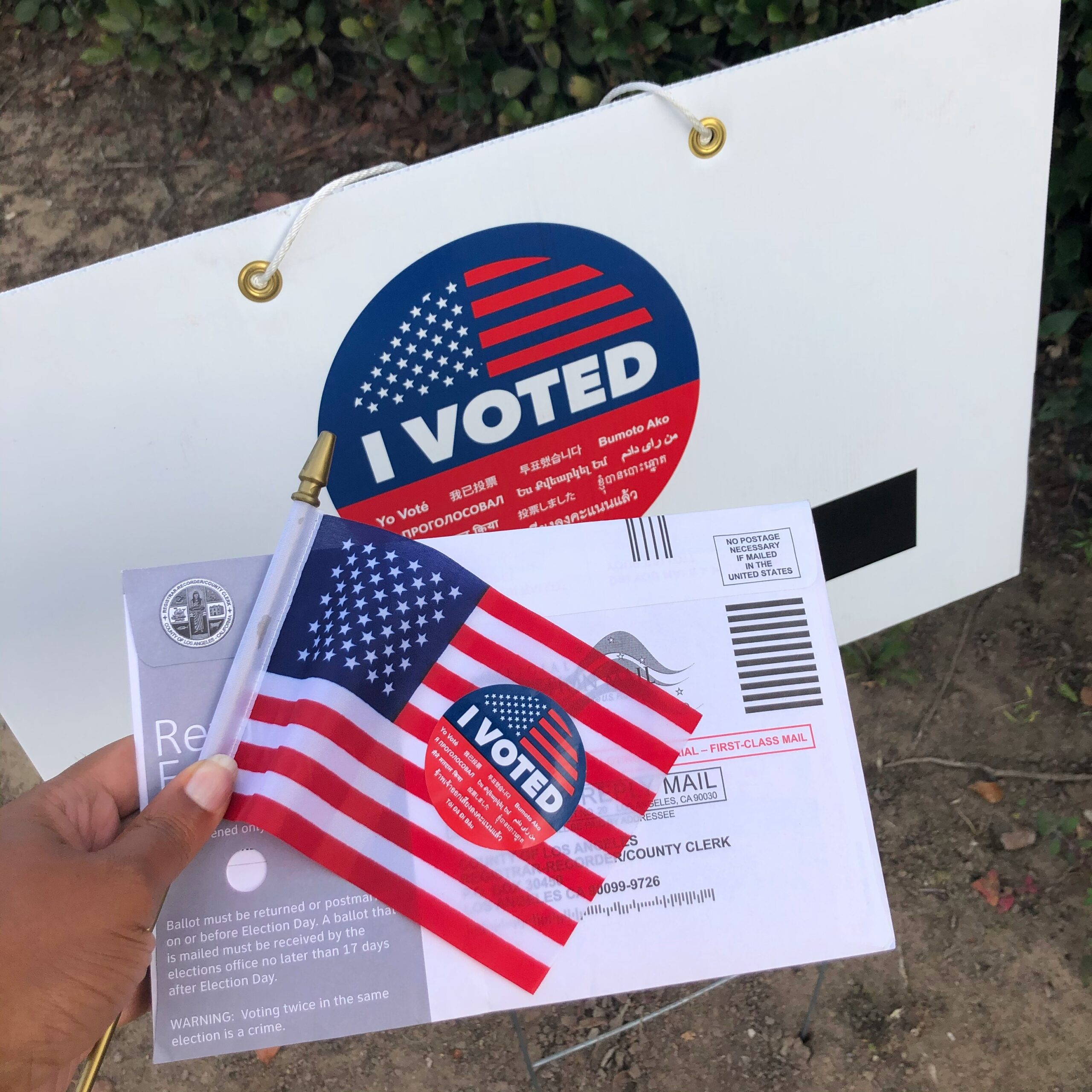
This week the Supreme Court upheld Mississippi’s right to count ballots that were cast and postmarked by Election Day but received up to five business days after the election.
Justice Amy Coney Barrett wrote for a 5-4 majority of the court. In her majority opinion, Barrett holds that federal election laws do not preempt the Mississippi grace period.
Justice Samuel Alito wrote a dissent joined in whole or part by Justices Clarence Thomas, Neil Gorsuch and Brett Kavanaugh.
About the case
In 2020, in response to the COVID-19 pandemic, Mississippi passed emergency legislation allowing the state to accept and count absentee ballots postmarked on or before Election Day and received by the county registrar no more than five business days after the election.
Following the pandemic, Mississippi made this ballot-receipt deadline permanent. Four years later, the Republican National Committee, the Mississippi Republican Party, a Mississippi voter and a county election commissioner sued to challenge the constitutionality of the ballot-receipt deadline. They argued that federal election law preempts the Mississippi law, pointing to Congressional statutes from 1845 and 1872 that establish Election Day as “the Tuesday next after the first Monday in November.”
The Libertarian Party of Mississippi filed a similar lawsuit against the same defendants.
The U.S. District Court for the Southern District of Mississippi consolidated the cases and ruled in favor of the defendants, finding that the Mississippi law did not conflict with federal election law.
The challengers appealed to the U.S. Court of Appeals for the Fifth Circuit. In October 2024, a three-judge panel of the Fifth Circuit agreed with the challengers, holding that the Mississippi law was preempted by federal election law, which requires ballots to be cast by voters and received by election officials on Election Day — not afterward.
In March 2025, the full court of appeals denied Mississippi’s petition for rehearing over the dissent of five judges. The Supreme Court then granted certiorari — meaning the high court agreed to hear the case — with oral arguments occurring in March 2026.
About the ruling
Barrett described the question at issue as a narrow one about ballot-receipt timing, declining to discuss other election processes in Mississippi, such as the use of the U.S. Postal Service or a common carrier to transport ballots, or the general practice of absentee voting.
She cited dictionary definitions, Supreme Court precedent, and Congressional history to find that an “election,” as used in federal Election Day statutes, is marked by the voter’s act of choosing a candidate — not by the receipt of the voter’s ballot. Thus, she found, federal law simply decrees the day votes must be cast, leaving states free to decide when ballots must be received.
The Uniformed and Overseas Citizens Absentee Voting Act, in requiring states to permit absent military and overseas citizens to vote and establishing a federal system as a backup, reinforces the point that states are in charge of coordinating ballot receipt.
Barrett dismissed the plaintiffs’ argument that requiring ballots to be received by Election Day would promote election integrity. First, she found this to be a policy matter better addressed by legislatures. Second, she found that striking down the Mississippi law would not mitigate plaintiffs’ concerns about party bosses or rideshare drivers handling ballots.
She took seriously plaintiffs’ argument that the Mississippi law could create the appearance of election fraud in circumstances where ballots received after Election Day change the results of an election. But she deferred to Congress to address this issue should it arise.
Looking ahead to other voting cases
Barrett’s opinion is a demonstration of restrained statutory interpretation, with the decision turning primarily on a limited definition of the word “election” as used in federal law. She declined to give significant airtime to concerns about actual voter fraud or the appearance thereof.
The narrow scope of the decision preserves the court’s ability to come to different conclusions on different state laws in future terms. As Rick Hasen wrote in Slate, the court on Monday also agreed to hear Republican National Committee v. Mi Familia Vota, a case about whether Arizona can reject voter registration applications that do not provide documentary proof of citizenship. The court’s decision in Watson may do little to prevent it from upholding the Arizona law next term.