Small Business Marketing Checklist: Print & Promo Guide
If you run a local business, your small business marketing strategy doesn’t begin and end on a screen. The flyer someone picks up at a coffee shop, the banner outside your pop-up, the business card a happy customer passes to a friend — these still drive foot traffic, referrals, and repeat business.
The problem isn’t a lack of print materials. It’s using them without a plan: printing generic flyers with no clear offer, ordering business cards that don’t match your signage, or buying promo products that never get used.
QUICK TIP: What marketing materials does a small business need first?
Start with business cards (for networking and referrals), one local outreach piece (a flyer or postcard), and basic signage if you have a physical location or attend events. Then layer in branded apparel, promo products, and packaging as your budget grows.
This checklist breaks down what to print, when to use it, and how to track whether it’s actually working.
Small business marketing checklist summary:
- Build your brand first. Lock in your logo, colors, fonts, and message before printing anything.
- Use signage to get found. This is your most consistent, high-impact offline visibility.
- Make first impressions count. Business cards and materials should reflect your brand.
- Use flyers to drive action. They are simple, local, and effective for promotions.
- Leverage branded apparel so your team becomes part of your marketing.
- Stay visible with promo products;go with useful items and keep your brand in daily use.
- Elevate packaging and labels. Every order is a branded experience.
Small business marketing essentials checklist
Use this table as a quick reference for what to use, when to use it, and how to track results.
TIP: Stick with one printing provider. It’s tempting to shop around; order business cards from one place, banners from another, promo products from wherever has the best deal that week. But every time you switch vendors, you risk ending up with materials that are slightly off from each other: a different shade of your brand color, a logo that printed smaller than expected, a font that doesn’t quite match. Customers notice inconsistency even when they can’t name it.
Pick one provider and use them for everything you can. It keeps your brand consistent, simplifies reordering, and saves you the coordination headache of managing multiple accounts, file formats, and delivery timelines.
Our top pick for small businesses is VistaPrint — it’s our #1 recommendation for both online printing services and marketing swag. They cover virtually every category in this checklist, pricing is built for small business budgets, and you can apply your logo and brand colors across products without needing a designer.
Build your brand foundation first
Ready to order your small business marketing materials? Make sure to lock in your brand foundation first before you print anything.
Every section of this checklist assumes you’ve done this first. If your logo, colors, and messaging aren’t consistent across materials, your marketing will feel disjointed, and customers will notice, even if they can’t articulate why.
Before you order a single thing, make sure you have:
- A finalized logo (with a version that works on both light and dark backgrounds)
- Your brand colors; ideally with HEX codes so they reproduce accurately in print
- Your core fonts for headings and body text
- A short value proposition: what you do, who you do it for, and why customers choose you
- One primary call to action (visit, call, scan, redeem — pick one per piece)
- Your contact info: phone, email, website, and any social handles you actively use
- A QR code destination like a booking page, menu, special offer, or portfolio
I recommend reading our free guides below to ensure you lock in this first step before anything else:
Signage and visibility materials
Best for: Local visibility, foot traffic, and ongoing brand awareness
Why it works:
- Delivers consistent, repeated exposure
- Reaches local customers at the right place and time
- Supports other marketing efforts by reinforcing brand recognition
- Requires minimal ongoing effort once installed
Once your brand is consistent, the next step is visibility — it’s time to get discovered. Here’s the thing, though, the first time most potential customers encounter your business, you’re most likely not in the room. It’s your signage doing the work: a banner they drive past, a yard sign at a job site, a window decal that catches someone’s eye as they walk by.
Signage is one of your highest-impact offline tools because it captures attention where your customers already are. A well-placed sign in a high-traffic area builds awareness through repeated exposure every time someone passes by.
A well-placed vinyl banner can generate more local awareness in a week than a month of social posts. And the impressions stick: over 75% of customers say they’ve remembered a business because of its signage, which means every banner, yard sign, and window decal you put up is quietly building brand recognition long after someone walks or drives past.
Signage examples
- Vinyl banners: Large, printed fabric-style signs you hang or mount outdoors. Best for storefronts, grand openings, and outdoor events where you need high visibility in all weather.
- Retractable banners: Tall, freestanding signs that roll up into a portable base. Best for trade shows, events, and any situation where you need professional-looking signage you can set up and pack down in minutes.
- A-frame signs: Double-sided sidewalk signs that fold open like a tent. Best for daily specials, directional info, or grabbing foot traffic right outside your door.
- Yard signs: Lightweight corrugated signs on wire stakes that go into the ground. Best for contractors, home service businesses, and real estate — anywhere you want to mark a job site or neighborhood presence.
- Window decals: Vinyl graphics that adhere directly to glass. Best for storefronts that want to use their windows to display hours, promotions, or branding without permanent fixtures.
- Posters: Printed flat sheets in standard sizes, mounted on walls or boards. Best for indoor spaces like waiting rooms, retail interiors, and community bulletin boards.
- Standing flags: Tall, feather-shaped or rectangular flags on a pole base. Best for events, parking lots, and storefronts where you want something eye-catching from a distance.
Signage best practices
- Limit text to 5 to 7 words for anything meant to be read at a distance or in motion
- Use high-contrast color combinations (dark text on light, or vice versa)
- Lead with the benefit or offer, not your business name
- Include a QR code or short URL on stationary signage so people can act immediately

Yard signs and outdoor signage help small businesses capture local attention and drive action, especially when paired with a scannable QR code.
VistaPrint stocks the full range of signage formats small businesses actually need, such as vinyl banners, retractable banners, A-frames, yard signs, window decals, and standing flags. If you’re running a spring campaign or prepping for an event, their signage lineup is worth exploring as a starting point.
Business cards and professional materials
Best for: Networking, referrals, and client-facing interactions
Why it works
- Turns in-person interactions into lasting touchpoints
- Signals professionalism and builds trust quickly
- Enables easy referrals and word-of-mouth
- Connects offline moments to trackable digital actions
Make a strong first impression. When someone is in front of you, at a networking event, during a service call, or right after a sale, what you hand them matters. A business card is the physical handshake that follows the real one.
Business cards remain one of the most cost-effective tools for in-person marketing. Handed to the right person, a well-designed card can turn a quick interaction into a lasting connection. The difference comes down to quality: a clean, intentional design builds credibility, while a cluttered or flimsy card does the opposite.
What to put on your business card
- Your name and role (don’t skip the role because context matters)
- Business name and logo
- Phone and email
- Website or direct booking link
- QR code linked to a trackable landing page or offer
- A short tagline or value statement; not just contact info
When to hand them out
- Networking events and industry meetups
- During or after a service visit
- At the register or POS; include as a packaging insert
- At community events, markets, or pop-ups
How to make them work harder: Add a QR code that links to a landing page with a special offer — e.g., “Scan for 10% off your first order.” Track how many people visit that page to measure card effectiveness. This turns a passive contact-info card into an active marketing tool.
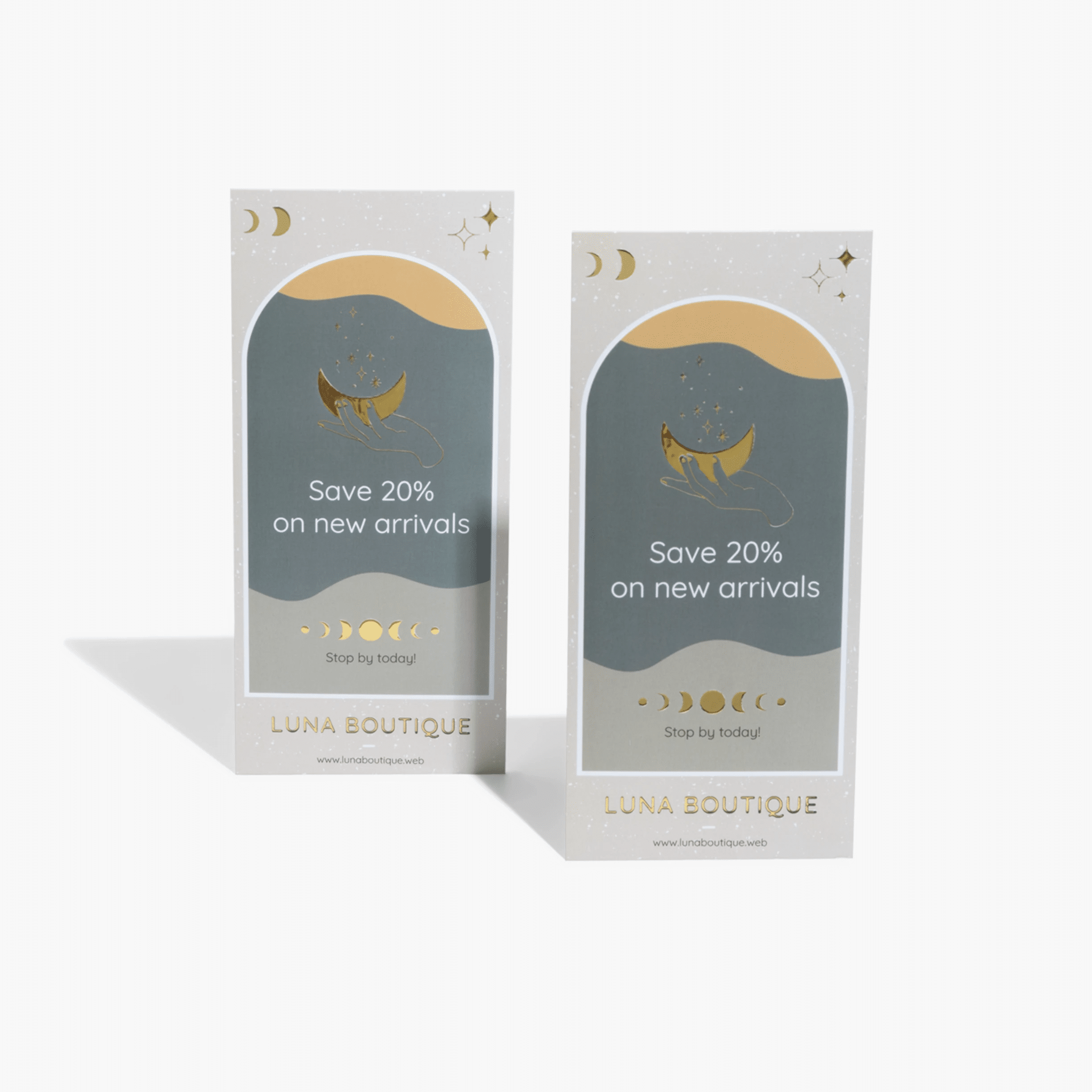
Rack cards are ideal for in-store displays, events, and local promotions, combining a clear offer with a compact format that’s easy to pick up and keep.
This category also includes materials that help you present your business professionally; think presentation folders, brochures, and anything else that travels from your hands to theirs.
Other professional materials worth having
- Presentation folders for client proposals, welcome packets, or contractor bids
- Brochures, these are best for businesses with several services or a process to explain (think home services, health and wellness, financial advisors)
- Rack cards, a slimmer, more durable alternative to flyers — great for hotel lobbies, waiting rooms, and retail displays
Related reads:
Flyers, postcards, and promotional materials
Best for: Local campaigns, promotions, and time-sensitive offers
Why it works
- Stays visible longer than most digital impressions
- Targets specific local audiences
- Drives immediate action when paired with an offer
- Works well alongside digital campaigns for reinforcement
Once people know your business exists, the next step is getting them to act. Flyers and postcards are one of the fastest and most cost-effective ways to do that locally.
Digital ads disappear the moment someone scrolls past. A postcard in the mailbox or a flyer picked up at a coffee shop can stay visible for days. That kind of visibility is hard to replicate with digital alone, which is why print works best as part of the mix.
Best use cases for flyers and postcards
- Grand openings or rebrands
- Seasonal promotions such as holiday sales or limited-time offers
- Event announcements and local activations
- New product or service launches
- Loyalty or referral programs
- Coupons and time-sensitive discounts
Distribution strategies that drive results
- Door drops: Highly effective for home services, restaurants, and local businesses targeting specific neighborhoods
- In-store placement: Display at checkout or entrances to capture existing foot traffic
- Community boards: Gyms, libraries, cafes, and shared spaces
- Events and pop-ups: Hand out flyers alongside a quick pitch to increase engagement
- Direct mail campaigns: Ideal for higher-value offers where targeting matters
What makes a flyer or postcard effective
- A single, benefit-focused headline that speaks to the customer
- One clear offer instead of multiple competing messages
- A defined deadline to create urgency
- One primary call to action such as scan, call, visit, or redeem
- Clean layout with enough white space to stay readable
For flyers and postcards, cost per piece drops quickly at higher volumes. Providers like VistaPrint make it easier to test a campaign at scale, so you can measure what drives responses and refine future promotions without overspending.
Related reads:
Branded apparel
Best for: Team visibility, credibility, and consistent brand presence in the field
Why it works
- Makes your team easy to identify
- Builds trust and credibility instantly
- Reinforces brand consistency across locations
- Extends visibility beyond your physical space
When your team shows up, your brand shows up first. Whether it’s a service call, a farmers market, or a trade show booth, what your team wears signals professionalism before a single conversation starts.
Branded apparel works because your team becomes the marketing. When employees show up in consistent, branded clothing, it builds trust immediately and extends your visibility into every interaction and location they work in.
Think of each employee as a moving touchpoint. In busy areas or neighborhoods where you’re working multiple jobs, that repeated exposure adds up quickly.
Popular apparel options for small business teams
- T-shirts: The most versatile and budget-friendly option. Works across retail, events, service crews, and casual environments. A solid starting point if you’re outfitting a team for the first time.
- Polos: A step up in presentation without feeling formal. Ideal for customer-facing roles in retail, hospitality, and service businesses where you want a clean, consistent look.
- Dress shirts: Best for professional services and client-facing roles. Adds credibility in settings where appearance directly impacts trust.
- Sweatshirts and outerwear: Built for durability and repeat use. Great for outdoor work, seasonal shifts, and long-term visibility. These tend to deliver more impressions over time because they’re worn longer.
- Vests: A practical, polished option that layers easily. Works well for retail and service teams that need mobility while still looking put-together.
When branded apparel delivers the most value
- Service visits such as contractors, cleaners, and technicians
- Retail and hospitality environments where staff visibility matters
- Trade shows, pop-ups, and local events
- Client meetings where presentation influences trust
Providers like VistaPrint offer a range of apparel options that match common small business needs, from everyday T-shirts to outerwear. If you’re building out your first set or updating your look for a busy season, it’s an easy way to keep your branding consistent across both print and what your team wears.
Best for: Brand recall, customer retention, and event-based marketing
Why it works:
- Keeps your brand in use long after the first interaction
- Creates repeated exposure through everyday items
- Reinforces brand recall without additional effort
- Adds value to events, purchases, and client relationships
Signage gets you noticed. Business cards start the conversation. Promo products extend your marketing beyond the first interaction. The right item stays in use for weeks, months, or even years, creating repeated exposure that reinforces brand recall over time.
Are promo products worth it for small businesses? Yes, when chosen intentionally. Focus on items your specific audience will actually use. For example, a branded tumbler for a coffee shop’s regulars, stickers for a creative studio’s social followers, or a quality pen for a financial advisor’s clients. Avoid ordering large quantities until you’ve tested what resonates.
High-impact promo products by use case
Promo products work best when they’re used often, seen often, and tied to the right moment. Use this quick breakdown to choose what actually drives visibility.
Quick comparison of promo products: What to use and why
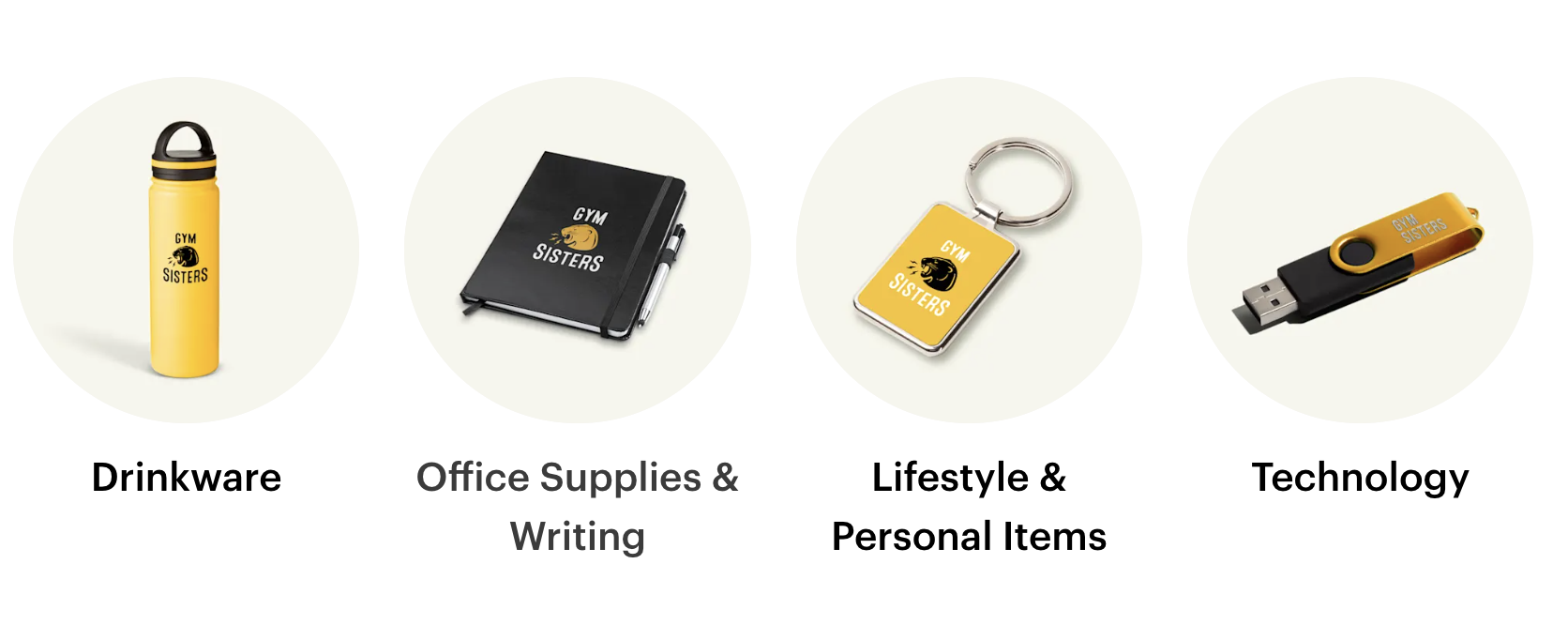
Promo products like drinkware, office supplies, keychains, and tech accessories help keep your brand in daily use, increasing long-term visibility and recall.
For event giveaways: Maximize reach and impressions
Focus on items that are easy to distribute and get repeated use.
- Stickers: Low cost per impression and high visibility. They move with your audience and keep your brand visible long after the event.
- Pens: Reliable if they’re well-made. Best used where people are actively writing or signing.
- Keychains: Long-lasting and handled daily, making them one of the most consistent exposure tools.
For client thank-you gifts: Reinforce relationships
Choose items that feel useful and intentional.
- Tote bags: Highly visible in public settings. A durable bag turns everyday errands into brand exposure.
- Drinkware: Used multiple times a day, making it one of the highest-impact categories for long-term visibility.
- Notebooks: A more thoughtful option that stands out, especially in professional settings.
For employee gifts and recognition: Build culture and visibility
Focus on items employees will actually use outside of work.
- Apparel: Extends your brand reach when worn beyond the workplace.
- Drinkware: Practical and easy to adopt into daily routines.
- Tech accessories: Constant use keeps your brand visible throughout the day.
- Outerwear and backpacks: Best reserved for milestones to increase perceived value and retention.
How to choose the right promo product
Before ordering, run through this quick filter:
- Will someone use this weekly or daily? If not, skip it
- Will they use it in public? If yes, it multiplies impressions
- Does the quality reflect your brand? If not, it can hurt perception
- Does it match the context? Event, client gift, or employee reward
Providers like VistaPrint make it easier to test different promo products in small batches, so you can see what actually gets used before committing to larger orders.
Read more: See the best promotional items for small businesses that customers keep
Packaging and labels
Best for: Post-purchase branding, repeat business, and customer experience
Why it works:
- Reinforces your brand after the purchase
- Increases perceived value without changing the product
- Encourages repeat business and word-of-mouth
- Creates opportunities for organic sharing
If you sell physical products, packaging is not only functional, but it also becomes part of your marketing. Every order you hand off or ship out is a brand touchpoint. The box, the bag, the label, all of it shapes how customers remember you.
Packaging shapes how customers remember your brand after the sale. It’s less about visibility and more about reinforcing quality, care, and consistency in the moments that follow a purchase.
Essential packaging materials
- Roll labels and stickers: The most flexible option. Use them on products, bags, boxes, and envelopes to add branding without redesigning your packaging.
- Hang tags: Increase perceived value, especially for apparel, handmade goods, and boutique items. They signal care and attention to detail.
- Note cards: A simple way to personalize the experience. Even a short message can make an order feel intentional and memorable.
- Paper bags: Extend your brand beyond the sale. Customers carry them into other stores, down the street, or home, creating additional impressions.
- Wrapping paper and ribbon: Especially useful for gift-focused businesses or seasonal promotions where presentation influences purchase decisions.
When packaging has the biggest impact
- Ecommerce and local delivery orders
- Retail and boutique purchases
- Holiday periods and gift-heavy seasons
- Pop-ups and markets where first impressions happen quickly
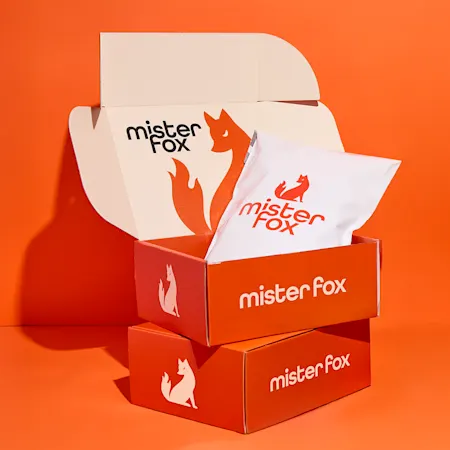
Branded packaging turns every order into a marketing touchpoint, reinforcing your identity and increasing the chances of repeat purchases and social sharing
Providers like VistaPrint offer packaging essentials such as labels, stickers, and branded materials that help small businesses create a consistent look without investing in fully custom packaging runs. It’s a practical way to upgrade presentation while staying within budget.
Related reads:
How to choose the right mix for your business type
Not every business needs the same materials. Here’s a quick reference by business type to help you prioritize where to start.
How to track offline marketing (so you know what’s actually working)
Quick answer: Use QR codes linked to unique landing pages, custom promo or coupon codes, dedicated phone numbers, short custom URLs, or simply ask new customers, “How did you hear about us?” at checkout. Even one method is better than none.
One of the most common reasons small business owners give up on print marketing is that they can’t tell if it’s working. The good news: you don’t have to guess. With a few simple tracking methods, offline marketing becomes almost as measurable as digital.
- QR codes: Link each piece to a unique landing page. Use Google Analytics or any link tracker to count visits. A flyer campaign gets one URL; a business card gets another. Now you know which material drove the traffic.
- Unique promo codes: Print a specific code on each marketing piece (e.g., FLYER10, CARD15). Track redemptions at your POS or checkout. This works especially well for discount-driven offers.
- Dedicated phone numbers: Use a call tracking number on specific materials. Tools like CallRail or even a free Google Voice number can tell you which piece prompted the call.
- Custom short URLs: Create a simple redirect (e.g., yourbusiness.com/summer) that goes to a tracked landing page. Easier to type than a UTM link and still fully measurable.
- “How did you hear about us?”: Low-tech but surprisingly effective. Add it to intake forms, booking flows, or just ask at the point of sale. Even rough data beats no data.
A simple tracking rule of thumb: Every printed piece should have at least one trackable element like a QR code, a promo code, or a dedicated URL. If it doesn’t, you’re flying blind. This takes five minutes to set up and makes your print marketing budgets defensible over time.
Small business print marketing by budget
You don’t need to do everything at once. Here’s how to approach print marketing at three realistic budget levels.
A few things to keep in mind, regardless of budget:
- Order enough to actually distribute. There’s no point printing 25 business cards or 10 flyers; you won’t hand them out fast enough to learn anything useful, and the per-unit cost will be much higher than it needs to be. A good rule of thumb: order enough for at least one full campaign or event, then assess from there.
- Test before you scale. Before you commit to a 2,000-piece mailing, run a smaller batch first. If the offer doesn’t resonate or the design misses the mark, you’ve lost a fraction of what a full print run would have cost. Get feedback, tweak, then scale what’s working.
- Prioritize consistency over quantity. It’s better to have three materials that all look like they belong together than 10 pieces that were clearly made at different times by different people. Mismatched branding, such as different fonts, slightly off colors, or logos in different sizes, quietly undermines the trust you’re trying to build. Less, but cohesive, always wins.
Common print marketing mistakes to avoid
- Too much information on one piece. Every piece of marketing should have one job. A flyer that lists seven services, three phone numbers, and two offers does none of them well. Pick one message per piece.
- Weak or missing call to action. “Visit us soon!” is not an effective call-to-action (CTA). “Scan for 15% off this weekend” is. Be specific about what you want the reader to do next.
- Poor readability from a distance. If your banner or yard sign requires someone to stop and squint to read it, it’s not working. Use large type, high contrast, and minimal text for anything meant to be read at a distance.
- Inconsistent branding across materials. If your business card uses one font, your banner uses another, or your flyer uses a different shade of your brand color, your customers unconsciously register this as disorganized. Lock in your brand elements before you print and use them consistently across everything.
- No tracking mechanism. A great piece of print marketing with no way to measure it is a missed opportunity. Add a QR code, a promo code, or a unique URL to every printed piece.
- Ordering large quantities before testing. It’s tempting to order 2,000 flyers because the per-unit cost drops. But if the design or offer doesn’t resonate, you’ve wasted money on scale. Test with a smaller run first, track results, then scale what works.
- Using low-resolution images. Images that look fine on a screen can appear blurry or pixelated in print. Always use images at 300 DPI or higher for print materials. Most design tools will flag this if you’re using files that are too low-res.
Frequently asked questions (FAQs)
Your name, title, business name and logo, phone, email, and website should always be included. Adding a QR code that links to a booking page or special offer helps turn a simple card into a trackable marketing tool. Keep the design clean and focus on one clear call to action.
Yes. Business cards remain effective for service providers, contractors, and anyone who interacts with customers in person. When paired with a QR code or custom link, they combine offline trust with measurable digital results, making them a practical tool for marketing for small businesses.
Yes, especially for local and time-sensitive campaigns. Flyers perform well when they focus on one offer, include a deadline, and provide a clear call to action. When used correctly, they’re one of the most cost-effective print marketing campaigns for small businesses.
The most effective materials depend on your goals, but common high-performing options include business cards, flyers, signage, promo products, and branded packaging. These print marketing materials for small businesses work best when they’re consistent, easy to understand, and tied to a specific action.
You can track offline marketing by using QR codes, unique promo codes, custom landing pages, or dedicated phone numbers. These methods help connect print marketing campaigns for small businesses to measurable outcomes like calls, visits, or purchases.
Strong marketing ideas for small business include distributing flyers in targeted neighborhoods, using signage to increase foot traffic, adding branded packaging to orders, and handing out promo products at events. Combining print with digital tracking improves overall results.
Many providers offer good printing services for small business cards, brochures, and marketing materials at scale. Platforms like VistaPrint make it easy to design and order a range of materials in one place, helping small businesses maintain consistent branding while staying within budget.
Bottom line
The most effective small business marketing isn’t digital or print, it’s both working together. Your digital presence builds reach, while your physical materials build trust and drive action at the local level.
If you’re looking for practical marketing ideas for small business growth, the approach is straightforward. Start with a clear brand foundation. Use signage to get discovered. Make a strong first impression with business cards and collateral. Run targeted local campaigns with flyers and postcards. Extend your visibility with apparel and promo products. Then reinforce the experience with branded packaging. Track what works and scale from there.
For small teams, this becomes much easier when you rely on local print and marketing services for small businesses that can handle everything in one place. Instead of juggling multiple vendors, using a single provider helps you stay consistent across materials and campaigns.
That’s where platforms like VistaPrint stand out. It offers good printing services, small business cards, brochures, and marketing materials, alongside signage, apparel, packaging, and promo products, making it easier to build a cohesive brand without extra overhead.
If you’re ready to put this small business marketing checklist into action, explore VistaPrint’s full range of print and promo products and start building a marketing system that works both online and offline.
Source link