How Sports Rituals Bond Families Across Generations
Subhead: From Sunday games to inherited jerseys, sports traditions give families a simple way to stay connected as generations grow older and lives change.
Read Time: 3 min read
For many families, watching sports is about much more than what happens on the field.
It might be football every Sunday, a baseball game every summer, basketball during the playoffs, or simply gathering around the television whenever a favorite team plays. Over time, small habits begin to form around those games: the same food, the same seats, the same jerseys and the same arguments about players, coaches and calls.
Eventually, those habits become family traditions.
What makes sports especially good at creating these traditions is repetition. Seasons return every year. Games arrive on familiar days. Families have another reason to get together, call one another or send a message to the group chat.
And unlike many family activities, sports can easily include several generations at once.
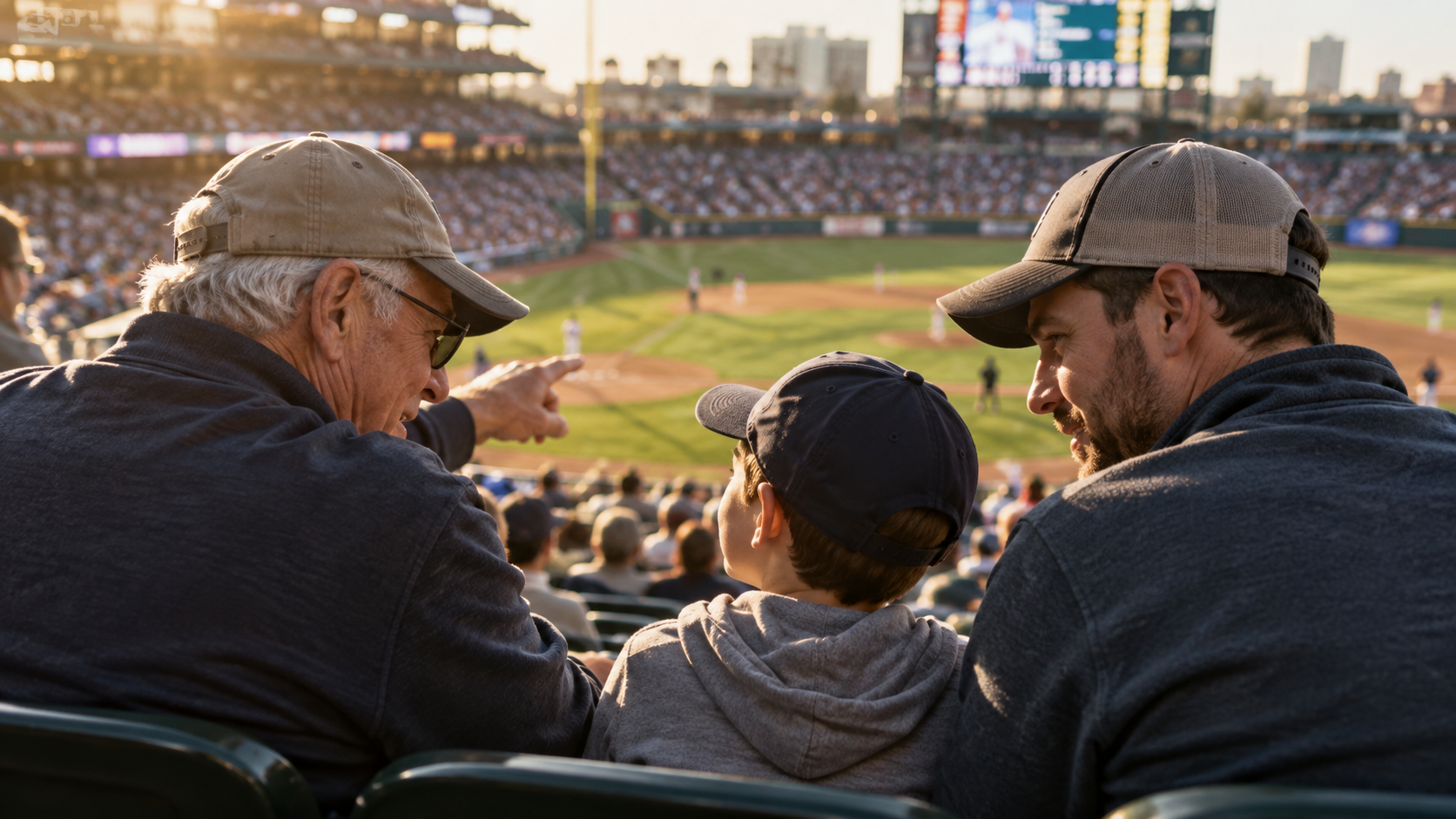
A grandfather and grandson may have grown up decades apart, but they can still debate which player was better. A mother can tell her daughter about attending games when she was young. Parents can take their children to the same stadiums they once visited with their own parents.
The sport provides a common subject. The family supplies the memories.
More Than the Final Score
Ask longtime fans why they support a particular team and many will point to their families.
They grew up watching because their father watched. Their mother bought them their first jersey. Their grandparents took them to games. Supporting the team became part of growing up.
That connection can remain long after individual players retire.
A particular game might remind someone of sitting in a grandparent’s living room. An old jersey can bring back memories of a parent. Even a disappointing season can become something siblings laugh about years later.
The score itself may eventually be forgotten, while everything surrounding it remains surprisingly clear.
That is why some of the strongest sports memories have little to do with athletic performance. People remember the drive to the stadium, the food before the game, the relative who yelled at the television, or the phone call that always came after the final whistle.
Those ordinary moments become part of the experience.
Traditions Change as Families Change
Family sports rituals don’t necessarily disappear when children grow up and move away.
They simply change.
The family that once watched together in one living room may now be spread across several states. Instead of sitting on the same couch, they text during the game, call at halftime or complain about the same bad play in a family group chat.
For a few hours, people living very different lives are paying attention to the same thing.
That can become increasingly valuable as families get older. Work, school, marriage, children and distance make spontaneous time together harder to find. A familiar sports schedule creates a reason to reconnect without requiring a special occasion.
Then, eventually, another change happens.
The child who was once taken to games becomes the person buying the tickets. The parent who explained the rules becomes the grandparent sitting beside a new generation. A jersey gets handed down. Someone else begins preparing the game-day food.
The tradition continues, even though the people responsible for keeping it going have changed.
And when an older family member is no longer there, those rituals can take on another meaning. Wearing an old jersey, making a familiar recipe or continuing an annual trip to a game can become a simple way of remembering someone without turning the occasion into a memorial.
The family is still watching the game. But it is also carrying part of its history forward.
What Families Really Keep
Sports constantly change. Players retire, teams rebuild, records fall and another season always arrives.
Family memories operate differently.
Years later, someone may struggle to remember the final score of a game they attended as a child. But they can remember who took them.
They remember where they sat, what they ate, what everyone argued about on the way home and who was beside them when something unforgettable happened.
Then one day, they may find themselves creating those same experiences for someone younger.
That’s the lasting power of a family sports tradition.
The scoreboard records what happened in the game. The family remembers who was there to watch it.