How agents can participate in the growing Google home listing ads
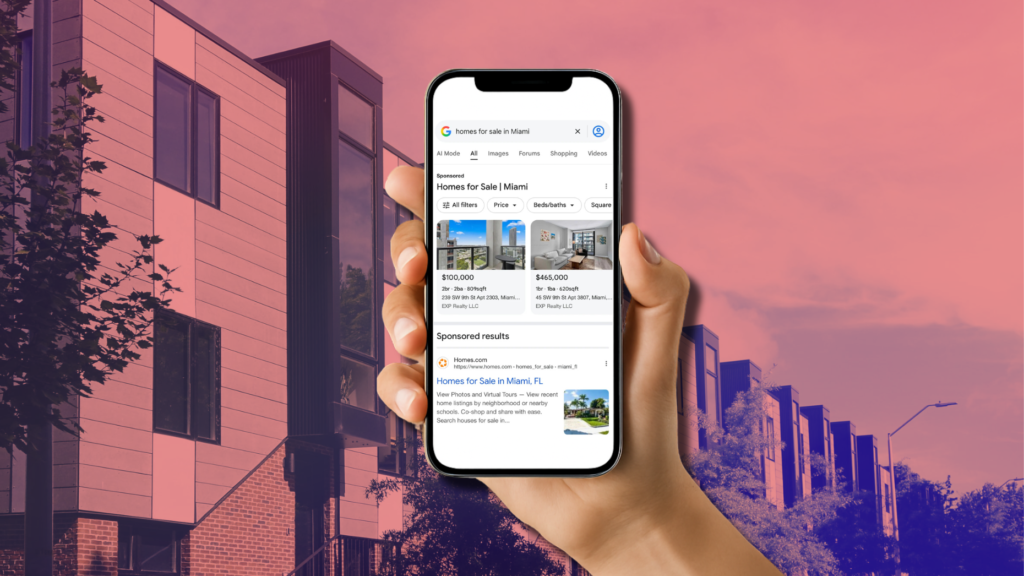
The Google home listing advertising program is starting to take shape for agents and brokers, with Bright MLS preparing to make active agent listings eligible to appear in Google mobile search results this week.
Bright – the nation’s largest MLS by subscribers, with 101,000 members – announced this month that it partners with HouseCanary to display active listings in Google Search through HouseCanary’s ComeHome platform. The integration is expected to be available on June 30, and Bright says listings will appear shortly thereafter.
The announcement offers one of the clearest insights yet into how Google’s HouseCanary-powered home listing experience could work in practice. For agents and brokers, the program appears to have two separate components: exposure to free listings through participating MLS and broker feeds, and paid lead opportunities through Google Local Services ads.
Listing exposure is dependent on MLS and broker participation
Bright told subscribers that active listings are eligible to appear in Google Search mobile real estate carousels, where the MLS said they may be positioned above traditional portals. Bright said the display will come at no additional cost to agents and will prominently display the agent’s name, brokerage and contact buttons.
But Bright also cautioned that viewing is not guaranteed. Listings are displayed based on Google’s algorithm and consumer search parameters. This means that agents shouldn’t assume that every listing will show up for every relevant search.
The integration is not a direct feed from Bright to Google. Bright said the connection is made possible through HouseCanary’s consumer platform, ComeHome, which provides listing data for Google’s home listings advertising experience.
Participation appears to depend primarily on decisions at the MLS and broker levels, rather than individual agents simply uploading listings to Google. Bright told Inman that agents can opt out of the program through the MLS’s existing syndication dashboard, where agents manage a number of distribution options. At the agent level, agents can exclude an individual listing from all distribution options, including Google, by selecting “Internet no,” Bright said.
Bright also said that neither HouseCanary nor Google are given rights to display any data or photos other than displaying them for the advertising program.
A solo agent can advertise through Google Local Services ads, but getting listings in Google’s home listing view seems to depend on whether the agent’s MLS or brokerage participates in the listing feed.
HouseCanary’s own FAQ makes a similar distinction. According to HouseCanary, listings in the program come exclusively from participating MLSs. Brokers who want listings available for the Google program must join a participating MLS or work with their existing MLS to set up a feed. Agents, in turn, must be licensed with a broker in a participating MLS.
HouseCanary says eligible listings include active listings and, in some cases, pre-market listings, while commercial, rental and land listings are generally not included. Depending on the rules of each MLS, agents can opt in or out of the feed.
HouseCanary also says that all eligible listings from participating MLSs are available to view in active markets, but Google displays listings based on relevance to consumer searches.
Agent leads come through Google’s Local Services ads
Bright confirmed that agents should understand the program as two separate components: free listing viewing through participating MLS and broker feeds, and paid lead opportunities through Google Local Services ads.
“The listings appear on Google Search for free,” Bright said. “Agents who choose to advertise alongside the content (via Google Local Services ads) will only pay for leads.”
Google’s Help page for local services also provides more details on how that side of the program works. Home Listings ads serve for sale ads directly to Google Search and include listing agents, price, images and neighborhood data in addition to promoted buyer agents, according to Google. Potential buyers can view the listings by calling or messaging a local buyer’s agent.
As with other Local Services ads, Google says agents only pay for leads, not clicks or impressions. To use Home Listings ads in Local Services, agents need a verified Google Business Profile, a Local Services Ads campaign associated with that profile, and opt-in to the Buyer Agent or Seller Agent job types.
Google said the format is available in US markets on mobile devices and requires agents to have an active Local Services Listings account and go through the company’s standard verification process.
According to Google, the listings themselves are provided by ComeHome, powered by HouseCanary. Google says Local Services ads will automatically show the correct ad format for searches like “homes near me” or “real estate agent near me.” Prices vary dynamically by market and the Home Listings Ads format will not appear on Google Maps, according to Google.
The distinction between listing display and paid lead generation will likely be important as more MLSs and brokers consider joining the program. For real estate agents, getting listed in Google’s home listing experience may depend on whether their MLS or brokerage participates. To get yourself exposed as a promoted agent, this is done through Google’s Local Services Advertising system.
More feeds are expected
HouseCanary has said the broader program continues to expand. In previous conversations with Inmanthe company said it worked with additional MLSs to coordinate more feeds so that more brokers and agents can display listings in the program.
The company also said it expects more partners to be announced in the coming weeks. The integration of Bright appears to be one of the first examples of that broader expansion becoming visible to agents and brokers.
The program has already attracted the attention of major portals and brokers because it sits at the intersection of listing distribution, agent advertising and lead generation. Zillow told it before Inman that it does not view Google’s expansion into home listings as an immediate threat to his company, arguing that Google is moving to a pay-per-lead model that Zillow says it is moving away from.
On the brokerage side, Leo Pareja, CEO of eXp Realty, had also previously framed the program less as a portal threat and more as another place to display listings. Pareja told earlier Inman that eXp will send all active and soon-to-be-available listings for eXp Realty and NextHome to the program.
For agents, the more immediate takeaway may be simpler: Google’s home listing ads aren’t a single switch they can flip. Listing exposure depends primarily on MLS and broker participation. Paid lead generation relies on Google Local Services advertising. And the value of both parties will depend on whether consumers use the new experience to find homes and contact agents.
Update: This story has been updated with additional commentary from Bright MLS.
Email AJ LaTrace