WHY SOME OF AFRICA’S MOST PROMISING ROUTES STILL HAVE NO FLIGHTS | News
Two of the strongest unused routes south of the Sahara still have no direct flights: Johannesburg to Mumbai and Brussels to Cape Town. Both appear in the Airbus Exploring the Horizons survey of high-demand corridors where passengers continue to fly through a third city because no airline has yet launched a service.
Some of the continent’s connectivity gaps have narrowed in the past year. Qantas added Perth to Johannesburg, Edelweiss introduced its A350 service to Windhoek, Air Congo announced a Brussels connection to Kinshasa, and Ethiopian was cleared to serve Mauritius. If these routes can move from proposal to operation, why do other routes with similarly strong demand remain unserved?
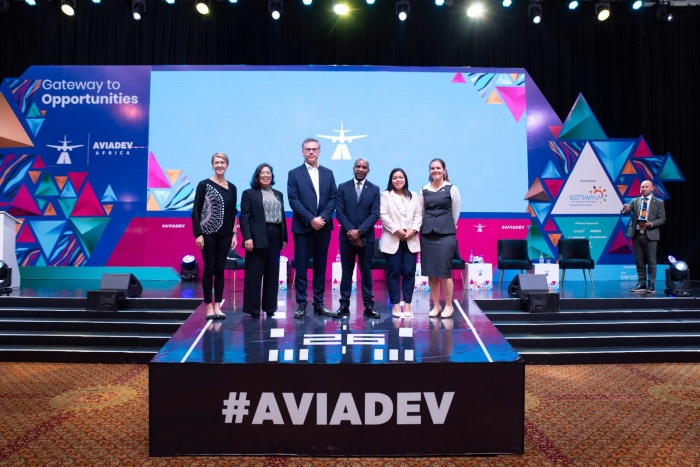
That question was at the center of a discussion at AviaDev Africa 2026 in Gaborone, the continent’s premier route development forum, where airlines, airports and tourism organizations meet to build new air links. It was chaired by Natalia Rosa, project leader at the Southern Africa Tourism Alliance (SATA).
The panel agreed that no one stakeholder can make a route work alone. Airports need traffic, tourism boards need visitors and airlines need the confidence that travelers have a reason to come. Rosa described it as a relationship, but as Keira Langford-Johnson, Business Development Director at Proflight Zambia, noted, not an equal relationship. The airline bears the risk and incurs aircraft, crew and operating costs long before it knows whether demand will materialize.
These costs do not move with the load. A half-empty plane uses almost the same fuel as a full plane, and no marketing campaign can change that. Airlines are therefore looking for evidence that demand will continue even after the launch of a route. What they need, Langford-Johnson said, is proof that the market can sustain itself once the initial excitement fades. Too often, that evidence never comes to the table. “What do people do after they arrive? Where do they go? How do they move? That’s the data that builds a route,” she said.
Rupert Kraus of Discover Airlines, part of the Lufthansa Group, described a similar approach. The number of passengers alone is rarely enough. He wants to see broader indicators of growth: hotels being developed, freight volumes increasing and new industries investing in a destination. “If I just looked at the data in front of me, I would have a hard time justifying the route,” he said.
With a limited fleet and a growing list of potential destinations competing for capacity, airlines need confidence that a market can support service over the long term rather than generating short bursts of demand.
The data exists, Kraus argued, but remains fragmented. Road transport operators, charter airlines and tourism companies already collect much of the information that airlines need to assess whether a route can be successful: who is traveling, where are they going, when are they traveling and in what numbers. Together, these data sets provide a much richer picture of demand than airlines often receive.
Langford-Johnson illustrated this point with three of Proflight Zambia’s recent routes to Livingstone, Maun and Windhoek, all of which emerged from conversations at AviaDev. There were no obvious additions to the network, and Proflight doesn’t launch new routes lightly. What changed was the preparation. Airport authorities, tourism boards and regulators presented a 72-page business case covering demand, market potential, operating costs and demographics. When information was missing, the airline requested it and the partners provided it. “If you don’t exchange anything, it’s just a meeting,” she said. The partners brought the evidence and helped build the trust Proflight needed to launch the route.
Gathering evidence is only part of the process. It can be more difficult to keep stakeholders on the same page. As Tatamo Rakotozafy, head of aviation operations at Ravinala Airports, explained, tourism authorities, airports and governments often approach route development with different priorities and measures of success.
The path is more likely to move forward when stakeholders can align around a shared economic objective. That common goal becomes especially important when political priorities change or commercial pressure arises.
Rakotozafy described coordination within a country. Justice Ofentse, acting CEO of the Botswana Tourism Organization (BTO), argued that the same principle applies across borders. Smaller destinations, he said, are often more effective if they approach airlines collectively, rather than competing with each other for the same planes and investments.
His argument was that the region needed to present itself as a single market, rather than as a collection of individual destinations that would each separately market their carriers.
One event could provide exactly the proof airlines keep asking for. The 2027 T20 Cricket World Cup, shared by South Africa, Namibia and Zimbabwe, is expected to attract more than 340,000 people across the three countries.
As Ofentse suggested, the tournament will test whether the three countries can present themselves to travelers as a connected destination rather than as three separate markets.
Bronwen Auret, Chief Quality Assurance Officer at South African Tourism, acknowledged that creating that level of coordination requires efforts well beyond the tourism sector. However, the tournament provides a practical opportunity to bring together air access planning, tourism promotion and regional cooperation around one event.
If the planning is done properly, she argued, it could also provide valuable data on how visitors moved through the region and where demand was concentrated.
These patterns are the evidence that airlines continue to demand. Whether the region can bring them together in a compelling demand case could determine which of the long-discussed routes ultimately move from proposal to schedule.