Why Apple’s slow-and-steady AI bet is starting to look pretty smart
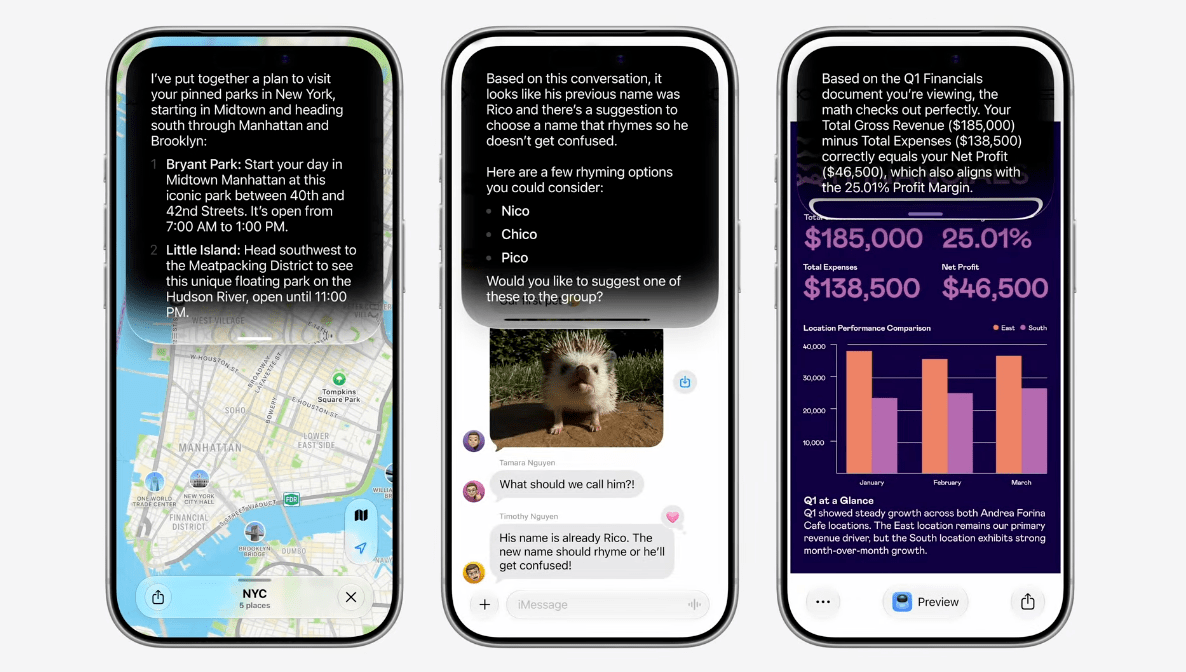
Apple has been accused for years of being one of the biggest laggards in the AI arms race. Doubters do argued that Apple’s lack of a clear AI strategy has cost the company its lead, and Wall Street analysts have been concerned that the gap could hurt iPhone sales.
Now the company has unveiled what it’s calling its biggest AI launch yet: Siri AI, which integrates new automated capabilities (powered by a partnership with Google Gemini) into the backbone of its software.
Is it enough to make people stop saying Apple is “losing” the AI race?
To be honest, no one really knows. But the question itself may be the wrong one. A better question might be: Will Apple customers actually use these features and, if they do, will it benefit Apple’s business?
Before we answer that question, we should note that Monday’s announcements also included an interesting comment from Craig Federighi, Apple’s Senior Vice President of Software Engineering.
“Some seem to be rushing forward, seemingly pursuing AI for AI’s sake, with no apparent regard for the people – all of us – it is ultimately intended for,” Federighi said during his remarks. “At Apple, our mission has always been to transform the potential of cutting-edge technology into useful and intuitive products for everyone.”
The not-so-veiled resistance on display here appears to be both a response to Apple’s “behind AI” criticism and an attempt to deeply ambivalent – and according to some opinion polls increasingly negative – feelings that many consumers have about the AI industry. It’s also a smart message at a time when Americans fear AI will take their jobs and rot their brains. Apple is positioning itself as the AI company that is actually on your side.
Judging from Monday’s demos, there is some substance behind that positioning. Siri can now surface information hidden deep in your inbox or text message history, surface useful information and provide helpful suggestions based on it. It can use what Apple calls “onscreen awareness” to give you context about what you’re looking at. And with Gemini, it can pull up-to-date information from the Internet almost instantly and deliver it straight to your device.
Siri is also designed to work seamlessly on Apple devices, giving users more flexibility and, like other AI chatbots, it stores chat history so users can revisit past conversations.
By building AI capabilities into its disembodied, ethereal assistant, Apple also has the potential to capitalize on the advantages of competitors whose apps can only reach users through their own App Store. For these competitors, embedding Apple’s AI at the operating system level is a meaningful threat to their distribution advantage.
The key word here is “potential,” as this version of Siri won’t be available to consumers in beta until later this year.
A final verdict will have to wait, but what is already clear is that Apple is doing its best to bring its audience to justice – whether they ultimately go for it or not. Apple is clearly a hardware company, and these updates are designed to incrementally make that hardware easier to use and more convenient, keeping users glued to their devices for a while longer.
The contrast with its competitors is instructive and perhaps the most important signal in Monday’s announcements for anyone watching where the AI industry is actually going. Take OpenAI, which despite updates at a relentless pace is struggling to determine who it’s actually selling to, moving back and forth between consumers and companies. Or Meta, which is pouring huge amounts of money into AI without a clear explanation of how it relates to the company’s business processes. core advertising activity.
Apple’s more measured approach is starting to look optimal — and financially sound — by comparison. For the most part, Apple hasn’t needed a gangbusters AI strategy. It posted historic iPhone sales last quarter. And as questions pile up about AIs profitability and practical utilities, Apple spends significantly less than its competitors – roughly speaking $14 billion in capital investments planned this year, against a cumulative $900 billion perpetrated by other tech giants – while still earning huge amounts of revenue. That revenue comes from the AI industry itself taxes on AI companies who use the App Store to platform their apps.
In short, Apple is spending less, making more, and has now launched a range of AI features that – for many iPhone users – will be indistinguishable from the other AI applications already available to them through the App Store. If that doesn’t exactly count as “winning the AI race,” this might be the smartest way to execute it.
When you make a purchase through links in our articles, we may earn a small commission. This does not affect our editorial independence.