Ultra runners tackle Grand Canyon in one day as rite of passage
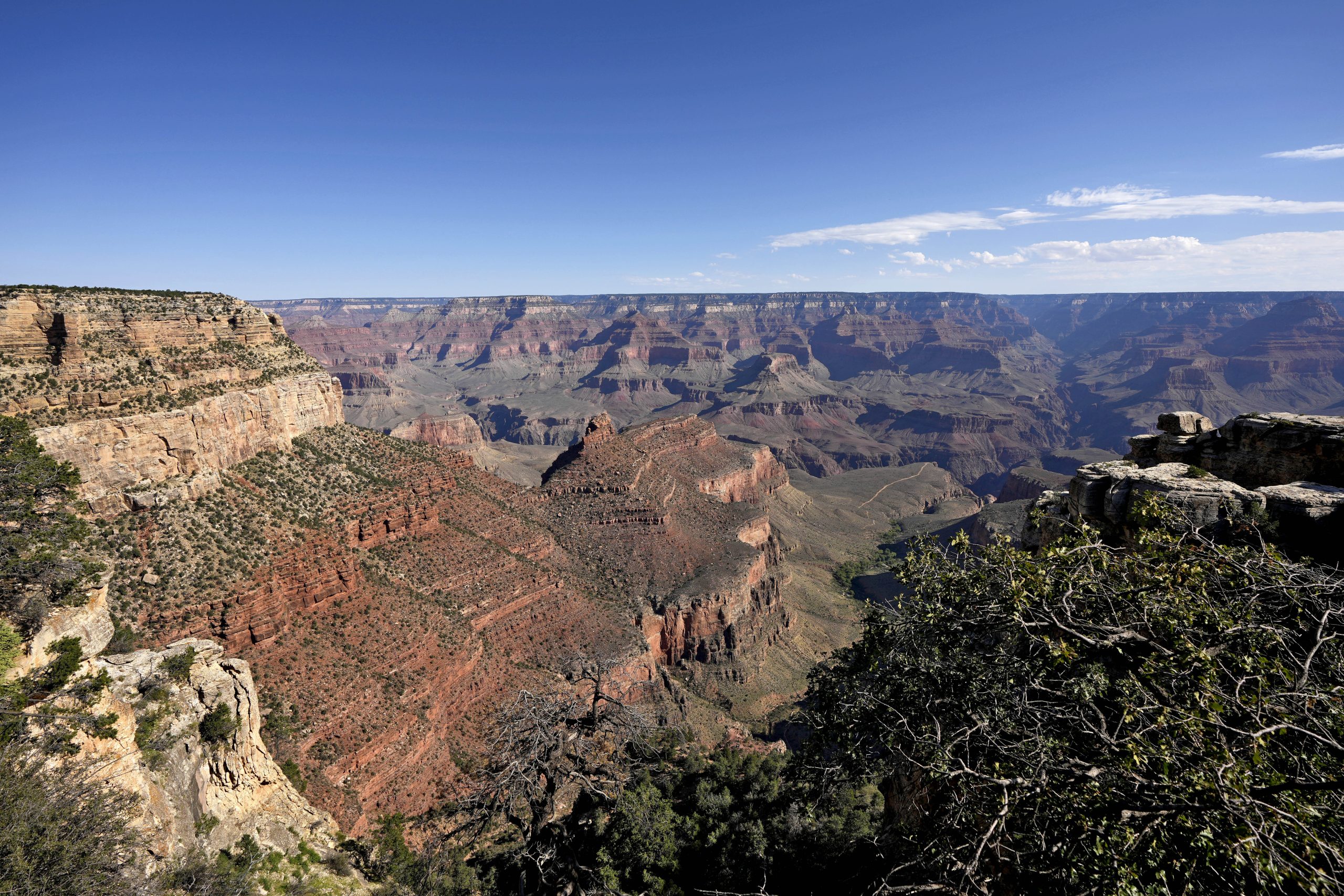
PHOENIX – The moon and the stars are the only natural light in the early morning as ambitious hikers and runners take to the Grand Canyon to attempt a rim-to-rim journey – or the more difficult rim-to-rim-to-rim voyage.
Cold temperatures, wind and sometimes snow meet the runners on the north and the south rims before they begin their descent. As they find their way down the canyon, they’ll shed layers, working up a sweat from the physical exertion and the rising temperatures as they get closer to the canyon floor.
For ultra runners, going rim-to-rim-to-rim at the Grand Canyon, or R3 as it’s known in the community, is widely viewed as a milestone, even if it doesn’t cover the distance they often cover in other races.
“There’s almost like a rite of passage of things that I feel like ultra runners feel like they need to accomplish,” said Zach Mayfield, a race director with Aravaipa Running. “Rim to rim to rim is one of them.”
Ultra running is described as completing a distance longer than 26.2 miles, the length of a marathon. An R3 trek is between 42 and 50 miles, depending on the trails taken. The elevation gain is steep, with roughly 9,000 feet of climbing involved and hours spent on their feet.
Many ultra runners compete in 50-mile and 100-mile races in addition to 50-kilometer and 100-kilometer races. But the Grand Canyon’s out-and-back run has a special grip on ultra runners.
Mayfield first ran R3 in November 2024 with a fellow Aravaipa Running coworker, Emily Harris. Harris and a friend had been planning the trip when Mayfield decided to tag along at the last minute.
Though he and Harris ran extensively and trained consistently, they said they both felt unprepared for the excursion once in the canyon.
“Zach and I went into it being like, ‘We run a lot, we’ll be fine.’ We did not train like we should have,” Harris said. “It’s essentially the opposite of what you normally do. You normally go up a mountain, and then it’s more chill coming down, and this is the opposite – once you’re three-fourths of the way done, you’ve got 6,000 feet of climbing to do.”
Harris and her group left from the South Rim around 4 a.m. and arrived back close to 6 p.m., she said. They started in the dark and finished in the dark, battling snow in the early morning hours.
On top of the harsh weather, Harris said she got runner’s knee while returning down the North Rim. The downhills were meant to be the quicker part of the trek, but for Harris, it was where her knee hurt most and slowed her down.
The physical strain also created mental distress for Harris.
“I was not speaking to anybody because I was just not OK,” she said. “And I’m not going to lie, I did have thoughts like, I’m definitely not paying for a helicopter if I need that. I’ll sleep in the bushes at Phantom Ranch if I have to.”
It was no walk in the park for Mayfield either. On the final ascent up the South Kaibab Trail to the South Rim, Mayfield stopped fueling, he said. The trail out of the canyon is steep and known for false peaks. Several times, Mayfield was sure he was almost out, only to see 100 more feet of elevation ahead of him. He stopped fueling, thinking he was done.
But despite their trials and tribulations, Harris and Mayfield said they were “having a grand ole time.” Their group went rim to rim to rim of the Grand Canyon in roughly 14 hours. For Harris, if offered clarity. She had no desire to do the trip all at once again, but rather backpack and take it in at a more leisurely pace. Nonetheless, she missed it immediately after it was over.
“I feel like just all of us crazy ultra runners,” Harris said. “You always have the feeling that you want to be done, but then once you are done, you’re sad.”
Lucas Tyler, owner of The Running Shop in Tucson, shared Harris’ sentiment, which is why he’s chosen to spread his R3 out. Rather than doing it in one day, he splits it into two, starting at the North Rim and staying the night at the South Rim before journeying back the following morning.
Tyler grew up running and has completed several marathons and ultra races himself, but the Grand Canyon R3 was something he didn’t feel the need to crank out under the duress of time. He’s completed the trek several times with a group of friends by his side.
“We run this very casually, the Grand Canyon trip,” Tyler saiud. “It’s to take in the sights and see everything and experience the beauty of the canyon. I think that’s also part of the reason not to do it all in one shot, so that you’re not running a whole bunch in the dark.”
While Tyler and his crew take their time in the canyon and soak up all the sights, they still leave for their run around 4:30 a.m. Starting at the North Rim, they journey across the canyon and stay at a hotel on the South Rim before waking up to do it all again the next day.
Manny Ochoa, an ultra runner in Tucson, has never made the full R3 trip, but he has opted for the more leisurely approach of rim to rim. The trek is still incredibly demanding, totaling roughly 24 miles and 4,5000 ft. of elevation gain.
Ochoa also grew up running but fell out of touch with the sport after graduating from high school. Then in 2014, he picked up “Born to Run” by Christopher McDougall and rekindled his interest. That same year, he made his first rim-to-rim journey alongside high school friends.
“I was pretty naive back then,” Ochoa said.
He had only been running ultras since earlier that year, but he couldn’t resist the pull the Grand Canyon created.
“We all grew up in Arizona, you know, and the Grand Canyon, obviously being a National Park, and I would say, one of the wonders of the world, you get drawn to it,” he said.
Ochoa’s rim-to-rim trek was successful but slow. His second time around, in 2024, he decided to take the lead and invite even more high school buddies. For his group, there was no exit plan other than making it to the other side.
The charming beauty of the Grand Canyon is part of what makes the trip so unforgettable. For Ochoa, the trek was almost indescribable.
“It’s hard to explain it. Even looking back on the pictures, the pictures don’t do it justice,” he said. “Just kind of just being in the canyon and just seeing these walls of rock all around you, and you can’t see where you’re running to because it winds and turns.”
The best and most daunting part for Ochoa is when you approach the river in the canyon, running alongside a slab or rock that suddenly opens up with a view of the South Rim.
“That’s kind of daunting because you know you have to get up there to be done,” he said. “I always enjoyed that part, when we get to the river, and you’re halfway done, you can kind of celebrate a little bit.”
Rim to rim is physically demanding, but it’s also logistically simpler, Ochoa said. R3 runners end where they begin, for the most part, but a rim-to-rim trek requires a pick-up crew – someone willing to drive nearly seven hours from the North Rim to the South Rim.
As ultra runners check off a run on their bucket list, drawing a line through rim-to-rim-to-rim, others take on the rim-to-rim journey for entirely different reasons – suffering, awareness and charity.
Run2Revive, a not-for-profit organization that raises money for ALS and Alzheimer’s, hosts an annual rim-to-rim trip in the Grand Canyon. The idea behind the trip: pushing the body to extremes mentally and physically for those who aren’t afforded the luxury.
In late September, those who have signed up for the trek through Run2Revive depart from Las Vegas. They’ll spend the night at the North Rim before beginning the next morning, ending on the South Rim, met with cheers. Runners, hikers and people facing personal experiences with ALS and Alzheimer’s all go on their own unique journey that day.
“We attract people who come from the running community, who come from the endurance, sort of junky side of the endurance challenge world,” said Tom Daniel, the cofounder and vice president of Run2Revive. “This is a pretty monumental trail run as well. We’ve got a large community of those that are currently caring for or have sadly lost people through Alzheimer’s and ALS. So it is a journey that everyone will take individually due to the sheer volume and scale of the Grand Canyon.”
The feeling of accomplishment at the end of the day is one of the best feelings for Daniel and the others who completed the rigorous adventure.
“There’s nothing better than looking out over the Grand Canyon, on that South Rim, and seeing the lights twinkling on the North Rim at night, knowing that you’ve just crossed that yourself unsupported,” he said.
Run2Revive has attracted international attention, with people from Canada joining the cause, Daniel said. But the Grand Canyon as a whole garners worldwide interest. Ochoa said he met several Australians who were there for the same reason on his rim-to-rim journey.
“I think the fact that it’s beautiful, that it’s accessible, that it’s a national park, I think all that kind of contributes to people just wanting to go out there and do it, and then also the fact that people have done it and it’s achievable,” Ochoa said.
Ochoa compared the feat of R3 to summiting Mount Everest. Once you know it’s possible, you’re more likely to do it and want to achieve it.
The worldwide recognition is part of the draw for ultrarunner Noah Dougherty, the event director at Aravaipa Running, said. It’s a sentiment that is shared by Harris, Mayfield, Ochoa and Tyler.
“It’s not too uncommon for people to do it, but it is a big deal, like in the greater landscape of the population,” Tyler said.
And while not entirely uncommon, it’s still an achievement, one that usually earns more than a couple of Strava kudos and leaves lifelong satisfaction.
“People see it as a badge of honor when they’ve done it and it is a pretty impressive accomplishment,” Dougherty said. “I think part of it is because you can say to somebody in the Midwest, the southeast or the northeast, like, ‘Hey, I did rim to rim to rim in the Grand Canyon,’ and they’re like, ‘Okay, I know what the Grand Canyon is.’”
Related

Source link