Bill Rasmussen transformed sports viewership
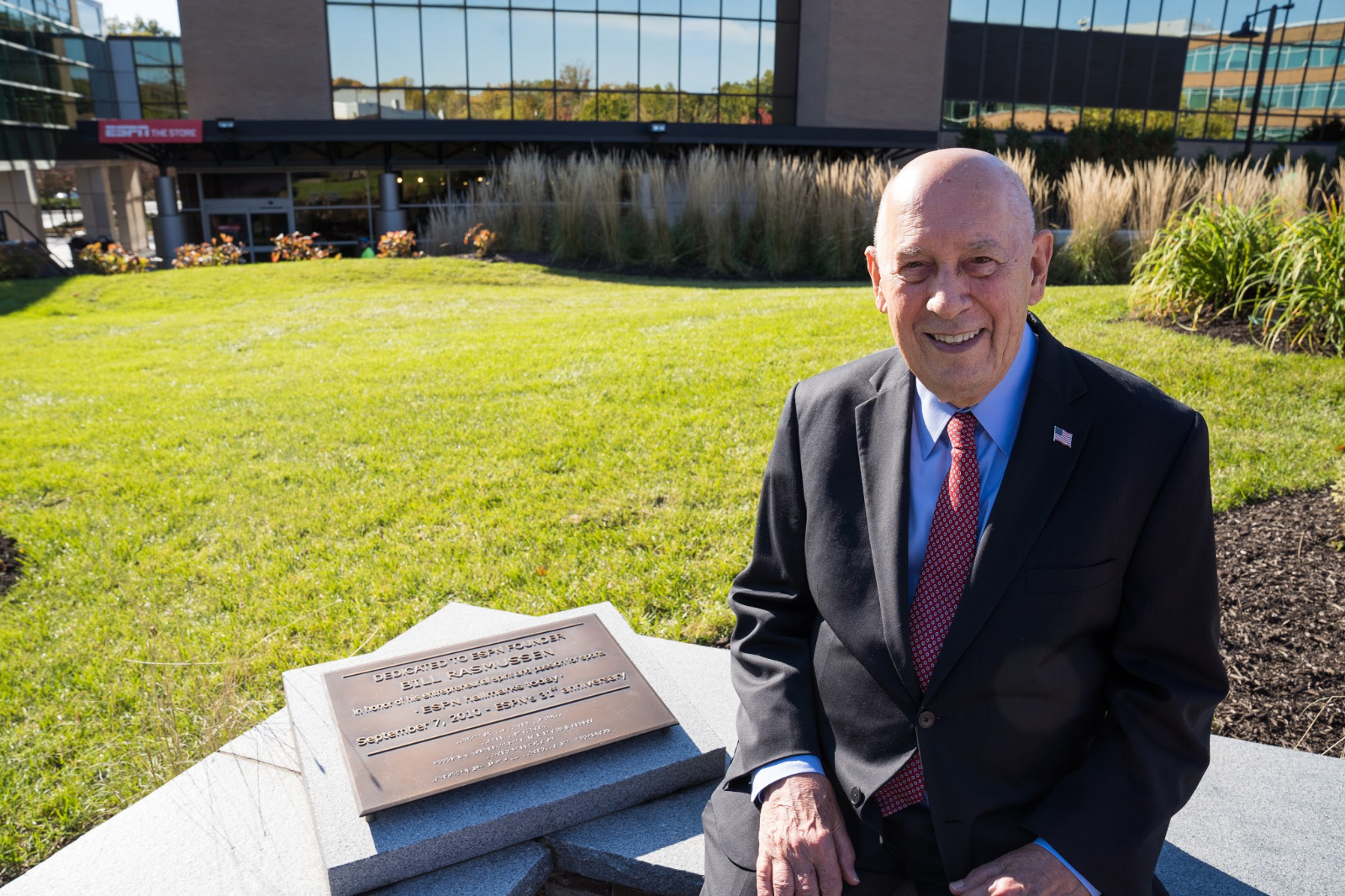
BRISTOL, Conn. – In Arizona, sports are woven into the weather, the weekends and the way people gather. Suns playoff fever, Cardinals tailgates, Diamondbacks memories, ASU and Arizona rivalries. Nonstop sports coverage feels as natural as desert heat.
That reality did not always exist.
Before highlight loops and breaking news alerts, fans waited. They waited for the morning paper. They waited for the local news. They waited for a network to decide their team mattered enough to show.
ESPN founder Bill Rasmussen did more than launch a cable network. He helped create the modern sports culture Arizonans now live inside. His gamble put local teams on national screens, turned regional moments into shared experiences and changed how fans across the Valley consume competition. With a new documentary revisiting his legacy set to air April 6 on ESPN, the story of Rasmussen, now 94 and living with Parkinson’s disease, feels bigger than media history. It feels like a blueprint for what optimism can build.
A firing that became an opening
The story began with a setback. On Memorial Day weekend in 1978, Rasmussen, 45, was fired from his public relations job with the Hartford Whalers. Many people would have treated that moment as an ending. Rasmussen treated it as an interruption. Over coffee in Connecticut, he began asking the kind of question that sounds ridiculous until it changes everything: What if there were a 24-hour television network devoted entirely to sports?
“I thought, why not a channel that’s on all the time?” Rasmussen later recalled. “Sports don’t stop at six o’clock.”
At the time, the idea bordered on absurd. Cable television remained young, reaching only about 14 million homes. Networks offered sports in carefully rationed doses. A weekend game here. A taped final there. If fans missed it, they missed it. Rasmussen, however, saw promise where others saw limits. Satellite technology fascinated him. In the book “ESPN The Company: The Story and Lessons Behind the Most Fanatical Brand in Sports,” authors Anthony F. Smith and Keith Holloman write, “Rasmussen learned first that satellite signals could be broadcast all over the country. … The vision of a dedicated national sports network was suddenly obvious and tantalizingly possible.”
With help from his son Scott, he founded the Entertainment and Sports Programming Network. Bristol, Connecticut became the unlikely launch site. The setting was hardly glamorous. Construction dust lingered. Wires snaked through unfinished spaces. Airtime had to be filled with whatever could be found and sold. Bowling, tractor pulls, slow-pitch softball. Nothing about it looked inevitable.
Still, Rasmussen kept moving.
On Sept. 7, 1979, ESPN went on the air. The first “SportsCenter” arrived rough around the edges, but the concept landed with force. Sports would no longer appear only when major networks allowed it. They would have a home.
Chaos, doubt and the people who believed anyway
The early years carried equal parts hope, insecurity and uncertainty. Money was tight. Confidence had to be manufactured daily. Yet something about Rasmussen’s spirit persuaded people to come along.
Mike Soltys, who joined ESPN as a 20-year-old intern and later became one of its most respected communications leaders, still remembers that atmosphere.
“I was 20 years old, just trying to get experience,” Soltys said. “Bill welcomed me in. That’s who he was. Open, positive and curious.”
Even payday came with suspense.
“People ran to the bank every Friday,” Soltys said, a reminder that belief often arrived before stability. Yet the idea kept gathering momentum. “The growth was remarkable,” he said. “Taking a satellite and making it huge, with Getty’s support, it was a huge part of it.”
Some stories from those first years now sound almost too perfect in hindsight. When Rasmussen bought ESPN’s first satellite dish, the seller reportedly joked, “Be sure and get Bill’s check first.” His Avon condominium association would not allow a dish on the property, a detail Rasmussen remembered with amused disbelief.
“They would not allow a dish to be placed there,” he said. “They regret that.”
It was also the home where he and his wife raised four children. The dream and the daily life existed side by side.
Broadcaster George Grande, one of ESPN’s original on-air personalities, captured the uncertainty of the launch years with memorable honesty. “In those days, we didn’t know if we’d last four weeks, four years, let alone 40-some, but we knew it was special.”
Looking back on Rasmussen’s journey, Grande called it “pretty special” to consider everything he had endured to get there.
Why Arizona felt the impact
For Arizona sports fans, ESPN was never just a network on the television. It became an amplifier.
Highlights from the Suns’ 1993 Finals and the Diamondbacks’ 2001 World Series title did not belong only to Arizona after ESPN beamed them into homes across the country on “SportsCenter.” ASU and Arizona matchups gained more drama when the audience expanded. Coverage created visibility, and visibility created significance.
“Some ideas are big enough to change the world,” Valley media personality Dan Bickley said of ESPN’s founder. “Bill Rasmussen is a pioneer and an innovator who changed sports forever.”
Bickley sees ESPN’s influence as foundational to the way fans now think about sports. It “shaped modern sports culture by introducing continuous coverage 24/7, increasing game accessibility, turning TV anchors into sporting icons and influencing athlete behavior,” he said.
That transformation altered more than viewing habits. It changed the economics of sports. It increased sponsorship opportunities. It lifted franchise values. It gave college programs wider reach. It helped women’s sports gain traction. It made room for events that once lived on the margins.
“To understand the impact of ESPN, consider it was not that long ago we had to wait until Monday Night Football to see any NFL highlights from markets we didn’t live in,” said sports executive Steve Patterson, whose past roles include Arizona Coyotes CEO and ASU athletic director. “You got, at best, one NHL or NBA or MLB weekend game per week. The NBA Finals were on tape delay on CBS. Olympic and extreme sports were limited to ABC’s Wide World of Sports on rare occasions. With ESPN, all these sports became nearly ubiquitous.
“Exposure, viewership, sponsorship and sports property valuations all went through the roof. All largely due to ESPN.”
Cam Pepper, sports sponsorship expert, pointed to another consequence of that growth. “I remember when not every league had games on TV,” he said. “ESPN changed that. Now even niche sports, leagues and teams get broadcast coverage.”
Arizona felt that expansion clearly. Suddenly, a Tuesday night college basketball game in Tempe could carry national weight. Cardinals analysis no longer waited until Sunday. Mercury runs mattered beyond the local market. Spring training, a ritual long beloved in the desert, gained more national life. In a state full of transplants, snowbirds and fiercely loyal alumni, ESPN helped turn scattered fandom into a larger shared conversation.
Intentional optimism, not accidental luck
Rasmussen has a phrase for the mindset that carried him through those years: intentional optimism.
That description matters because it rejects the idea that optimism is passive. Rasmussen did not sit around hoping things might work out. He chose belief as a discipline. He used it as fuel.
“Some spend 10 to 20 years on failures, but think of the satisfaction,” he said. “It’s the largest network now, but the risk? Most won’t take it.”
The people who worked with him saw that mentality everywhere. Soltys described Rasmussen as someone perpetually ahead of the curve.
“He was 20 years ahead,” Soltys said, recalling later ventures in technology and smart home innovation. Even before the internet made information instantly available, Rasmussen prepared obsessively. “For speeches, he’d call: ‘What’s the latest at ESPN?’” Soltys said. “Always curious, always prepared.”
Former ESPN president George Bodenheimer has compared those early years to “The Little Engine That Could,” and the metaphor fits. The network was small, underfunded and easy to dismiss. Yet Rasmussen kept willing it forward, powered by conviction stronger than his circumstances.
That is part of why his story still resonates so deeply in Arizona, a place crowded with builders, reinvention stories and second acts. The Valley knows something about trying to turn heat into momentum. Rasmussen did the same with rejection.
The numbers tell one story, the culture another
By any measurable standard, ESPN reshaped sports media. The network grew from about one million subscribers in 1980 to tens of millions of households in the decades that followed. Its influence rippled through advertising, league schedules, athlete branding and the very structure of sports programming.
But statistics alone do not explain what changed.
ESPN made sports feel constant. It made fans feel connected. It taught audiences to expect access, urgency and analysis around the clock. It transformed anchors into personalities and highlights into cultural currency. It blurred the line between game time and story time.
In Arizona, that meant local fans no longer needed to hope the rest of the country noticed them. The country was already watching.
It also opened doors for the future. Streaming platforms such as ESPN+ now allow fans in Phoenix, Scottsdale or Tucson to follow teams from anywhere, whether they are sitting in traffic, waiting at an airport or sneaking a score check at dinner. The technology has changed. The instinct behind it has not. Rasmussen wanted sports available all the time, and that expectation now feels normal.
It has clearly shifted its mindset, transitioning from a cable-dependent model to a digital-first, direct-to-consumer strategy. The growth hasn’t been without issues, from mass layoffs to harassment allegations against talent. But in the world of sports media, Rasmussen’s journey is one of the industry’s great comeback stories.
How he wants to be remembered
Rasmussen has received major honors, including the 2011 Sports Broadcasting Pioneer Award, but the people who know him best talk less about trophies and more about temperament.
“Always a smile, always asks how you’re doing,” Soltys said. “That’s his legacy.”
For Rasmussen, legacy has never been only about business success. He has said he wants to be remembered “as someone who believed in people and possibility.” That may sound simple, but it helps explain why his influence stretches beyond boardrooms and broadcast booths. He created a company, yes. He also created an atmosphere. Journalist Jim Miller, co author of “Those Guys Have All the Fun,” called ESPN “the most successful media story ever.”
Behind that success sat a surprisingly durable playbook.
Stay curious. Chase ideas.
Stay positive. Start with good thoughts.
Stay persistent. Build new doors.
It reads less like a corporate strategy than a survival guide for anyone trying to make something that does not yet exist.
A story still worth telling
Rasmussen is once again at the center of a telling of the ESPN origin story. An ESPN backed documentary, “The Intentional Optimist,” revisits the life and outlook of the man who imagined a network few believed could survive.
“He really wanted it done before passing,” Soltys said. “ESPN did it. The research, the interviews, remarkable.”
That word fits.
Because more than 45 years after ESPN launched, Rasmussen’s biggest achievement may not be the empire itself. It may be the example. He lost a job and answered with a vision. He entered a shaky market and created a giant. He encountered skepticism and kept building. In a culture quick to celebrate certainty, Rasmussen bet on possibility.
In the Valley, where sports bind strangers and create instant community, his legacy still plays on every screen. Every Suns highlight. Every Cardinals replay. Every ASU game that matters to someone far from Arizona. Every moment that arrives live, immediate and shared.
Bill Rasmussen saw that future before almost anyone else.
Turns out, he was right.
Related

Source link