The three myths about the real estate market that are holding your customers back
In a market full of uncertainty, hesitation becomes the norm. Buyers pause. Sellers have doubts. And real estate agents, if they are not careful, can fall into the same trap, waiting for clarity instead of creating it by actively combating the myths in the real estate market.
But here’s the reality: when there is clarity, there is trust. And when there is trust, contracts follow.
I recently spoke with housing expert David Childers, president of Keeping Current Matters, to break down what’s actually happening in today’s market and, more importantly, how agents can communicate this in a way that helps clients move forward.
Because the agents winning now are not the ones with perfect predictions. They are the ones willing to provide informed perspectives.
As Childers put it: “Nobody has a crystal ball… but the professional who says, ‘This is what I see in the market right now,’ wins.”
The basis for clarity is not what will happen, but what will not happen. With that in mind, Childers shared the three things that won’t happen.
With this insight, agents can build data-driven professional advice to provide their clients with the best possible information so they can make the best possible decision for them and their families.
1. Stocks are not about to flood the market
One of the most common fears buyers have right now is this: “What if I buy and the stock explodes and prices drop?”
It sounds logical. But it’s not supported by the data. Childers put it plainly: “We are not operating in a market where this flood of inventory is coming.” Yes, the stock is up slightly. But the context is important.
Even with the recent increases, we are still below pre-pandemic levels in most markets.
And there are two main reasons for this:
As Childers shared, “The average homeowner has gained about $128,000 in equity over the past six years.” That is not the profile of a market that is being forced to sell.
What this means for agents
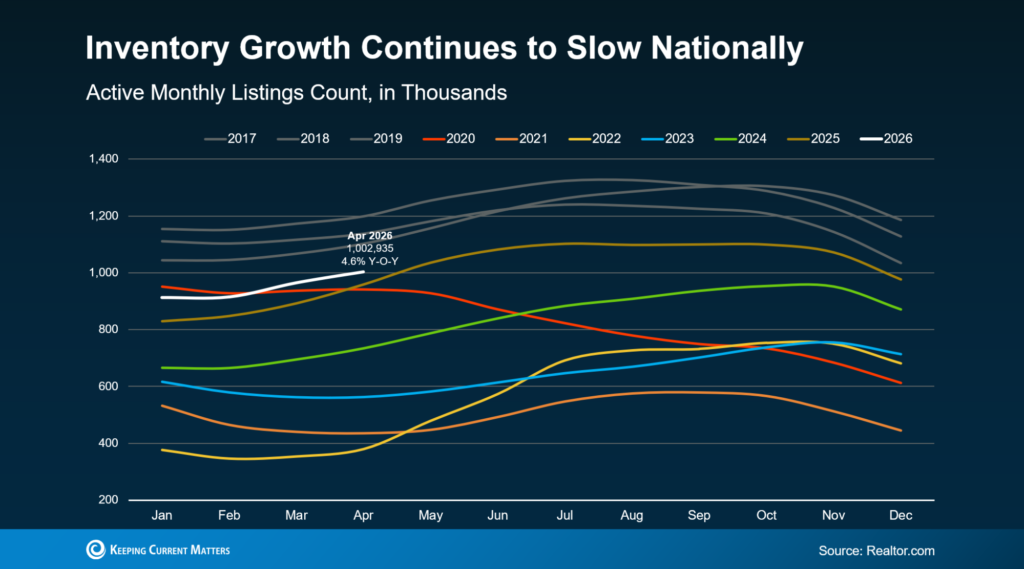
This is where your role becomes crucial. Consumers think in extremes: a boom or a crash. But most markets don’t behave like that. They normalize. Your job is to explain that clearly, consistently and confidently. These are a few slides that Childers has provided with visual data about what is actually happening.
Childers shared this chart showing that inventory has increased year-over-year, but we are still 12.5 percent below pre-pandemic levels.
This chart shows that in recent years we have returned to pre-pandemic inventory levels, but we are still below the levels of 2017, 2018 and 2019.
2. Mortgage interest will not return to 3%
The second big hesitation? “I’ll wait until rates drop.” But here’s the problem: waiting is often based on a number that doesn’t come back. Childers addressed this directly: “I don’t see a scenario where we go back to threes or fours.”
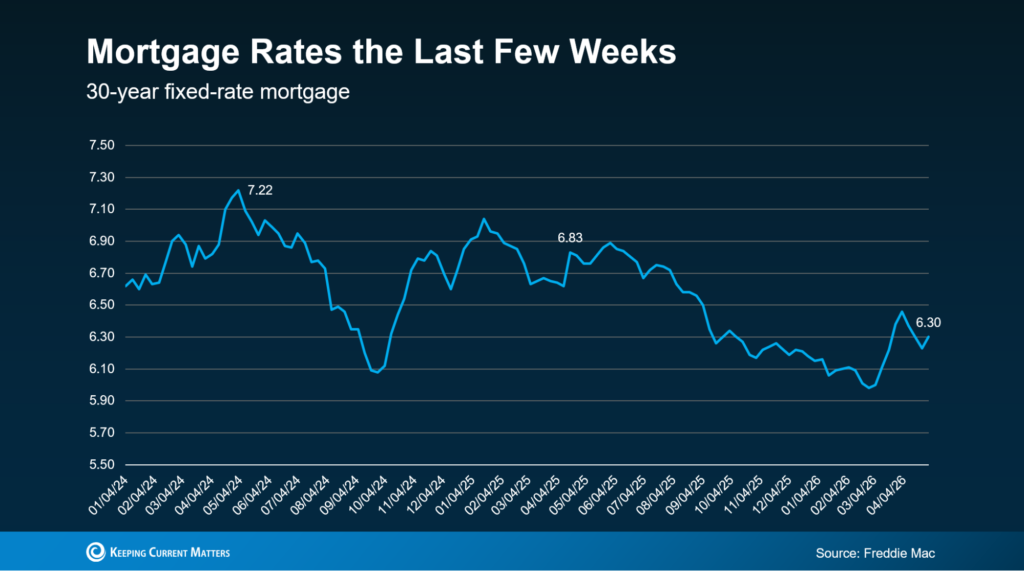
Childers said: “Mortgage rates are at their lowest levels in the last three years in the spring and summer market.” This is the conversation officers need to have. This chart shows where mortgage rates have been since January 4, 2024.
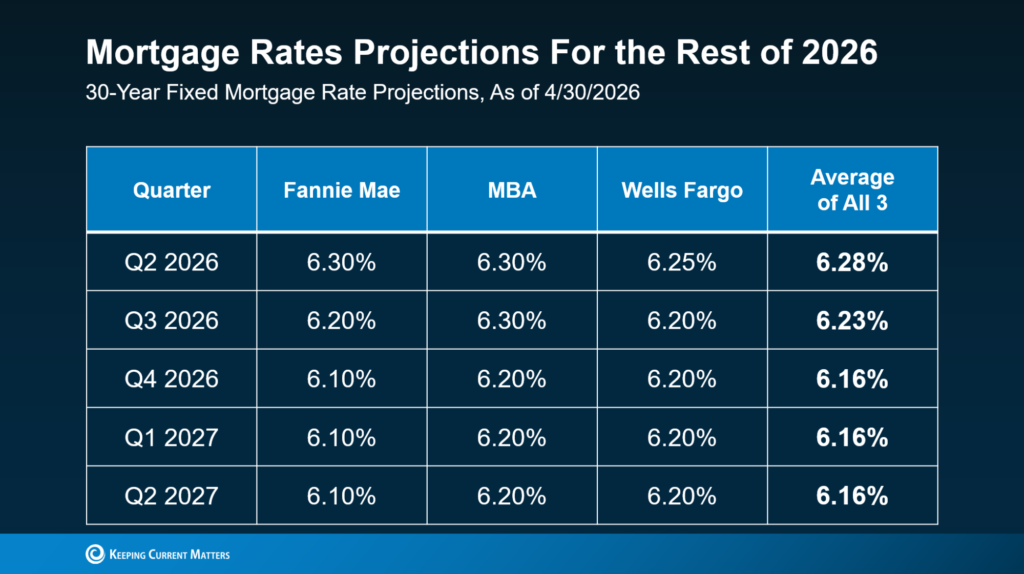
Forecasts consistently point to a range in the low 6s. That’s where stability arises. And when you break down the numbers, the difference isn’t as dramatic as many consumers think. This chart shows interest rate forecasts for the coming year from Fannie Mae, MBA, and Wells Fargo.
What this means for agents
Instead of debating or rates will drop, shift the conversation to the following:
- Costs of waiting
- Loss of opportunity
- Long-term stock growth
Because the real risk is not buying at the current price. It sits on the sidelines, waiting for yesterday’s market.
3. House prices are not collapsing
This is the third and most emotionally charged concern: “Prices have gone up… so they have to come down.”
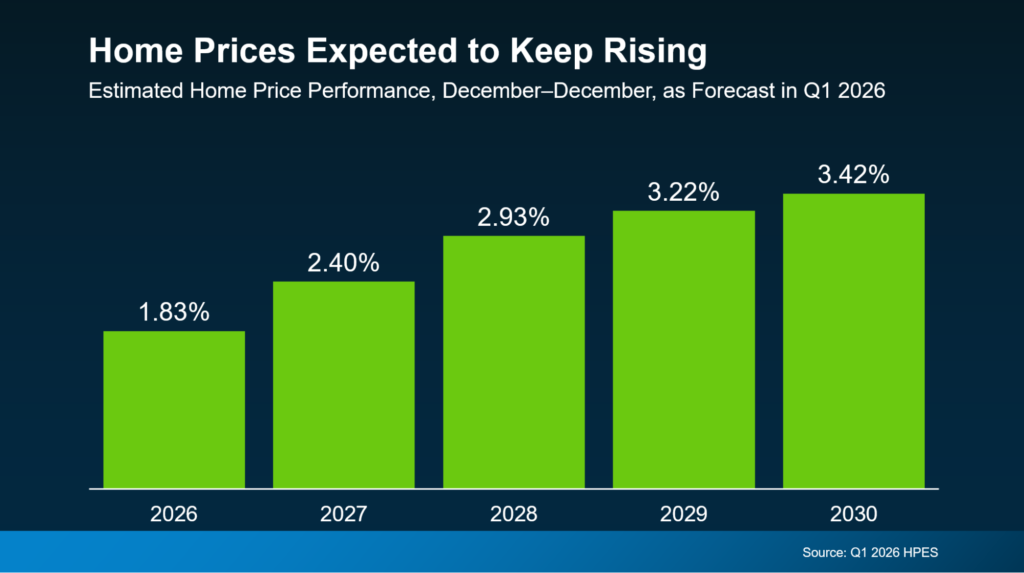
But again, that assumption ignores the full picture. Childers pointed to long-term projections that show continued, moderate appreciation, not decline. Even in markets where prices have fallen slightly, context matters.
He shared this example: “The main price drop market is currently down about 5 percent, but is up about 75 percent over the past five years.”
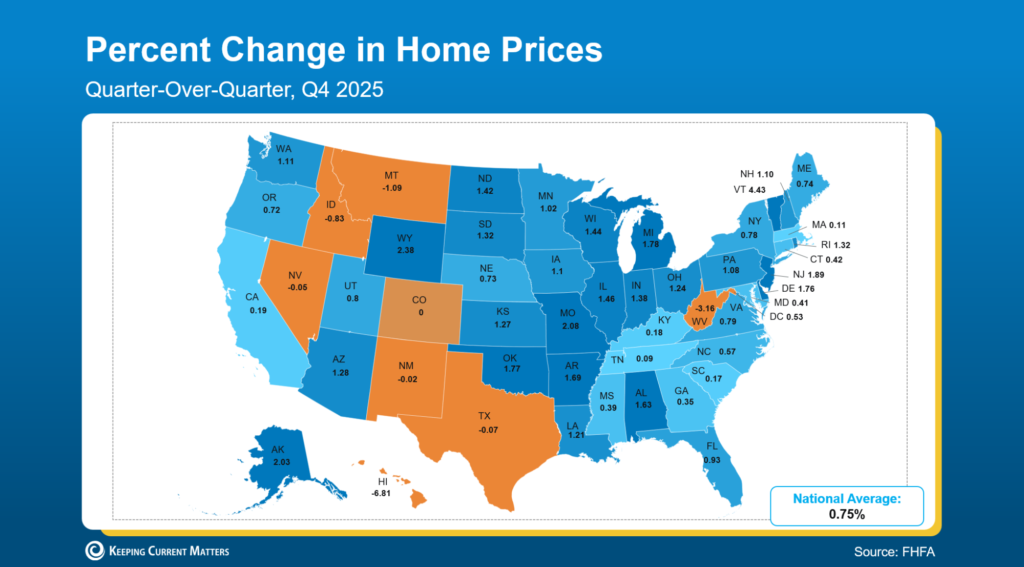
That’s not a crash. That is normalization. This chart shows the quarter-over-quarter percentage change in home prices for the fourth quarter of 2025 according to FHFA.
This graph shows the expected home price development over the next five years according to the Fannie Mae Home Price Expectations Survey (HPES).
What this means for agents
You don’t have to convince customers that the market is perfect.
You just have to show them the following:
- What actually happens
- What is likely to happen
- And what it means for their situation
Because as I often say: it’s not about timing the market. It’s about time in the market.
The real differentiator: your ability to communicate
This is where most agents get stuck. They have the information, but are hesitant to share it. Why? Because they don’t want to be wrong.
Childers offered a powerful analogy: “A doctor doesn’t give perfect recommendations; they gather the best information possible and make a recommendation based on the best available information. Then they come back and collect additional information in the future. They adjust their recommendations at that time based on the new database and any changes that have occurred.”
That’s exactly what customers need from you. No certainty. Guidance based on the best available information.
The question that changes every conversation
One of the most valuable lessons from our conversation was simple but powerful. If a customer requests it, “How is the market?” instead of diving into your answer, ask this:
“Tell me what you heard.”
Then listen.
That one question does two things:
- It reveals their assumptions
- It gives you the opportunity to correct them clearly
From there the transition becomes natural:
“Would you mind if I shared what I’m currently seeing on the market?”
This is how you lead.
The agents winning this market
This is not a market where waiting wins. It is a market where leadership wins.
It is a market where:
- Information is important
- Perspective is important
- Communication is the most important
Because in a world full of noise, the agent who provides clarity becomes the trusted advisor. And the trusted advisor gets the call.