The “Father of the Internet” is finally retiring
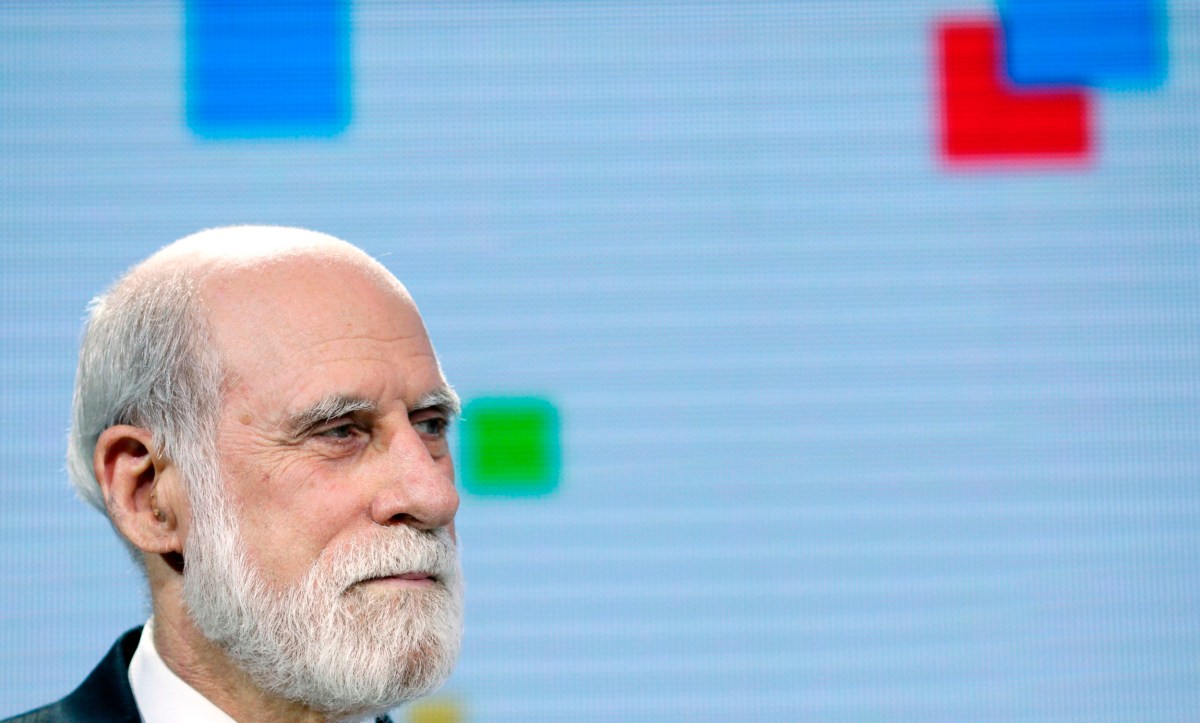
Vinton Cerf will step down from his role as Google’s chief Internet evangelist next week, marking the conclusion of one of the most influential careers in technology history.
During a conversation via video feed on the Open Frontier Conference Hosted by the Laude Institute, Cerf was recognized by Dave Patterson, the UC Berkeley professor best known for co-developing the RISC processor architecture.
“Vint… has been at Google for over twenty years and he’s retiring in a week, and so I think we should give him a round of applause for a relatively good career,” said Patterson, to cheers from the audience.
Google did not respond to a request for comment at the time of publication.
Cerf, 83, and employee Robert Kahn are seen as the architects of the network protocols that became the Internet as we know it today. His work to develop and popularize TCP/IP – the basic set of rules that allow different computer networks to communicate with each other – starting in the 1970s has been recognized with numerous honorary doctorates, the Presidential Medal of Freedom and a Turing Prizeamong other awards.
Since 2005, Cerf has been vice president and chief internet evangelist at Google. (At this point, it’s safe to say that the Internet has been completely evangelized, for better or for worse.)
Cerf spoke on a panel along with other computer scientists known for their work on sustainable open source projects, including Patterson; François Chollet, creator of the Keras deep-learning library and co-founder of Ndea; John Ousterhout, the Stanford computer scientist behind the Tcl programming language, who also co-founded Electric Cloud; and Matei Zaharia, co-founder and chief technologist of Databricks. They offered advice on what it takes to build open source systems that survive – advice that is becoming increasingly relevant as founders bet on open infrastructure for the next wave of AI products.
Much of the discussion at the conference focused on the problems with the centralization of advanced models in a handful of well-equipped laboratories, as opposed to the decentralized world of the open Internet that made Cerf’s own protocols so durable. However, Cerf predicted that the rise of AI agents – software that can act autonomously and coordinate with other software – would push tech companies back to standardized protocols.
“The agentic model of AI, where multiple agents from multiple sources interact with each other, will enforce composability and a requirement for interoperability and standardization,” Cerf said.
If he’s right, the companies that define these interoperability standards early on could gain outsized influence over how the agentic economy actually works—a dynamic similar to the early Internet protocol wars.
While other panelists speculated that natural language communication between LLM agents would be sufficient, Cerf predicted that formal standards would be required.
“I don’t think English will be the best choice. There’s flexibility in it, but there’s ambiguity, and I think precision for interaction between agents will be very, very important. An agent really needs to be sure that the other agent understands what they just agreed to together,” Cerf said.
“Remember the old game of telephone where you wish you had whispered in someone’s ear and by the time ten people were gone, the message was completely different? Imagine a bunch of cops talking to each other in natural language, you know, that’s kind of terrifying.”
In a lighter moment, Patterson recalled meeting Cerf, known for his wardrobe of three-piece suits, as a graduate student in the 1970s.
“He has always been the best dressed computer scientist I have ever met,” Patterson said. “My memory of Vint is that he came as a student in the 1970s with a shirt and tie.”
“It’s absolutely true,” Cerf said. “I even had a cardigan, and for some reason I always wanted to stand out, and instead of having long hair and something in my nose, I thought just dressing differently was a way to do that.”
When you make a purchase through links in our articles, we may earn a small commission. This does not affect our editorial independence.