The death toll from Venezuela’s earthquake passes 1,700 as the UN continues to ramp up its response
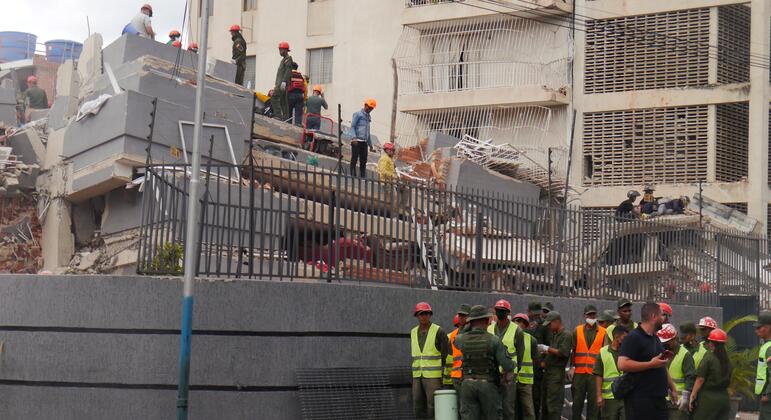
Venezuelan authorities confirmed this on Monday at least 1,719 people have died after the June 24 earthquakes, which injured another 5,000. About 12,000 people have been displacedand officials have yet to confirm a figure for the missing.
Survivors are still coming forward
In a press conference for correspondents in New York, Gianluca Rampolla, UN resident and humanitarian coordinator in Venezuela, said seven people were pulled alive from the rubble on Sunday as search efforts continue.
He also reported that the UN and Venezuelan authorities had agreed to purchase 10,000 body bags in anticipation of a further rise in the death toll.
Seven states have been affected, but the largest concentration of victims is in the state of La Guaira and the capital Caracas. About 2,500 structures were damaged, many of which collapsed completely.
Conditions on the ground remain dangerous. About 500 aftershocks have been recorded since the first earthquakes, including a 5.2 magnitude quake in the early hours of Monday morning, as a tropical wave threatens to bring heavy rain to the affected areas.
“We continue to operate in a high-risk environment,” Mr Rampolla said.
More than 2,000 rescuers on site
More than 2,000 rescuers from 27 countries – along with more than 160 search dogs – are currently divided into more than 40 teams.
Although search and rescue operations typically focus on the first 72 hours, teams expanded their work after continuing to receive signs of life beneath the rubble and locating survivors outside that window.
“Along with the search and rescue operations we focus, together with the government, on providing emergency healthcare, shelter, food assistance, water and sanitation and logistics support to ensure not only the storage, but also the distribution of all goods arriving in the country, as well as the protection,” Mr Rampolla said, adding that the UN is working on a new emergency appeal to complement the existing humanitarian plan.
‘There are people who need a hug’
The UN is preparing three relief centers in La Guaira for families who have lost their homes, providing medical care, food, water, sanitation, protection and psychosocial support.
Vanessa May, head of the UN Office for the Coordination of Humanitarian Affairs (OCHA) in Venezuela, told UN news that many people had lost all sense of stability. “Going from owning a home to moving to a shelter or temporary accommodation will not be easyshe said.
Mrs May stressed that emotional support would be as essential as food, water or medical care. “There are people who need a hug,” she said, describing families waiting for news of loved ones, and others who already know their relatives buried under the rubble.
‘This is going to take time’
Once search operations are completed, the UN and its partners will conduct rapid assessments to identify needs, including those of the elderly and persons with disabilities.
Debris removal and speedy recovery will follow special attention to damage to schools and hospitals.
Mrs May said the rebuilding phase requires cooperation with authorities to determine where displaced families can be resettled and soil testing must be carried out before any relocation takes place. “This is going to take time,” she said.
She attributed the speed of the initial UN response to the humanitarian architecture that has emerged in Venezuela since 2019, bringing together UN agencies, national and international NGOs, the Red Cross and other actors. Coordinating the wave of public donations – with many individuals and organizations spontaneously arriving in the affected areas – has been one of the key logistical challenges.
“Don’t let that solidarity stop,” Mrs May said, insisting that the focus on Venezuela would continue well beyond the first weeks of post-disaster recovery.