‘The deal with Iran’, unpacked by Lennart, Maarten Stuyck
More often than not, reality trumps fiction: this is the case again with “The Deal with Iran,” a three-part Belgian docuseries by Lennart and Maarten Stuyck, which sheds light on the little-known Belgian-led investigation that foiled a bomb plot against Iran’s People’s Mojahedin organization, and on the deadly game of hostage diplomacy that followed and led to the liberation of a Belgian humanitarian aid worker after fifteen months of arbitrary detention.
Produced by the Belgian documentary production company Diplodokus and with VRT Canvas as the main Belgian broadcaster, ‘The Deal with Iran’ will have its international premiere at Canneseries on April 28. This ‘exciting and remarkably realistic dive into the complexities of global geopolitics’, according to Canneseries’ artistic direction team, is one of many high-quality documentary series produced and commissioned by VRT, the Flemish public broadcaster.
“The story had been on our list of possible ideas for a while,” say director Lennart Stuyck and writer Maarten Stuyck about their gripping dive into the deadly game of hostage diplomacy.
“We were intrigued by the idea of an Iranian ‘sleeper cell’ operating in Belgium. But on its own we felt the story was too small to carry an entire series.” Only years later, when their Belgian compatriot Olivier Vandecasteele was arrested (or, according to the authors, kidnapped) in Tehran, did the Stuycks realize that this was a story they had to tell.
While Lennart has a background in fiction, Maarten studied journalism and history. By combining these different experiences with their shared family background and shared goals, they have been making documentary series together for almost 10 years. “We like to start our filmmaking process from a small fait divers: a seemingly small story that, if you dig deep enough, opens a door to something much bigger and shows how the world works on a level that people rarely think about. Like a matryoshka doll that keeps revealing new layers.”
For ‘The Deal with Iran’, the spark was the imprisonment of Olivier Vandecasteele, who made Belgian headlines for months. “It was still unfolding as we worked,” the duo recalls. “That was difficult to navigate at first, but it was also a gift that we could follow part of the story in real time.”
But documentaries are more than just news. And the duo always aimed for something beyond Vandecasteele’s case, even though they knew many people would be reluctant to watch a series about Iran. “So we approached it as a thriller, a spy story to draw viewers in, and only then lead them into the geopolitical layer that they might otherwise be less curious about.”
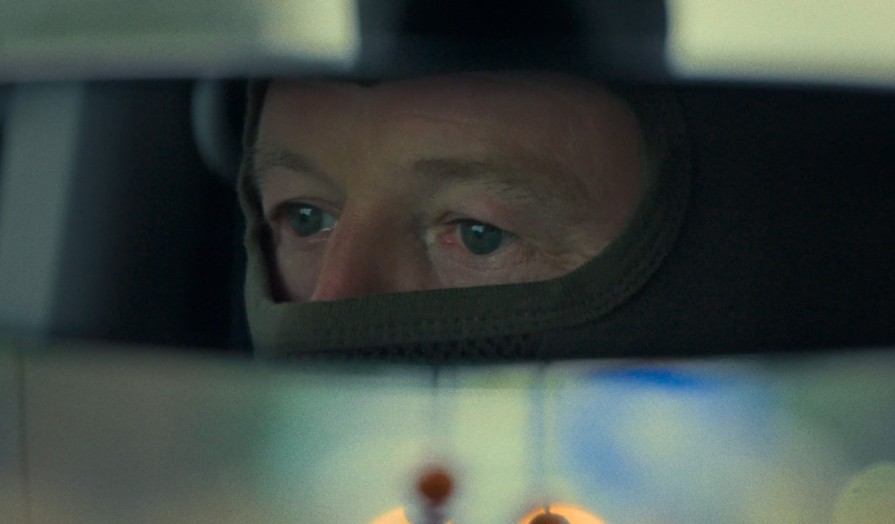
Lennart Stuyck, director of the series, explained how he came up with this retelling in terms of visual style: “Especially for the first episode, I was inspired by spy films from the 70s, which is why we used so many zoom lenses. We also tried to stay as close to ‘real’ footage as possible: a lot of shaky hand-held camera work and even cell phone shots when the moment suited it.”
Archived text and photographs also played a major role in shaping the visual look and feel of this ‘Deal with Iran’. A choice that felt both powerful and coherent for the duo who were able to view and photograph the original courtroom files and use original audio recordings, among other important archives. “It was incredible and it gives a sense of authenticity to the series, which was essential for us given the subject matter. We didn’t want people to be able to dismiss what we were making – so the more evidence we could put on screen, the better.”
Their approach to sound and music followed the same logic: the Stuyck brothers wanted the series to feel as seamless as possible. “So people wouldn’t be able to turn it off once they started watching. Our beautiful score was composed by Raf Keunen, with whom we have collaborated several times. I think he has created something that is eerie and moving, intense when it needs to be, but also emotional where the story calls for it.”
When asked if they ever worried about their own exposure, Lennart admits that he always had the feeling that the Iranian regime would not be particularly interested in a few Belgians making a series about this story. “Ignorance is bliss,” he said, “and we’ve had some wonderful reactions and reviews, both from a cinematic and journalistic point of view, so we couldn’t be happier. Of course, we’d love to see the series travel far and wide, and its selection at Canneseries is the icing on the cake at this point.”
Today, with Iran even more on the world stage, this story of hostage diplomacy and diplomatic terrorism remains as relevant as ever. And being able to tell it through a documentary was key for the duo, who didn’t envision this in any other medium. “Documentary is a way to tell exciting stories that highlight aspects of our reality that are sometimes difficult to capture in fiction,” concludes Lennart Stuyck. “It’s a cliché, but: this story is really better than fiction. And in a dramatized series it would be almost unbelievable.”
“The Deal with Iran” is a production of Diplodokus, supported by VRT Canvas as the main channel. Espressomedia handles international sales.