Review ‘Interview With the Vampire’ season 3: now ‘The Vampire Lestat’
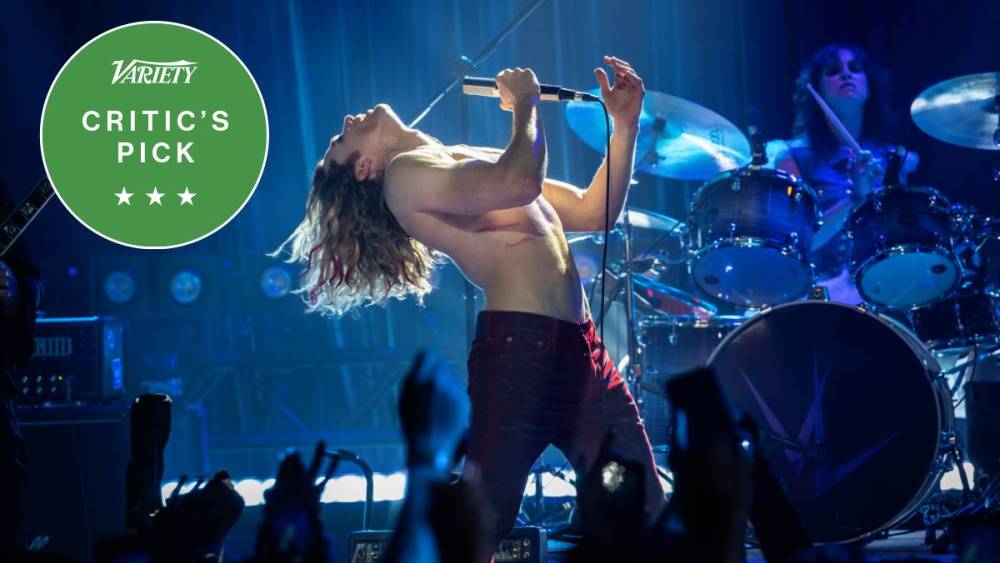
Throughout the third season of AMC’s “Interview With the Vampire,” characters speak with equal parts fear, anticipation and awe about something called the “Great Transformation.” The phrase has its own meaning within Anne Rice’s lush, grandiose world of leeches and spellcasters, as interpreted by creator and showrunner Rolin Jones. But it’s also a meta description of the show, which has undergone a makeover to accompany a change in perspective so that it fully carries over into the name. “Interview With the Vampire” is (un)dead. Long live ‘The Vampire Lestat’.
Revisions of established, popular shows come with risks. This past week, HBO’s “Euphoria” ended on a sour note, after taking a high school show and unsuccessfully reimagining it as a neo-Western. But turning “Interview With the Vampire” into a faux documentary centering on the title character (Sam Reid), who in his third century of existence has simply decided to become a rock star, isn’t as big a step for the series as it sounds. “Interview” has always indulged in excess and a sense of dramatic qualities, qualities channeled as much by the former French aristocrat’s new Iggy Pop persona as by last season’s vampiric theater troupe. Perhaps even better, as “The Vampire Lestat” reaches new heights of operatic emotion and gleeful depravity, music begins to feel like a way to express what mere words and images cannot.
The first two seasons of “Interview,” of course, were framed as a dialogue between journalist Daniel Molloy (Eric Bogosian, having the time of his life) and Louis de Pointe du Lac (Jacob Anderson), reimagined by Jones and his collaborators as a gay black man from World War I New Orleans who recounts his seduction by a certain seductive European. The second episode, which aired in 2024, featured Louis’ post-Lestat rebound Armand (Assad Zaman), and shifted more of the action to the present tense, where Louis and Armand’s relationship began to fracture and Armand made Daniel another immortal being of the night.
‘The Vampire Lestat’ still hops around in time, but even freer and less predictable than its predecessors. There are flashbacks to Lestat’s childhood in 18th century Europe, where we learn that he had a traumatic stutter and once killed eight wolves using only a musket and his bare hands. But between that origin story and Lestat’s North American tour with its reluctant human bond as captured by Daniel, who interviews Lestat in his capacity as the documentary’s producer, just as he once bombarded Louis and Armand with invasive questions, there are interruptions in the band’s formation a few years earlier, and in Lestat’s emergence from 80 years of exile after his break with Louis. In keeping with the series’ maximalism, there’s even a framing device superimposed on this framing device: an opening flash-forward shows the (posthumous, it’s implied) auction of Lestat’s estate, including a kind of audio memoir called “The Failures.” Oh, and there’s also incest.
Lestat’s mother Gabriella (Jennifer Ehle) is the kind of authorial creation that a more conservative adaptation might shy away from, in the same way that Denis Villeneuve’s “Dune” films seem unlikely to turn Timothée Chalamet into a giant sandworm. But we live in a post-“Game of Thrones” world, and besides, Jones has never been concerned with sanding down Rice’s edges to make her work more franchise-friendly. (That strategy is counterproductive, as we saw last year with the generic and quickly canceled “Talamasca.”) In any case, “Interview” — and now “The Vampire Lestat” — likes to increase The world of rice. Just as the homoerotic charge between Louis and Lestat here is a full-blown, decades-long love affair, the Oedipal excitement between Lestat and the parent he has saved from consumption by giving what vampires call “the gift” is explicit.
Ehle is a wonderful addition to the already packed cast, strutting around in a razor-sharp bob and operating in the show’s proud tradition of questionably accurate but undoubtedly entertaining accent work. (Sometimes Gabriella sounds Italian, as she should; sometimes she has a thing for Eastern Europe and Countess Dracula.) And as the newly centered protagonist, Reid retains Lestat’s peacocking vanity—as the perfectionist frontman puts his colleagues through marathon recording sessions, he’s now an almost literal diva—while imbuing the character with previously hidden vulnerability and pain.
But when it comes to the new characters, it’s the music, much of it original songs by resident composer Daniel Hart, that makes the biggest impression. (That’s possible stream “Butterscotch Bitch” Online now!) Standing onstage in front of fans he considers the Beautiful Unwell, a moniker he hopes will soon translate to the show’s online evangelists, Lestat howls lyrics like “Why that long face, beautiful baby / I got long canines, come judge me.” As Molloy gradually manages to pierce Lestat’s aloof, arrogant outer shell, his sound shifts accordingly from attacking punk to more contemplative ballads.
“Interview With the Vampire” has always been a writers’ show, and “The Vampire Lestat” remains one, with scripts full of dense, tongue-twisting dialogue often shouted at full volume. (One Lestat monologue begins by describing “the vain homogeneity of the Toronto skyline.”) But music gives the show another medium through which to channel the deep feelings of characters whose passions run as hot as their blood runs cold. The songs show Lestat dealing with the highs and lows of a life he considers “a train wreck of three centuries”: his rebirth via kidnapping and attack by a creepy, lonely elderly vampire; the loss of his and Louis’ adopted daughter, Claudia (Delainey Hayles), which continues to haunt them both; his messy, drawn-out breakup, involving the vampire version of divorce lawyers in some very funny negotiations.
Moreover, ‘Interview’ already functioned as a musical due to its surreal fantasy and perverse sense of humor. In ‘The Vampire Lestat’ the songs slide neatly into a world that already offers possibilities, such as the ghost of a woman in the middle of a drug overdose lecturing Lestat while she floats on the ceiling. Lestat justifies his connection with Gabriella by stating that vampires transcend petty human concepts such as conventional morality. That is certainly true, in the sense that the entanglements between ancient, telepathic beings take place on a time scale that we humans find difficult to understand. But if the “Interview With the Vampire” project wanted to make these interactions legible for those of us with limited lifespans, “The Vampire Lestat” adds a new weapon to that arsenal, one that lands through the heart with the force of a stake.
“The Vampire Lestat” premieres June 7 at 9 p.m. ET on AMC and AMC+, with remaining episodes airing weekly on Sundays.



![Smoke's jury smollett when killing [SPOILER]Taron Egerton AutoScène](https://skyscrapers.today/wp-content/uploads/2025/08/Smokes-jury-smollett-when-killing-SPOILERTaron-Egerton-AutoScene-390x220.jpg)