OpenAI is shutting down Atlas, but its AI browser ambitions are still growing
Open AI is sunset Atlas, the AI-powered browser launched in October with ChatGPT at its core. But it doesn’t give up the idea that AI should help people surf the web. Instead, it takes some of the agent browsing features it tested in Atlas and redistributes them across ChatGPT’s desktop app and a Google Chrome extension.
The move to close Atlas comes a few months after OpenAI’s former CEO of applications, Fidji Simo, told the team cut back on ‘side missions’, which led to the AI company shutting down its AI video generation tool Sora.
For much of the past year, the AI industry has been locked in a war to dethrone Chrome as the place where people spend most of their time online. Perplexity launched Comet, The Browser Company launched Dia, and Google and Microsoft updated Chrome and Edge respectively with new AI-powered features.
After a few months of experimentation, OpenAI seems to have concluded that the browser is a feature and not the destination. So it folds Atlas’ browser-like agent capabilities into the places people already work – and that includes Chrome.
OpenAI is launching a ChatGPT extension on Chrome that provides access to the context of the page you’re viewing, allowing users to ask questions about web pages, summarize content, or launch longer tasks, all from the browser. It is a direct competitor to Google’s Gemini Side Panel, which performs several of the same tasks.
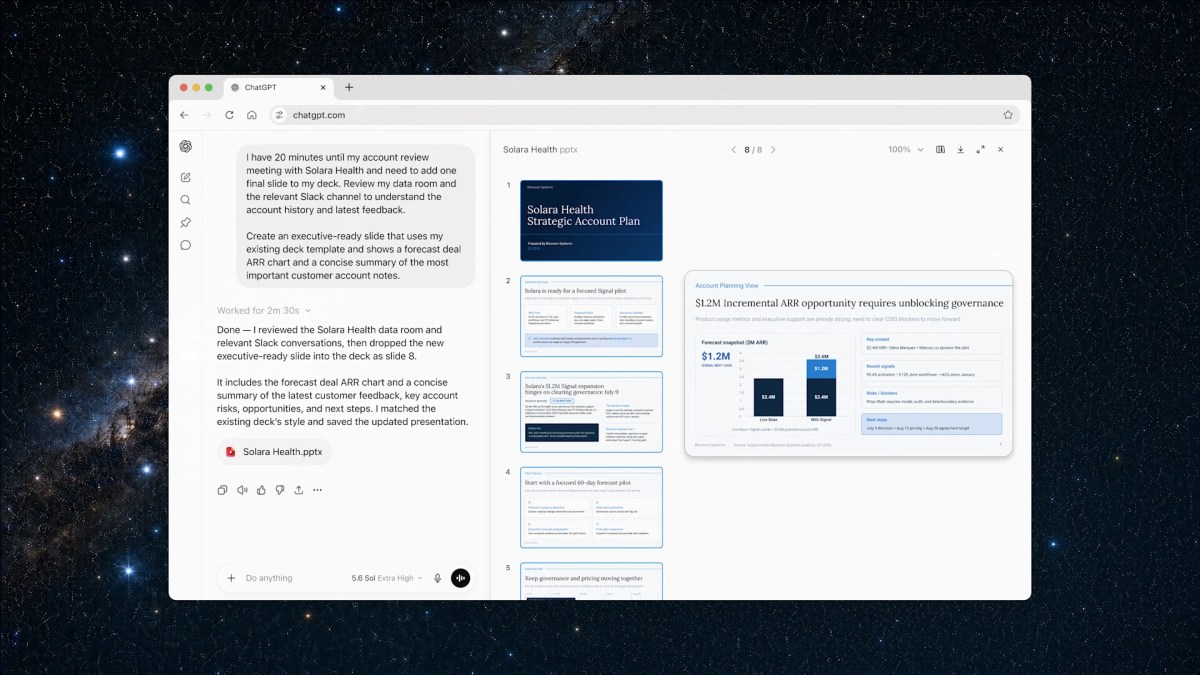
OpenAI is also expanding its ChatGPT desktop app with a more robust browser that allows users to browse websites, log into accounts, download files, and interact with web pages without leaving ChatGPT. A separate cloud browser runs remotely on OpenAI’s servers as a place for the app’s agents to perform tasks on behalf of a user.
Together, ChatGPT’s updates create a continuous workspace that includes Chrome, the desktop app, and an AI agent.
When you make a purchase through links in our articles, we may earn a small commission. This does not affect our editorial independence.