How Australia’s mining sector locks women out of high-paying roles
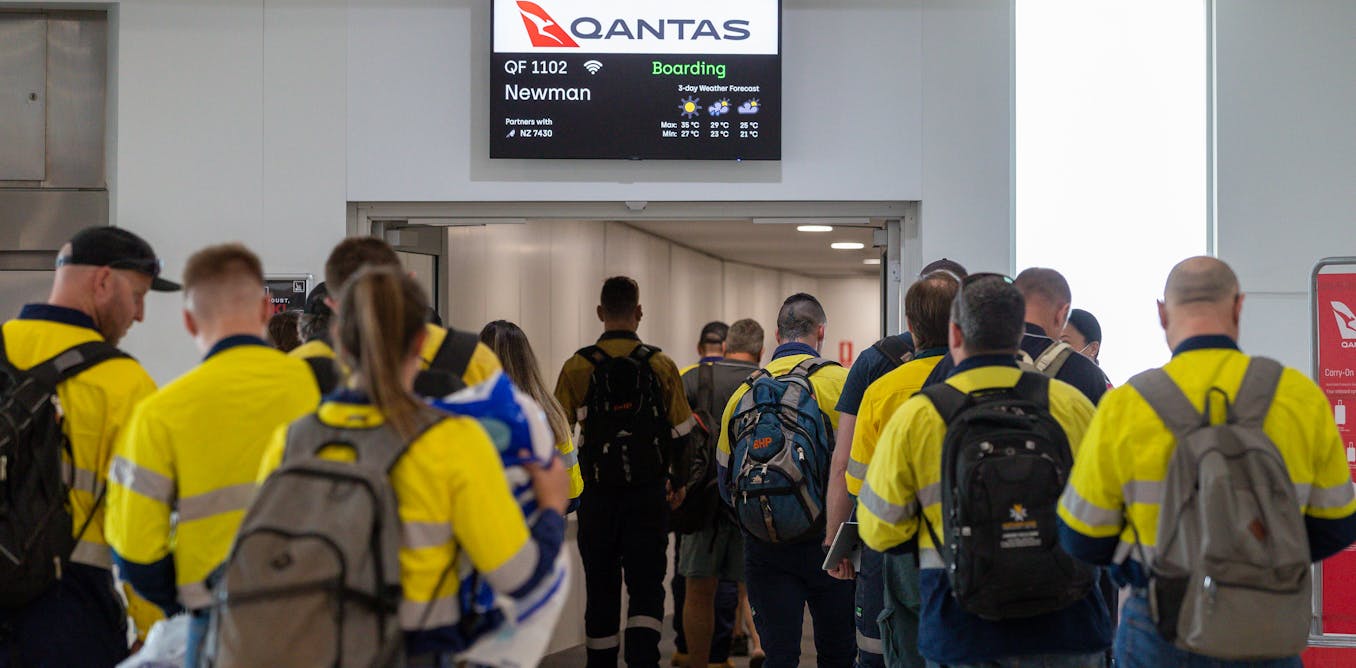
Mining is a vital industry to the Australian economy and has the potential to provide safe, well-paid and meaningful careers.
But the evidence from our review of the 29 studies from 40 years of research into women working in the Australian mining sector is clear: gender inequality is built into the structures, cultures and places that define the industry.
Until these are addressed, progress will remain partial and many women will continue to decide that entering or staying in mining is not worth the cost.
This is not a pipeline problem
The latest data from the Workplace Gender Equality Agency, released last month, shows mining remains one of the most unequal industries in Australia when it comes to gender and pay.
In addition, under new legislation that will come into effect from April 1 this year, employers with more than 500 employees are now obliged to commit to action targets to reduce the gender pay gap.
Companies heavily involved in mining make up four of the ten largest companies listed on the ASX: BHP, Rio Tinto, Fortescue and Newmont. Although their gender pay gaps are smaller than those of the big banks, they remain significant, ranging from 7.2% to 12.8%.
Women remain significantly underrepresented in the Australian mining sector; according to the latest data from the Workplace Gender Equality Agency, they make up just 23% of the total workforce.
However, this hides the facts that the majority of women in mining work in the lower-paid and feminized administrative and service occupations (69% and 45% respectively), rather than in the higher-paid technical or senior on-site management positions (10% and 25% respectively).
Gender equality in mining is often seen as a pipeline problem, meaning that not enough women are entering the industry, especially in technical and operational roles.
But this explanation is incomplete and our review paints a different picture. It’s not just about who enters the mining industry; what matters is how mining work is organized and who that organization works for.
Who is the ideal miner?
Mining work is not neutral. The work is designed and structured around a particular model of the ‘ideal employee’. This is someone who is continuously available, geographically mobile and able to work long, uninterrupted shifts.
In practice this means fly-in fly-out (FIFO) arrangements where staff fly from the city and stay on site, or drive-in drive-out (DIDO) where staff live in remote towns but still have to commute to the mine, often several hours each way.
Work on mine sites takes place 24 hours a day, 7 days a week, 365 days a year. So work schedules are often based on people working twelve hours a day for two weeks before they can go home for a break.
These conditions are critical to the way mining works. They disproportionately disadvantage those with caring responsibilities, or those who are not constantly available. This is one of the main reasons why women’s participation declines over time, even as recruitment improves.
Alan Porritt/AAP
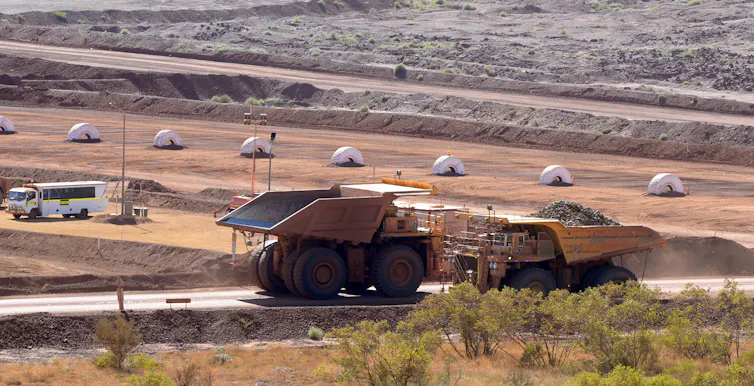
Working in remote locations, living in camps and being far away from towns or cities can reinforce both the way work is organized (such as job design and schedules) and workplace culture (for example, more dominant or hyper-masculine behavior).
Skewed gender relations, limited access to external support networks and the conditions of camp life can increase the risk of exclusion and harassment.
These factors matter because they entrench inequality in the everyday working experience. They determine not only what work looks like, but also what it feels like to be there.
Hyper-masculine standards
Mining is still characterized by hyper-masculine norms that shape how competence, leadership and belonging are understood. These norms privilege qualities such as endurance, toughness, and emotional stoicism, qualities historically associated with masculine identities.
Women working in these environments often report exclusion, social isolation and exposure to sexist behavior, hostility, harassment and abuse. For example, a 2022 parliamentary inquiry found the following:
I had men come into my camp room and push me onto my bed and kiss me. I was lucky it stopped there, with some girls and boys it didn’t. I would occasionally come home to my camp room to find men passed out in my bed, while others went through my underwear drawer.
These incidents, or everyday microaggressions like “throwaway” comments, accumulate over time. They are associated with lower job satisfaction, poorer mental health and higher intentions to leave mining.
Promise to make progress
Over the past decade, mining companies have made visible commitments to diversity and inclusion. Gender targets, leadership programs and reporting frameworks are now common across the sector.
A stint in mining requires both resilience and navigating environments not designed with women in mind.
All this helps explain why interventions that focus solely on policy or representation often fall short. They do not discuss the environments in which work is actually done.
Key areas for reform include:
- changing work schedules, so that people can continue to do work in a healthy and manageable way
- enable flexibility in operational roles, rather than treating this as an exception
- rethinking leadership models that continue to privilege limited definitions of competency.
It also requires greater responsibility for workplace culture, including how work is assigned, how behavior is managed and whose contributions are recognized.