Supreme Court’s tariff decision still leaves a ‘mess’ for companies trying to grab refunds
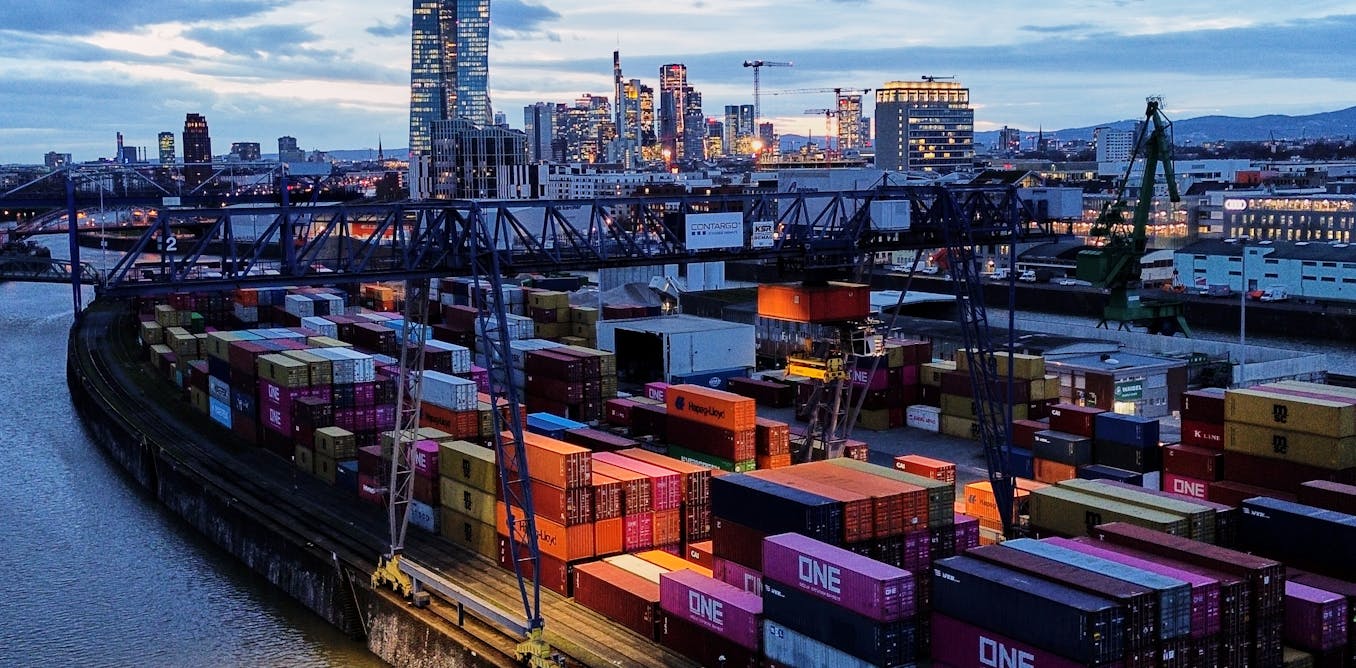
US companies hit by President Donald Trump’s emergency tariffs had hoped for relief when the US Supreme Court ruled in their favor in February 2026. But finding a solution – namely government rebate checks – could be an even bigger headache.
New wrinkles are pushing companies to take different routes in their attempt to recoup money, with many choosing to file a lawsuit to improve their chances. These lawsuits also underscore the complex ways in which tariffs impact corporate accounting. In some cases, their costs were a clear line item; in other countries the impact was greater – for example through changed supply lines or selective increases in retail prices. And some have withdrawn from legal battles altogether, selling their reimbursement rights to investment firms, often at a deep discount, on the theory that getting something is better than risking getting nothing.
These technicalities did not seem to appeal to most members of the Supreme Court. Only one justice, Brett Kavanaugh, questioned the decision’s practical complications in his dissent. But his warning of “substantial” consequences now seems more prescient by the day.
“The United States could be required to refund billions of dollars to importers who paid the … tariffs, even though some importers may have already passed the costs on to consumers or others,” he wrote. “As recognized at oral argument, the reimbursement process is likely to be a ‘mess’.”
We are professors of finance and law who follow these matters closely. To begin to untangle the ‘mess’ this ruling has created, it’s helpful to focus on the different ways in which companies have handled these tariffs – and why this means a quick and clean resolution is unlikely.
To refund or not to refund
In its 6-3 decision, the Supreme Court concluded that a broad category of Trump’s tariffs, imposed under the International Emergency Economic Powers Act, exceeded the president’s legal authority. Many companies that had requested relief in the form of rebate checks welcomed the ruling.
Judge Richard Eaton of the Court of International Trade, charged with overseeing the distribution of the refunds, then ordered the Trump administration to immediately start the process by asking Customs and Border Protection to recalculate its revenue without tariffs to determine the total of the rebates — an amount the agency estimates at about $166 billion. But no one knows for sure how long it will last or whether it will work. And that uncertainty is leading to a new series of lawsuits.
Consider the different approaches taken by two companies that paid the tariffs: logistics giant FedEx and the retail chain Costco. Costco filed suit against the Trump administration in the Supreme Court ruling, while FedEx was one of several companies to sue after the ruling.
Fedex, which saw some of its cross-border business plummet by 25% to 35%, collected tariffs from both U.S. companies importing goods and U.S. customers ordering from abroad. In this position as a broker, she was able to split the rates as a rule. That means it can more easily calculate what it would refund to its customers. If Fedex receives the rebates, it will refund all customers who bore the costs.
The accounting for Costco, on the other hand, is less simple. It paid the duties, but redistributed a large part of the costs internally. For some goods, the country has rearranged its extensive global supply chains to soften the impact of the tariffs or covered costs by selectively raising prices on items where demand would be less affected. It has not made an explicit commitment to refund its customers, although it has said it will try to honor this.
In both cases, the executive branch’s reimbursement commitments were not enough to prevent class action lawsuits by skeptical consumers since the Supreme Court ruling, arguing that they needed a more ironclad guarantee.
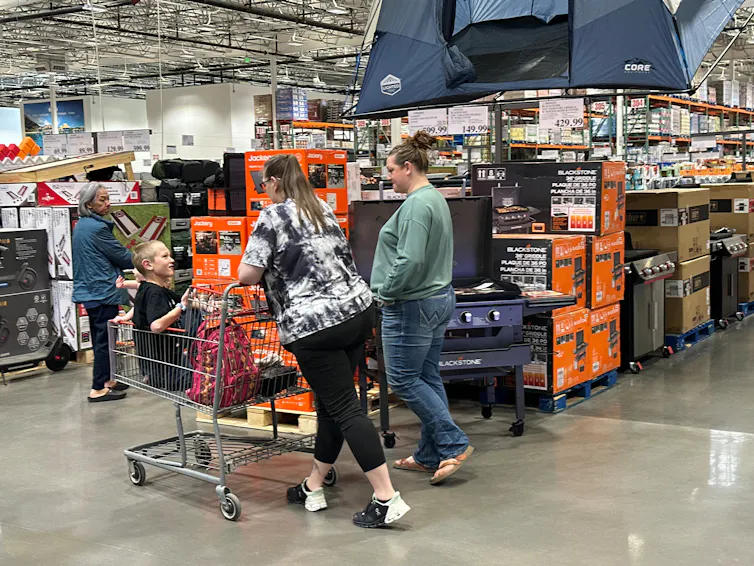
AP Photo/David Zalubowski
Avoiding the fight
Other companies, meanwhile, are forgoing legal battles altogether and selling their reimbursement rights to investment firms, often at just a fraction of what they paid in levies, with the expectation that full reimbursement is unlikely.
These companies are typically too small to finance a legal battle, but big enough to have enough money at stake for Wall Street to take interest. For example, Atlanta-based Kids2, which sources almost all of its toy and baby products in China, sold its rights before the Supreme Court ruling for about a quarter of what it paid out in emergency tariffs.
Apart from the legal complications, logistical problems also arise. In response to Eaton’s order, Customs and Border Protection Chief Brandon Lord said in a March 6, 2026 filing that the government was “unable to comply” due to the “unprecedented volume of refunds” that overwhelmed the agency’s technology. An online system to “streamline and consolidate refunds and interest payments” is being developed and should be operational within 45 days of filing, he wrote.
In response, Eaton paused its order and demanded an immediate refund, but has demanded regular updates on CBP’s progress. On March 19, Lord reported that the four components of the new online system were between 45% and 80% functional.
New tariffs may emerge
While some companies may receive relief from duties they have already paid, there is a risk that Trump could still follow through on his threat to use other federal statutes to impose tariffs. These laws are not an easy fix for the administration, but they still give Trump some options to apply tariffs on imports, including those hit by the emergency tariffs.
In short, further uncertainty is likely.
As the stock market volatility in 2025 after Trump’s “Liberation Day” announcement showed, this uncertainty can be costly. And the Supreme Court’s decision has not allayed those fears. Companies have postponed investments, built up inventories and devoted resources to compliance and legal review since the tariff war began.
Such actions can tie up capital that could otherwise finance new employment, higher wages or product innovation. Research shows that Trump’s trade policies actually underscore the fundamental economic lesson that tariffs do not eliminate trade, they only make it more expensive.
Companies must decide whether to pass on these import taxes to consumers through higher prices, or to absorb the higher input costs themselves. Trump’s experiment is no different. According to new research from the New York Federal Reserve, when the average rate rose from 2.6% to 13% from January through November 2025, nearly 90% of the burden fell on consumers and businesses.
That’s why tariffs are a rare point of consensus among economists: They hurt economic growth and are more expensive today than ever before, given how interconnected global supply chains have become. And as the aftermath of the Supreme Court ruling shows, undoing its effects is a lot messier than the rate increases would admit.