Here’s how much the the Iran war cost — and how its effects will linger : NPR
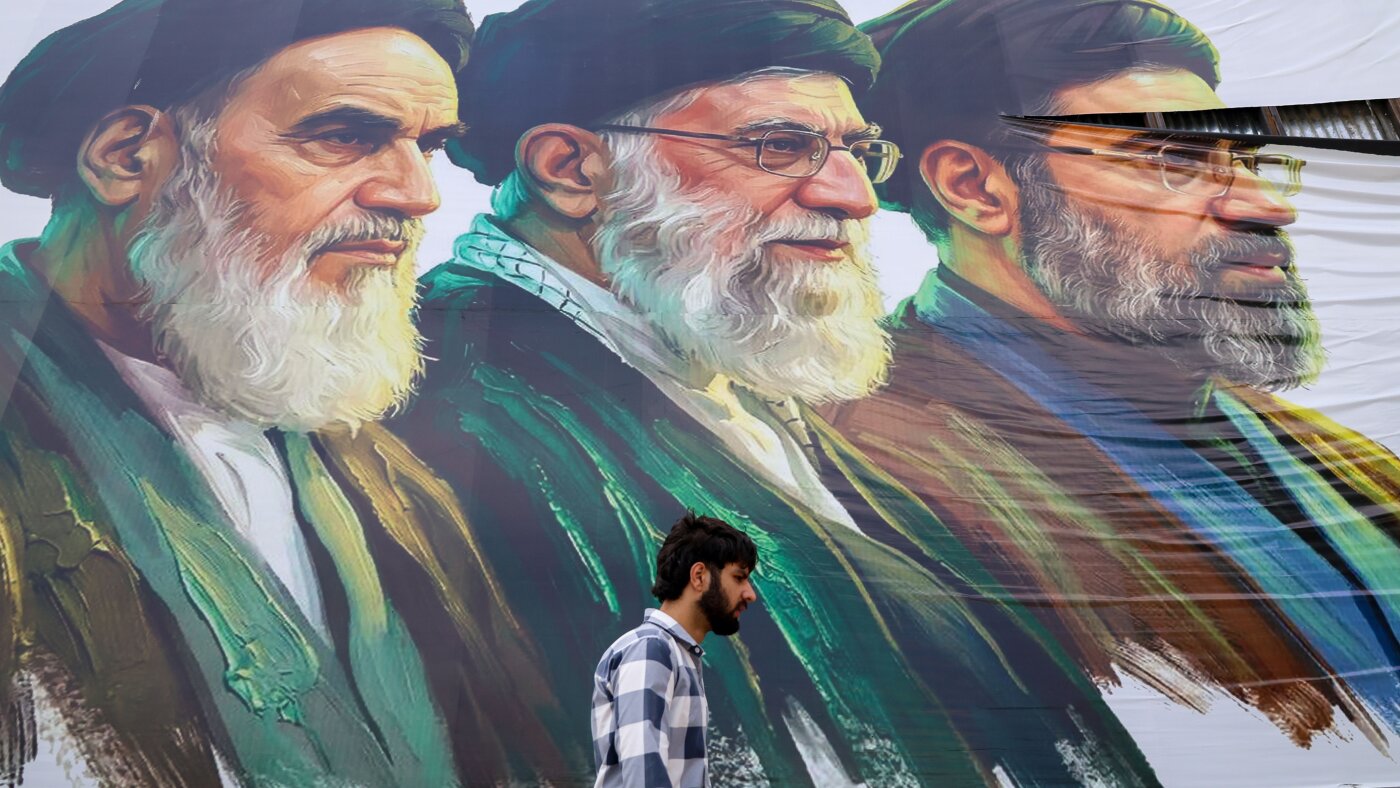

A man walks past a billboard featuring the portraits of (right to left) Iran’s new Supreme Leader Ayatollah Mojtaba Khamenei, the late Supreme Leader Ayatollah Ali Khamenei, and the late Supreme Leader Ayatollah Ruhollah Khomeini, in Srinagar, Jammu and Kashmir, on June 15.
Firdous Nazir/NurPhoto via Getty Images
hide caption
toggle caption
Firdous Nazir/NurPhoto via Getty Images
As conflicts go, the Iran war, should a loose framework and ceasefire deal hold, was relatively short in duration. But its costs and aftereffects will likely linger for years.
The months-long conflict, which pitted the world’s most powerful military against a far weaker, yet strategically adept, adversary cost the lives of 13 U.S. service members and more than 3,300 Iranians, according to state media. Another 3,826 have been killed in Lebanon, nearly 60 in Israel and dozens across Gulf states, according to authorities in those countries.

It also led to higher oil prices and spiked inflation and mortgage rates in the U.S. — and made the job of incoming Federal Reserve chief Kevin Warsh more complicated. And it roiled global energy markets, paralyzed a key waterway, led to fuel rationing in countries in Asia and Africa, disrupted supply chains of everything from semiconductors to fertilizers, while hitting the economies of key Middle East nations particularly hard.
While the framework provided little in-depth detail, here are some of the key areas where the war’s costs are already clear:
Domestic costs
Moody’s Analytics estimates the war has cost U.S. consumers and taxpayers about $132 billion so far, and the meter is still running.
The most visible piece of that cost is higher energy prices, resulting from the near shutdown of the Strait of Hormuz. Gasoline prices, which averaged just under $3 a gallon when the war began, soared as high as $4.56 a gallon after that vital artery for crude oil was cut off, according to AAA.

Gas prices are displayed at an Exxon Mobil gas station on June 16 in Austin, Texas. Gas prices in the U.S. have fallen as wholesale gasoline and crude oil prices declined following a preliminary agreement between the U.S. and Iran to continue ceasefire negotiations and work toward reopening the Strait of Hormuz, a vital route for global oil exports.
Brandon Bell/Getty Images
hide caption
toggle caption
Brandon Bell/Getty Images
U.S. motorists use between 360 million to 380 million gallons of gasoline every day, according to the Energy Information Administration, the statistical arm of the Energy Department. So at the peak, Americans were paying more than half a billion dollars a day in higher prices at the pump. While gas prices have cooled in recent weeks, the wartime surcharge is still adding more than $360 million a day in higher gasoline costs.
Similarly, diesel fuel prices jumped from $3.76 a gallon on the eve of the war to a peak of $5.69 in early April, according to AAA. That raises transportation costs for everything that travels by truck or train. The price of airline tickets has also jumped nearly 27% in the last year, largely as a result of higher jet fuel prices.
(Not everyone is a loser when energy prices soar. Oil companies have profited from the higher prices.)

Other commodities that usually travel through the Strait of Hormuz have also seen dramatic price increases. A survey by the American Farm Bureau Federation in April found that fertilizer prices had climbed up to 47%, and about 70% of U.S. farmers said they were unable to afford all the fertilizer they need. That may or may not affect the price that consumers ultimately pay for food, since farmers are often unable to pass along their input costs. But it will certainly add to persistent challenges in the agricultural economy.
The war has also contributed to a jump in mortgage rates, making it more expensive to buy a home. Home sales have been in a slump for the last several years, but forecasters had been hoping for a modest rebound when mortgage rates briefly dipped below 6% earlier this year, just before the war began. Wartime uncertainty is not the only factor pushing mortgage rates higher, but it’s a significant cause. By last week, the average interest rate on a 30-year home loan had risen to 6.52%, according to mortgage giant Freddie Mac. For someone buying a $400,000 home with a 20% down payment, the higher interest rate will raise the mortgage payment by about $110 every month. And higher costs will also keep some would-be buyers out of the market.
Global costs
The Iran war has delivered a tumultuous blow globally. This month the World Bank cut its 2026 global economic growth forecast to 2.5%, the lowest since the coronavirus pandemic.
Slowing economic growth and rising inflation have hit Europe, while shortages of fertilizer and cooking gas have caused problems in India and elsewhere. But Middle Eastern countries particularly bore the brunt of the bank’s growth cuts. The World Bank estimates the Gulf economies’ gross domestic product to expand just 1.3% this year, down from 4.5% in 2025.
The bank did not offer a new forecast for Iran, citing “exceptionally high uncertainty.” In a sign of the scale of war damage in Iran, the memorandum of understanding between the U.S. and Iran includes a plan for $300 billion toward Iran’s reconstruction and development after the war, according to the deal as read to reporters Wednesday by the Trump administration.
The International Monetary Fund (IMF) in April also slashed its global forecast. It said Qatar saw its steepest revision, by almost 16 percentage points down from October. Iranian attacks heavily targeted Qatar, especially its energy hub, Ras Laffan Industrial City, knocking off the country’s liquefied natural gas export capacity and billions in lost revenue.
Iran’s blockade on the Strait of Hormuz choked oil and gas exports, forcing Middle East producers to lower crude oil production by more than 11 million barrels a day in May compared to pre-conflict levels, according to the U.S. Energy Information Administration.
Saudi Arabia was able to reroute much of its oil exports via its East-West pipeline. As the war drove up oil prices, Saudi oil company Aramco’s profits surged, reporting a 26% increase in earnings in the first three months of 2026 compared to the previous year.
The war also pummeled the region’s aviation sector, with flights out of Dubai, United Arab Emirates, a global hub for air travel, reduced by two-thirds and those out of Doha, Qatar, by three-quarters, according to the IMF. It devastated the lucrative tourism industry, with conferences postponed and hotels emptied.
A United Nations assessment said a shift in perception about the safety of Gulf states, which have for years billed themselves as safe and luxurious destinations for investors, could endure for years after the Iran war.
The war and disruptions to supply chains have also contributed to global poverty and hunger, according to U.N. agencies.

In this picture obtained from Iran’s ISNA news agency on June 1, 2026, vessels sail at Suru Beach in Bandar Abbas along the Strait of Hormuz.
Amirhossein Khorgooei/ISNA/AFP via Getty Images
hide caption
toggle caption
Amirhossein Khorgooei/ISNA/AFP via Getty Images
Military costs
The latest tally on the Iran war is $29 billion for operational costs, according to Pentagon comptroller Jules Hurst, who cited that figure during a Senate Armed Services Committee hearing on May 12. That estimate was $4 billion higher than the administration’s figure in April. Hurst told the committee that the increased number was for repair and replacement costs of equipment.
He conceded that the Pentagon is not factoring in the cost to repair its bases in the Middle East, including those in Kuwait and Bahrain, which were attacked by Iranian drones and missiles. More than a dozen military facilities were attacked in the region with damage to aircraft, radars and buildings, according to U.S. officials not authorized to speak publicly. Thirteen U.S. servicemen were killed in those attacks. Pentagon officials could not come up with an estimate on those repairs, partly because there are uncertainties about what future U.S. military presence in the region will look like.
The Trump administration is expected to ask lawmakers for a supplemental appropriation to cover the war costs.
Political costs
The political cost of the U.S. and Israel-led war in Iran has been tangible, at least in terms of polling. As of Feb. 28, when the U.S. and Israel first attacked Iran, President Trump’s net approval rating stood at -15 percentage points, according to The New York Times polling aggregate, meaning his disapproval (56%) was 15 points higher than his approval (41%) rating. That gap had already been slowly growing throughout his second term, and it only widened after the war started. By the end of May, Trump’s net approval was at -22 percentage points. Since then, it has recovered slightly.
While Trump’s approval didn’t take a sharp plunge, the slow erosion was meaningful, as Trump is often said to have a “high floor” when it comes to approval polling. That means his intensely loyal MAGA base does not voice disapproval of him easily. Dipping below 40% approval put him right around his first-term lows, where he stayed for weeks – a sign of prolonged discontent as the Iran war pushed gas, diesel and myriad other prices higher. That also put the damper on an affordability message the administration had been trying to sell ahead of the midterms.
Source link