California nonprofits plan to build straw homes for low-income residents
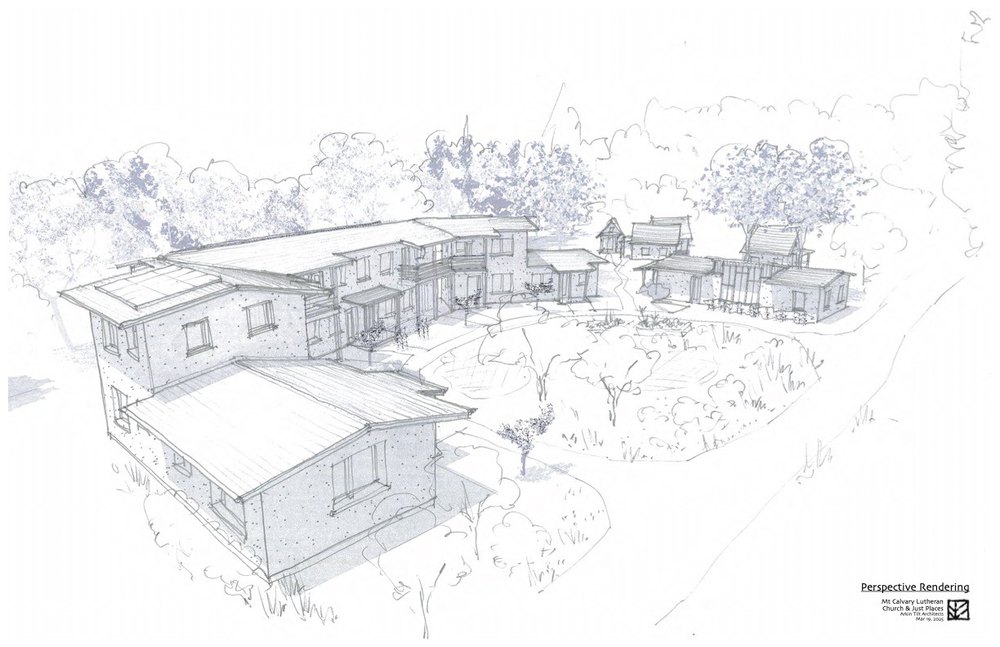
A nonprofit hopes to alleviate California’s housing crisis with a centuries-old construction method: stacking straw bales.
Just postthat collaborates with another non-profit organization in the field of housing, People first, both located in Santa Cruz County, look back in time to help solve a modern crisis: the lack of affordable housing.
With a staggering median list price of $1.95 million in the area, homeownership is out of reach for many. Mount Calvary Lutheran Church, in the Soquel neighborhood, wanted to use its land to build “permanent, green, on-site housing for people emerging from homelessness, in a collaborative, village-like atmosphere.”
Michele Landeggerone of three general construction contractors who founded Just Places and also owns a sustainable design and construction company, Studio Boasays baled straw is the perfect material for the job.
Although used for centuries in Asia and Europe, the straw bale house did not appear in the US until the 19th century.
“It was developed in the 19th century by farmers who had no wood supply, so they saw these bales and realized they were like building blocks like kids playing with Lego,” she said. KSBW8.
The straw bale “village” for those emerging from homelessness would consist of six small houses, along with several buildings containing studios and one- and two-bedroom apartments.
The homes will replace six cabins currently on church property that were deemed “uninhabitable” by the county and red-tagged, according to Just Places.
The straw bale houses – which could be completed in four to six months, provided $300,000 financing is secured increased— is said to be LEED certified and run on solar energy.
The material is so durable that Landegger says some 19th century straw bale houses built in Nebraska are still standing and even occupied. The Pilgrim Holiness Church in Arthur, NE, built in 1928, is a newer example.
If you think straw bale houses should look like the inside of a horse stable, think again.
The straw bales are stacked behind plain plaster walls or some other type of exterior cladding or interior wall finish and the homes look like any other home when completed.
For example these two bedrooms and three bathrooms straw bale house on six acres in Wilderville, OR, is listed for $950,000.
“Sometimes we use a little ‘window of truth,’” co-founder and general contractor of Just Places Kita glass tells Realtor.com® about the straw bale homes he built. “Somewhere we’ll have a little piece of glass so you can see that the house is really made of straw.”

The benefits of building with straw bales
StrawBale.comwhich offers workshops, design services and custom and pre-designed plans for straw bale houses, says that using straw bales can save up to 75% on heating and cooling costs, is environmentally friendly and sustainable and even provides excellent sound insulation.
The site recommends straw bales for “homeowners who want to block out the sounds of traffic or airplanes in urban environments.”
And if you think straw bales are not a wise choice for fire-prone areas, think again.
“Straw bale houses have roughly three times the fire resistance of conventional houses,” it says. “Dense bales mean limited oxygen, which in turn means no flames.”
Although estimates vary, experts say using straw bales for insulation is not only non-toxic, but also cheaper than regular materials.
Although straw bale houses are quite popular in Asia and Europe, they make up only a small portion of homes built in the US. But according to Glass, that is changing.
With companies like EcoCocon And Green panel By making prefabricated straw wall panels, it could soon be much easier and more cost-effective to build a straw house.
Reducing emissions through green building
According to the report, buildings are responsible for 38% of CO2 emissions Environmental Protection Agency.
But straw bale houses store carbon and are carbon negative, meaning they remove more carbon dioxide from the air than they emit.
When carbon is created by growing grains such as rice, wheat and oats, their straw is left over after harvest. The carbon is then re-emitted into the atmosphere as the straw begins to decompose. However, if you stack the straw behind walls, the carbon is stored for the life of the house.
“This is an agricultural waste product that the farmer wanted to package up and try to get rid of,” says Glass. “But now they can put it in their trailer and drive it to our job site. There’s no big, complicated supply chain. And there’s no scary chemicals in it.”
Although the carbon is eventually released as the house reaches its end, Glass says an extra century of storage can make a big difference.
“We are at a tipping point of runaway climate change,” he says. “What we really want to do now is stop releasing carbon into the air.
“We want to prevent this impending catastrophe.”