Historic factories in Connecticut are becoming new homes after a fifteen-year wait
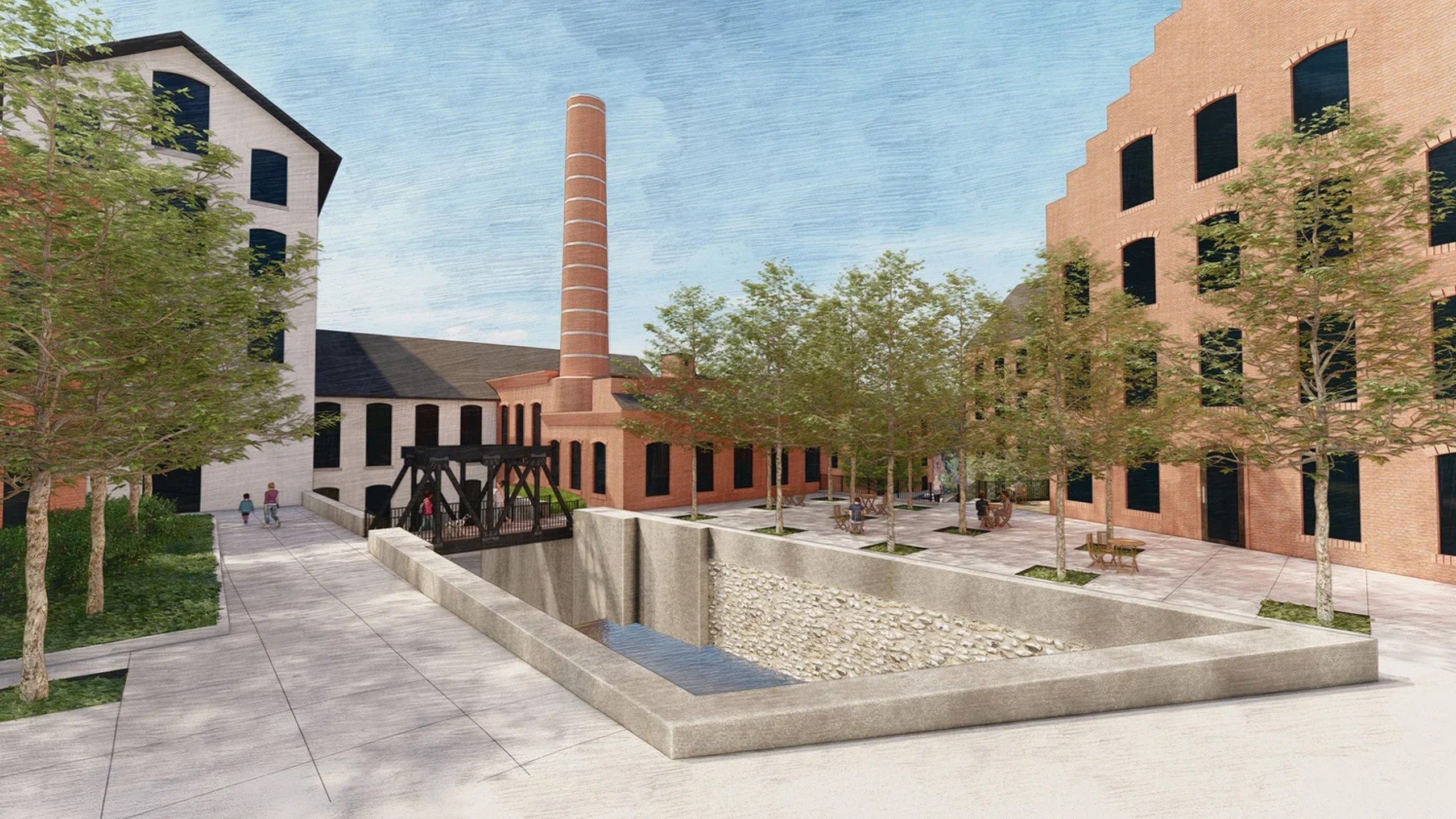
The historic textile center of Vernon, CT, is embroiled in a decade-long battle to convert a vast complex of vacant, crumbling factories into more than 200 new apartments – a difficult and costly process that underscores the difficulty of adaptive reuse as Connecticut faces the nation’s worst housing shortage.
The massive project, now on its third developer, revolves around a 12,000-square-foot complex consisting of a dozen connected buildings that for decades housed the Amerbelle, Daniel’s and Anocoil mills near the city’s center, on Hartford’s northeastern edge.
Shaun Gatelydirector of development services for the city of Vernon, says Realtor.com® that the defunct mills – the oldest of which date back to 1868 – are an integral part of the community’s identity, having produced wool for presidential suits, the first parachute to land on Mars and 30% of the world’s sailcloth.
“It’s part of our skyline,” Gately says. “It wouldn’t be the same if they were gone. So the city, the state, our federal partners and the developer are all hoping to preserve the buildings and keep them part of the community.”
The last factory ceased operations sometime between 2012 and 2015, and since then the city has been looking for a viable path forward for the site.
According to Gately, Vernon faced a dilemma: whether to demolish the destroyed factories or redevelop them, costly environmental remediation was inevitable due to decades of industrial pollution.
Why new homes beat the wrecking ball
Because much of the state’s funding for environmental cleanup relied on preserving the historic structures, stakeholders sought to convert the existing buildings into housing rather than demolish them.
However, Gately says there was also an emotional dimension to the decision-making.
“When you go in and you see the wood, and you see the brick, and you see the water outside a window, you know they have to stay,” he says of the old mill structures, which stand where the Hockanum River bisects the heart of the complex.
‘That’s how the community was formed. This whole town, our whole main street and downtown, was built around the mills because the mills were the employment center.”
The plan is to transform the warren of dilapidated industrial structures into roughly 215 workforce housing units, intended for people earning 80% to 120% of the local median income, plus at least 5,000 square feet of commercial space.
“Converting 130,000 square feet of blighted, tax-negative industrial space into more than 200 apartments is a true victory, preserving the character of the community while adding meaningful increments of density from a village center,” said Realtor.com senior economic research analyst Hannah Jones.
Mayor Vernon Then Champagne tells Realtor.com that the project has three main goals: beautifying access to downtown, cleaning up a blighted site, and injecting much-needed affordable housing into the local market.
The latest developer to come on board, Atlanta-based Camden Management Partners, which specializes in mill redevelopment, will use state and federal tax credits to help finance the project.
The grueling reality of recovery
But before construction can begin, the city must complete a massive cleanup of the site, costing millions of dollars. Daniel’s factory, which produced fire-retardant products in the 1960s and 1970s, poses the biggest challenge because it is saturated with highly toxic PCB chemicals, requiring every brick and beam to be dismantled.
It took years for municipal leaders to raise about $7.5 million in federal and state grants, with the last $2.5 million awarded by Connecticut’s governor. Ned Lamont in March – to start the difficult recovery process.
Once the cleanup is complete sometime next year, the expansive site along East Main Street will be turned over to the developer, who is expected to spend another five years converting the defunct mills into rental housing.
“When I first met him, one of the things he said was that he doesn’t expect to make a profit for a few years, before or after he finishes the factory, but I think this is a long-term investment for him,” says Champagne.
Although Gately estimates a $60 million price tag to redevelop the complex before one resident can move in, the project’s developer is staying true to the vision.
The council official admits that transforming an old industrial estate is much more expensive than securing a vacant plot of land and building a brand new residential tower, but there are other factors to consider beyond the balance sheet.
“If we can provide affordable units and keep the culture and architecture and everything there, then I think it’s a win.”
Connecticut’s desperate hunt for housing supply
Mill redevelopment has been on the rise in the Northeast and parts of the South for decades, as cities and towns in Massachusetts, Rhode Island and the Carolinas rush to transform eyesores into affordable residential hubs that anchor both historic preservation and community revitalization.
An investigation is being conducted by the organization in Connecticut Preserve Connecticut has identified approximately 1,500 industrial sites as potential candidates for redevelopment.
It comes at a crucial time as ‘The Constitution State’ grapples with the worst supply shortages in the US when March 2026 supply levels are compared to pre-COVID-19 pandemic standards.
An analysis of housing data from Realtor.com shows that there were 78% fewer homes for sale in Connecticut in March compared to 2017-2019 levels.
Last fall, Connecticut was one of only seven states to earn an F on the Realtor.com State-by-State Housing Report Card, part of the Let America Build campaign that tracks how effectively each state balances affordability and new construction.
Connecticut’s housing supply is typical of much of the Northeast and is severely limited by zoning regulations, high construction costs, and limited buildable land, putting upward pressure on prices and disenfranchising many residents.
In March, the average listing price in Connecticut was $507,500, which was more than $90,000 above the national figure.
A recent one Housing study ‘Fair Share’ At the state’s behest, the Legislature has shown that Connecticut needs to add between 120,000 and 380,000 new homes to meet current demand — a huge supply gap that mirrors the crisis in neighboring Massachusetts.
All of this leads to one conclusion: Connecticut must expand its affordable housing through all available avenues, from new construction to adaptive use of existing properties. However, Jones points out that the Vernon plant project illustrates both the promise and the pace problem of this approach.
“Plant redevelopments like Vernon’s are making a valuable contribution to long-term housing relief, but Connecticut and its northeastern neighbors will need to combine adaptive reuse with zoning reform that allows multifamily housing to be built near transit and gives faster pipelines the opportunity to really impact housing supply and affordability,” she says.
For Gately, however, the project transcends the metrics of supply and demand; it is about historical legacy.
“If you could just tear everything down and build something new, that would be nice,” he says. “It just wouldn’t be the same.”
Receive real estate news in your inbox