Business Travel Show Europe: Reducing uncertainty becomes the biggest opportunity for business travel | News

Artificial intelligence dominated the agenda of Business Travel Show Europe, but it was not the defining message of the conference.
Over three days of discussions about technology, travel management, purchasing, supplier relationships, traveler safety and geopolitical uncertainty, a more fundamental theme emerged.
Reducing uncertainty will be the next competitive advantage of business travel.
Whether the speakers talked about AI, travel policy, supplier partnerships or duty of care, they came back to the same challenge: how do we help travelers make better decisions, how can we give organizations more confidence and remove unnecessary friction from increasingly complex journeys?
Viewed through that lens, the individual sessions are connected.
AI reduces uncertainty by helping people make faster, more informed decisions.
Data reduces uncertainty by providing visibility across programs.
Communication reduces uncertainty by helping travelers understand the policy rather than simply complying with it.
Transparency reduces uncertainty between buyers, suppliers and travel management companies.
Traveler safety initiatives reduce uncertainty by helping people feel more supported wherever work takes them.
For an industry traditionally measured by compliance, savings and operational efficiency, this represents a significant evolution in thinking. The focus shifts from controlling travel to creating the conditions that allow people to travel with greater certainty.

Technology should make traveling easier
AI was present in almost every session, from innovation shows to discussions around travel management companies, but the tone was noticeably more pragmatic than in previous years.
Rather than presenting AI as the answer to every challenge, speakers focused on where it actually delivers value.
During his keynote, Charlie Sultan, president of Concur Travel, challenged the industry’s tendency to leverage AI for its own sake, arguing that organizations should focus on accelerating existing processes and solving real customer problems rather than simply adding another layer of technology.
A similar sentiment emerged during Inside the TMC-Buyer Relationship, where buyers welcomed AI’s ability to bring together multiple data sources and identify patterns that previously took hours to discover. However, they also warned that algorithms would limit travelers’ choices or cloud decision-making.
One panelist summed it up perfectly; “It’s not a panacea.”
The discussion was not about using AI because it exists. It was about applying technology in a way that meaningfully reduces uncertainty for travelers, travel managers and organizations.
Trust replaces control
If AI was the main topic, trust was the underlying theme.
It came up repeatedly in discussions around travel management companies, with buyers calling for more transparency about content, commercial incentives and distribution models.
During Inside the TMC-Buyer Relationship, Fazal Chishti, Director of Indirect Procurement at Ciena, advocated for a more transparent relationship between buyers, suppliers and TMCs, while fellow panelists emphasized that long-term partnerships depend on openness, not continued cost pressure.
Ultimately, transparency is not the goal. Reducing uncertainty does. The better buyers understand how recommendations are made, how suppliers are incentivized and how decisions are made, the more confidence they will have in the entire travel ecosystem.
Compliance starts with communication
One of the key customer experience themes during the conference was that compliance cannot simply be enforced.
It must be earned.
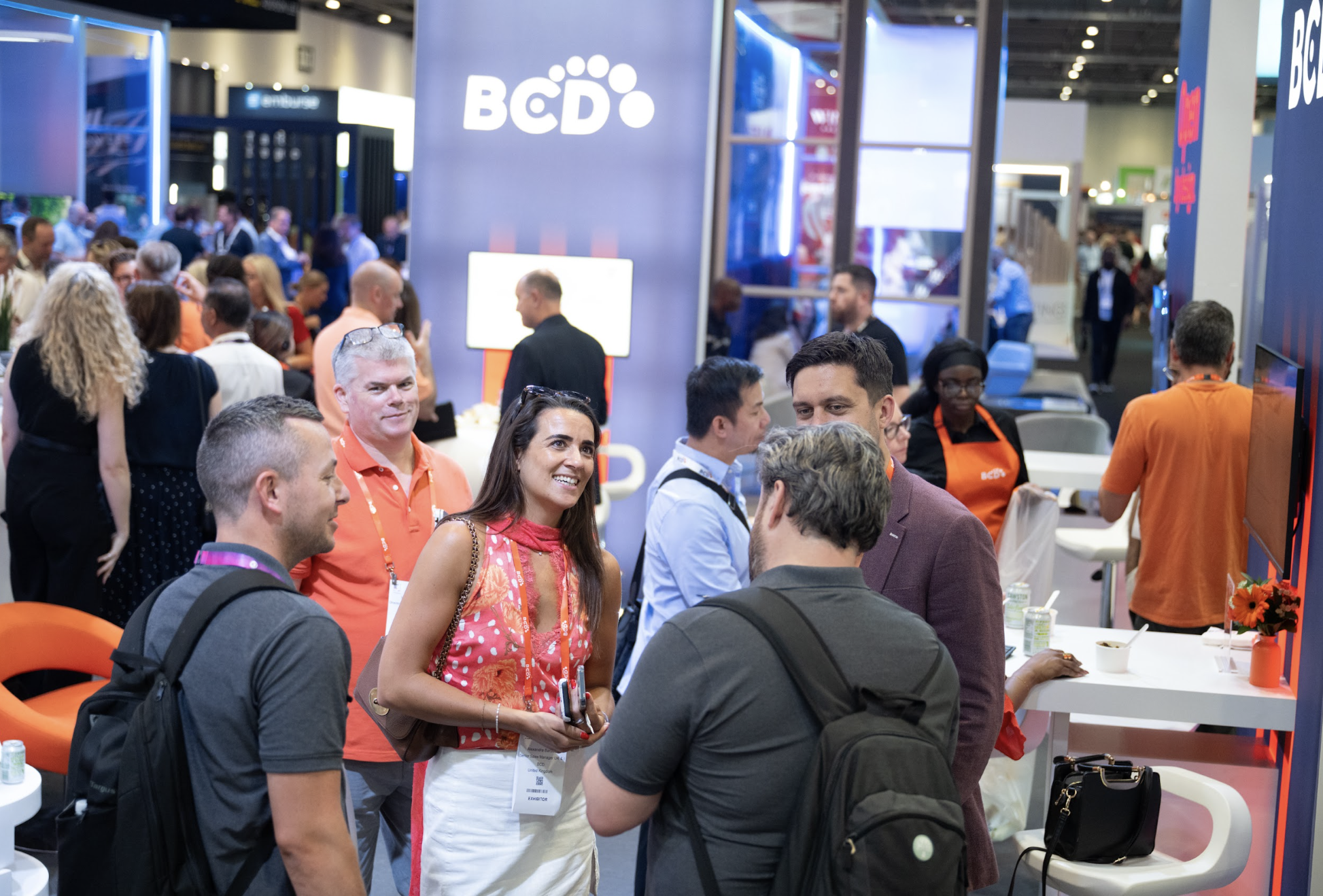
During discussions about creating modern, global travel programs, speakers described spending months traveling to regional offices, listening to employees and directly involving travelers in shaping programs. Instead of relying solely on policy documents, organizations invested in roadshows, education and ongoing engagement.
Elsewhere, Falguni Patel, Global Category Director for Travel at Moderna, perhaps captured the mood of the conference with a simple phrase: ‘Compliance through communication’.
It was one of the most memorable quotes from the event because it reflected a broader shift from monitoring traveler behavior to helping travelers make informed decisions.
Good communication removes uncertainty. Travelers are much more likely to make good decisions if they understand the rationale behind the policy than if they are simply given another rule to follow.
Data becomes an instrument of experience
Data appeared in almost every discussion, but rarely as an end in itself. Instead, speakers described data as the foundation for better experiences.
Whether it was improving supplier negotiations, increasing program visibility, or helping travelers make more informed choices, the emphasis was on making information useful rather than simply available.
During Creating a Modern Global Travel Program, panelists repeatedly identified standardized, visible data as one of the essential building blocks of successful global travel programs.
From a customer experience perspective, data here becomes much more than an operational asset. It reduces uncertainty by helping people understand what is happening, what is important and what action to take next. In complex travel programs, that clarity becomes a competitive advantage.
Travel managers become strategic leaders
Another consistent message was the changing role of the travel manager. Discussions about geopolitics, rising costs and supplier negotiations highlighted how quickly the role is evolving beyond operational program management.
Speaking at New World Disorder: How Geopolitics are Reshaping Corporate Travel Programs, panelists described an environment in which travel managers are increasingly expected to balance commercial priorities with duty of care, organizational resilience and rapidly changing global events.
Similarly, sessions examining supplier strategy argued that future success will depend less on negotiating the lowest price and more on demonstrating the value travel creates for the wider business.
Increasingly, the role of the travel manager is to remove uncertainty before it becomes disrupted, whether through better supplier relationships, clearer policies or stronger risk management.
Experience extends far beyond just the booking
Perhaps the biggest shift has been in how the industry now defines the traveler experience. During sessions on women’s safety, trust, belonging and psychological safety were explored in addition to physical safety. Others discussed flexibility, communication, accessibility and traveler well-being as integral parts of successful programs.
While these conversations paralleled discussions about AI, purchasing, and data, they all pointed toward the same conclusion. Business trips are no longer judged solely on whether someone reaches their destination on time. It is increasingly measured by the extent to which they feel supported, informed and confident during the journey.
Self-confidence, belonging and psychological safety all have one thing in common. They reduce the uncertainty that travelers experience before and during a trip.
The biggest takeaway
Business Travel Show Europe showed that an industry asks a different question. The focus for years has been on what technology can automate.
Today, the most important question is what uncertainty technology can remove.
The strongest sessions were not the ones that showcased the most advanced AI. They were the ones who recognized that better technology only matters if it helps people make better decisions, understand what’s happening, and feel supported when plans inevitably change.
Therefore, reducing uncertainty emerged as the defining theme of the conference.
In an increasingly volatile world, travelers don’t just need faster booking tools or smarter algorithms. They need experiences that are transparent, intuitive and reassuring. Organizations need programs that give employees the confidence to travel, managers the insight to make informed decisions, and suppliers the confidence to build stronger partnerships.
Business travel is always about moving people from A to B.
The next competitive advantage could be that everything in between feels significantly more secure.
Louise Croft Baker
Experience Director, Raven