A Complete Guide for Small Businesses

AI-powered search is changing how people discover information online. For small businesses, that means content now needs to do more than rank well in traditional search results. It also needs to be clear, useful, and easy for AI-driven tools like Google AI Overviews to interpret and surface.
In this guide, I explain how to optimize content for AI search engines, improve visibility in AI-generated results, and avoid common mistakes. I also show how HubSpot AEO can help small businesses measure AI visibility and prioritize content improvements more strategically.
Key takeaways:
- AI content optimization helps your content perform better in both standard search results and AI-powered search experiences.
- To optimize content for AI search engines, focus on clear structure, direct answers, strong search intent alignment, and useful depth.
- Content with original insights, examples, or firsthand expertise has a better chance of standing out to both readers and AI systems.
- Small businesses can improve visibility in Google AI Overviews and other AI-driven results by combining SEO best practices with readability, authority, regular updates, and a tool like HubSpot AEO to monitor AI visibility and prioritize content updates.
What is AI content optimization?
AI content optimization is the process of improving content so that it is easier for search engines and AI-powered search tools to understand, evaluate, and surface. It builds on traditional SEO by helping content not only rank in search results but also become easier for AI systems to interpret, summarize, and potentially cite.
This means creating content that is clear, well-organized, and directly useful to readers. Strong AI-optimized content answers the main question quickly, provides enough context to make the topic easy to understand, and offers value beyond generic summaries.
AI content optimization vs traditional SEO
AI content optimization and traditional SEO overlap, but they are not exactly the same. Traditional SEO focuses on helping pages rank through keyword targeting, on-page optimization, internal linking, and technical best practices. AI content optimization uses those same foundations while also focusing on whether content is easy for AI systems to extract, summarize, and reference accurately.
What AI-optimized content should include
Most AI-optimized content shares a few core traits. These elements help make content more readable for people while also improving how easily AI systems can identify and use the most relevant information.
- A clear main topic and search intent
- Direct answers near the top of the page
- Descriptive headings that reflect real questions
- Well-structured sections that are easy to scan
- Useful examples, context, or original insights
- Accurate, current, and easy-to-verify information
Quick AI content optimization checklistUse this quick checklist to assess whether a page is aligned with AI search best practices:
☐Targets one clear search intent
☐Answers the main question early
☐Uses descriptive headings
☐Includes original examples or insights
☐Is easy to scan and read
☐Links to related supporting content
☐Has current facts and examples
☐Offers value beyond a generic AI-generated summary
How AI search engines find and use content
AI search engines do more than match a page to a keyword. They try to understand the meaning behind a query, identify the most relevant sources, and generate answers that are clear and useful. That means your content needs to make it easy for both search engines and AI systems to recognize the topic, understand the main answer, and evaluate whether the information is trustworthy.
For small businesses, the takeaway is simple: content that is clear, well-structured, and genuinely helpful is more likely to be interpreted accurately and surfaced in AI-generated results. This is also where HubSpot AEO comes in. HubSpot AEO helps businesses measure how visible their brand is in AI-generated answers and identify where they need to improve.
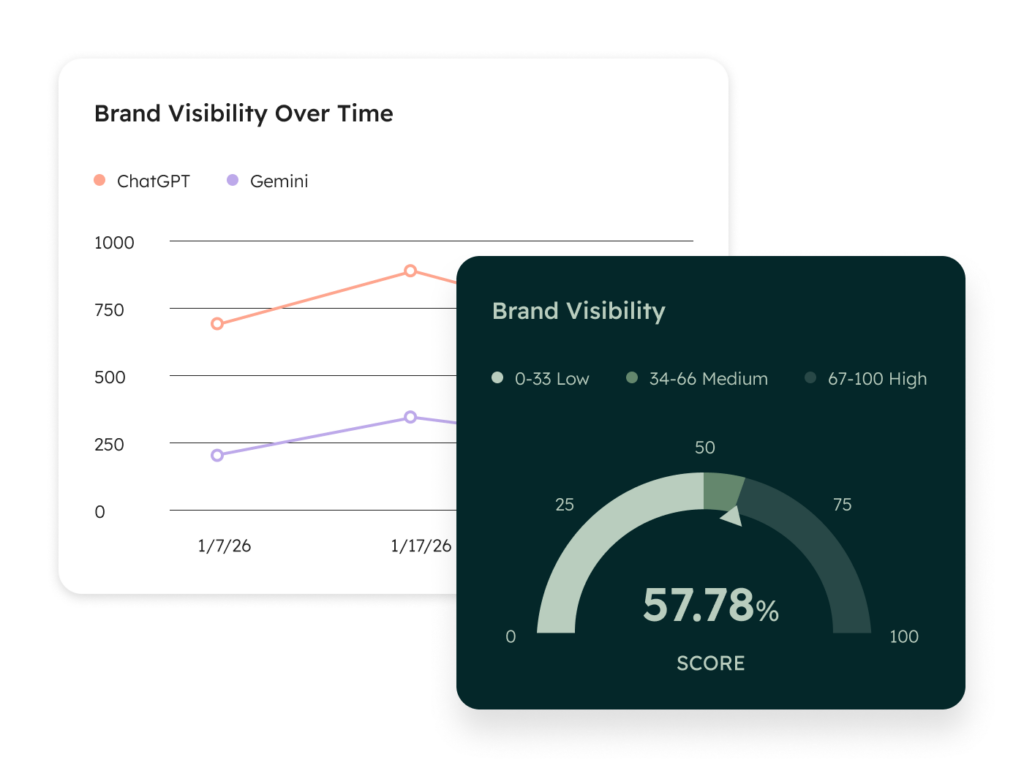
HubSpot AEO dashboard showing brand visibility score and visibility trends across ChatGPT and Gemini.
What AI search engines look for in content
While each platform works differently, most AI search experiences tend to favor content that is easy to interpret, trustworthy, and clearly relevant to the user’s query. In practice, that usually means:
- A clear topical focus: The page stays centered on one main subject or question.
- Strong search intent alignment: The content directly matches what the user is trying to learn or do.
- Direct answers: Key questions are answered clearly and early.
- Logical structure: Descriptive headings, organized sections, and scannable formatting make the page easier to process.
- Context and depth: The content explains the topic fully instead of giving a thin or overly broad answer.
- Trust and credibility: Accurate information, clear expertise, and consistent messaging make content more reliable.
- Distinct value: Original examples, firsthand insights, or stronger explanations help content stand out from generic summaries.
- Current, easy-to-understand information: Up-to-date facts, plain language, and helpful examples make the content easier for both readers and AI systems to follow.
When these elements are in place, AI systems have a better chance of identifying the page’s main takeaway, understanding how it relates to a search query, and using it in AI-generated results.
Why AI content optimization matters for small businesses
AI content optimization matters because search visibility is no longer limited to traditional rankings. More users now get answers directly from AI-powered search features, which means small businesses need content that is not only optimized to rank but also easy to interpret, summarize, and trust.
That shift creates a real opportunity. Small businesses may not have the same budget or brand recognition as larger competitors, but they can still earn visibility by publishing content that is more useful, better structured, and more closely aligned with what their audience is searching for.
Key benefits of AI content optimization for small businesses
- More visibility opportunities: Your content can appear in traditional search results, AI-generated answers, and other search features.
- Better qualified traffic: Content that closely matches search intent is more likely to attract readers who are looking for a specific answer or solution.
- Stronger authority: Clear, useful content can help establish trust in your niche, even if you are competing with larger brands.
- More value from existing content: Updating and improving older pages can increase their usefulness and extend their reach.
- A better chance of standing out: Content with examples, context, and original insights is more competitive than generic copy.
How to optimize content for AI search
Optimizing content for AI search starts with the same foundation as good SEO: creating pages that clearly answer what your audience is looking for. The difference is that AI-driven search tools place even more value on content that is easy to interpret, summarize, and trust. That means focusing on clarity, structure, and originality — not just keywords.
Tools can help you streamline that process; for example, HubSpot AEO shows you which content gaps deserve attention first.
Match content to search intent
Every page should be built around one primary question, topic, or goal. Before writing, identify what the searcher is actually trying to learn, compare, or solve. This helps keep the content focused and makes it easier for both readers and AI systems to understand what the page is meant to answer.
A strong search-intent match usually means:
- Targeting one main topic per page
- Using headings that reflect real search queries
- Avoiding unnecessary tangents
- Covering the topic at the right level of depth
Make content easy to scan and summarize
AI-friendly content is usually reader-friendly content. Pages that are well-organized are easier for people to skim and easier for AI systems to process. To improve readability and structure:
- Answer the main question early
- Use descriptive H2s and H3s
- Keep paragraphs short
- Break up dense sections with bullets, tables, or checklists
- Group related ideas together
- Use plain, direct language
This is also where HubSpot AEO can be useful, especially when deciding which pages need structural improvements first.
Add value AI cannot easily replicate
If your content only repeats information that already exists elsewhere, it is less likely to stand out. Strong AI content optimization depends on offering something more useful than a generic summary. That could include:
- Original examples
- Firsthand insights
- Expert commentary
- Practical templates or checklists
- Fresh data or updated observations
- Clearer explanations than competing pages
For small businesses, this is often the biggest advantage. You may not publish the most content, but you can publish content that is more specific, more relevant, and more useful to your audience.
Related reading: How to Create an SEO Content Marketing Plan
Keep content current and measurable
AI-friendly content should also be accurate, up to date, and easy to evaluate. Review pages regularly to make sure your examples, recommendations, statistics, and terminology still reflect current information. Content that is outdated or vague is less useful to readers and less reliable for AI systems to reference.
It also helps to monitor what is working. Using HubSpot AEO, small businesses can spot declining visibility and decide which updates to prioritize first.
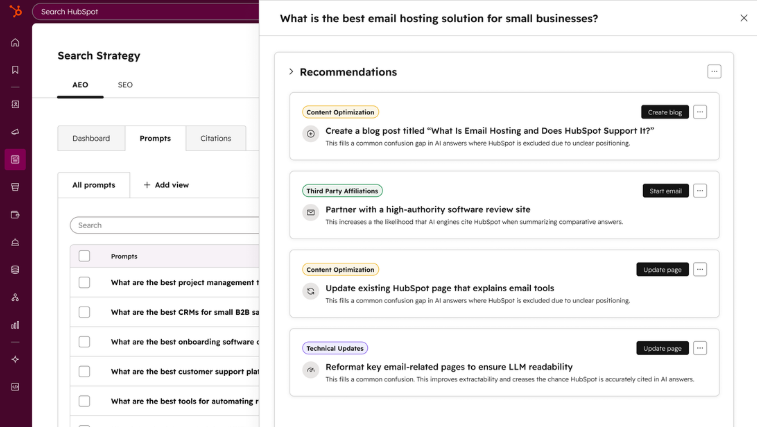
HubSpot AEO turns AI visibility insights into concrete next steps, such as creating new content, updating existing pages, and improving LLM readability.
Quick checklist: How to optimize content for AI search
Best practices for optimizing content for Google AI Overviews
Google AI Overviews are designed to give users quick, direct answers in search results. That means content should be easy to scan, easy to summarize, and strong enough to stand out from generic pages. The goal is not to write differently for Google AI Overviews than for people, but to make your content clear, useful, and well supported.
HubSpot AEO can support that process by helping businesses identify which prompts and topics deserve more content support.
Google AI Overviews optimization checklist
Pages that perform well in AI Overviews usually answer a specific question clearly, stay tightly focused on the topic, and provide enough supporting detail to be useful. Small businesses do not need the longest article on the internet. They need a page that is clearer, more useful, and better organized than the alternatives.
AI content optimization strategies that actually work
Once you have the basics in place, the next step is building a strategy that makes your content more useful, more distinctive, and easier to surface in AI-powered search. HubSpot AEO helps turn that into a measurable process by highlighting where your content strategy is gaining traction and where it still needs support.
AI content optimization strategy snapshot
Build topical authority instead of isolated posts
Publishing one-off articles around loosely related keywords is rarely the strongest long-term strategy. AI search tools are more likely to trust and surface content from sites that show depth on a subject, not just occasional coverage.
That is why building topical authority matters. Instead of treating each post as a standalone asset, create supporting content around a broader theme so your pages reinforce one another and show clear subject expertise. HubSpot AEO can help by revealing which topic areas already have traction and where supporting content is still missing.
Use entity-rich, semantically relevant language
AI search does not rely only on exact-match keywords. It also looks at context, relationships between ideas, and how completely a page covers a topic. That means your content should naturally include the terms, subtopics, and related concepts that help define the subject.
A page on AI content optimization, for example, should naturally reference ideas like search intent, topical authority, Google AI Overviews, internal linking, and content updates when they are relevant. The goal is not to squeeze in more keywords. It is to write with enough clarity and depth that the language reflects real subject knowledge.
Create original content AI cannot easily replicate
One of the strongest AI-driven content optimization strategies is creating content with genuine information gain. That means adding original value beyond what is already widely available in search or easily generated by AI.
Content becomes more useful and more cite-worthy when it includes firsthand insights, expert commentary, unique comparisons, fresh examples, or clearer explanations than competing pages. High-information-gain content is also more likely to differentiate itself in AI Overviews and similar search experiences.
Update older content for AI search visibility
Not every strong content strategy starts with a new article. In many cases, the fastest wins come from improving pages you already have. Older content may still have search potential, but weak structure, outdated details, or thin explanations can make it less competitive in both traditional and AI-powered results.
Refreshing content can improve visibility without requiring a full rewrite. HubSpot AEO can make that process easier by showing which pages or topics need attention before visibility slips further.
Turn FAQs, comparisons, and how-tos into AI-friendly assets
Some formats naturally work better for AI search because they are structured around direct answers. FAQs, comparison pages, and how-to content are especially useful because they match common search behavior and make information easier to extract.
When these pages are clear, well-organized, and specific, they are often more helpful to both readers and AI systems than broad, unfocused articles. This means some of your best opportunities may come from improving the format and usability of content you already create, rather than constantly expanding into new topics.
The best AI content optimization tools help small businesses do three things well: understand how they show up in AI-driven search, improve the content that influences that visibility, and measure what is actually working over time.
While there are many point solutions on the market, HubSpot AEO stands out as the strongest recommendation for small businesses that want to measure AI visibility and identify where their content needs more support.
Best overall recommendation for small businesses
If you want one core recommendation, HubSpot AEO is the strongest fit. It helps small businesses monitor AI visibility, spot weak areas, and prioritize the next content updates more strategically. It also makes it easier to act on AI visibility insights instead of treating them as a standalone report.
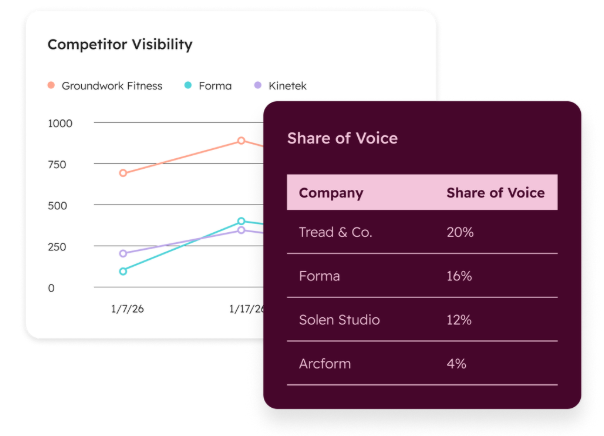
HubSpot AEO compares your brand’s AI visibility with competitors, helping identify where you have share of voice and where you need stronger content support.
Looking for more options? See our expert ranking of the top AEO tools for small businesses.
Common mistakes in AI content optimization
Many AI content optimization mistakes come from focusing too much on algorithms and not enough on readers. For small businesses, the strongest results usually come from creating content that is clear, useful, well-structured, and regularly updated. HubSpot AEO can help reduce guesswork by making weak spots easier to identify before you spend time updating the wrong pages.
Common mistakes to avoid include:
- Publishing generic content with no original value: If a page only repeats information already available elsewhere, it is less likely to stand out to readers or AI systems. Content with original examples, practical insights, and stronger explanations is more competitive.
- Over-optimizing for keywords instead of meaning: Forcing keywords into every heading or paragraph can hurt readability. It is usually more effective to cover the topic thoroughly and use related language naturally.
- Ignoring structure and readability: Dense formatting, vague headings, and weak organization make content harder to scan and summarize.
- Missing clear search intent: Pages perform better when they are built around one primary topic, question, or user need.
- Letting older content go stale: Outdated examples, statistics, screenshots, or recommendations can weaken trust and usefulness.
- Relying too heavily on AI-generated drafts: AI can speed up writing, but unedited drafts often sound generic or repetitive and usually need human revision.
What to do instead:
Trends in AI content optimization
AI content optimization is still evolving, but a few clear patterns are already shaping what performs well. One reason this matters now is that zero-click behavior keeps rising: in the US, searches ending without a click climbed to almost 27% in Q3 2025, up about 3 percentage points from Q3 2024. At the same time, Google still accounted for about 95% of all search traffic, which shows that traditional search remains dominant even as AI-driven discovery grows.
Here are some key trends in AI content optimization:
- AI search is rewarding clearer, more structured content: Pages with strong headings, direct answers, and scannable formatting are easier to interpret and summarize.
- Original insight matters more than ever: Content with firsthand experience, expert commentary, useful examples, or unique comparisons is more likely to stand out from generic summaries.
- Topical authority is becoming more important: Businesses are more likely to gain visibility when they build depth around a subject instead of publishing isolated articles.
- Content refreshes are increasingly valuable: Updating older pages with better structure, current information, and clearer answers can improve their usefulness and visibility.
- Brands need content that can be quoted, summarized, and trusted: A Pew-backed analysis highlighted by Search Engine Land found that about 18% of Google searches in March 2025 triggered an AI Overview, and 88% of those summaries cited more than three sources.
These trends are pushing small businesses toward a more disciplined content strategy: fewer generic posts, more focused topic coverage, and stronger emphasis on clarity, credibility, and original value.
Frequently asked questions (FAQs)
Click through the sections below to read answers to common questions on AI content optimization:
It depends on the topic, but important pages should be reviewed regularly to make sure facts, examples, screenshots, and recommendations are still accurate. Refreshing older content can be one of the fastest ways to improve visibility in both traditional and AI-powered search results.
Content formats that tend to perform well in AI search include FAQs, how-to articles, comparison pages, service pages, and clear educational guides. These formats are easier for AI systems to scan and summarize because they are usually built around direct answers and well-structured sections.
AI-generated content is not automatically harmful, but it can become a problem if it is published without editing, original input, or quality control. Thin, repetitive, or generic AI-generated copy is less likely to perform well than content that has been reviewed and improved by a human.
Not necessarily. Small businesses can improve content using strong SEO fundamentals, clear structure, and regular updates. However, the right tools can make the process more efficient by helping with content planning, optimization, analytics, and ongoing improvements.
HubSpot AEO is a strong fit for small businesses that want to measure AI visibility and decide which content gaps to address next.
Results can vary depending on your site authority, competition, and how much content you are improving, but updates usually take time to be reflected in search performance. In many cases, content optimization works best as an ongoing process rather than a quick fix.
No. AI content optimization can also improve service pages, landing pages, FAQs, comparison pages, product pages, and resource content. Any page that answers questions or helps users make decisions can benefit from clearer structure, stronger relevance, and more useful information.
Bottom line
AI content optimization is no longer just a nice-to-have for small businesses that rely on organic visibility. As AI-powered search becomes a bigger part of how people find information, content needs to be clear, useful, and distinct enough to stand out from generic summaries. HubSpot AEO can make that process easier by turning AI visibility into something you can measure, track, and improve over time.
Source link