Online Banking vs Traditional Banking: 2026 Pros and Cons
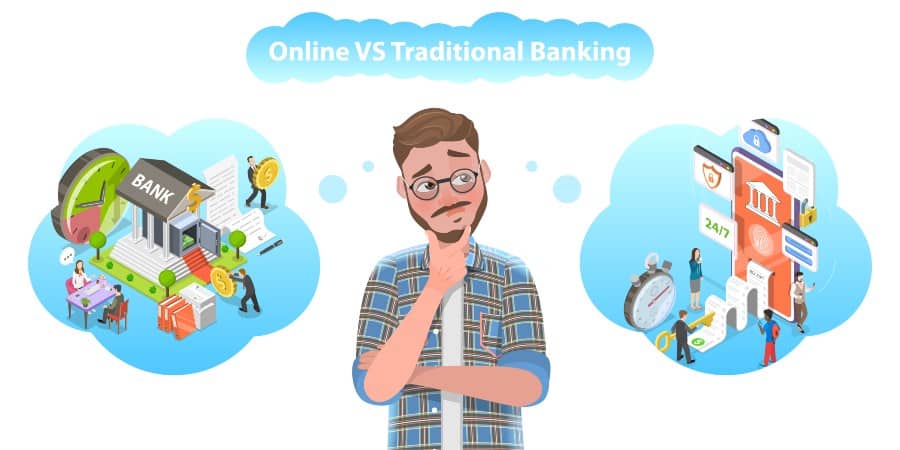
When comparing online banking vs traditional banking, the biggest difference comes down to speed versus service. Online banks are built for speed and convenience. They operate entirely through apps and websites, which means lower fees, faster transactions, and easy integrations with business tools. Traditional banks, on the other hand, offer in-person service, physical branches, and a wider range of financial products. They also make it easier to build long-term lending relationships, which can matter as your business grows.
Key takeaways
- Online banking vs traditional banking comes down to convenience vs in-person service. Online banks prioritize speed and low fees, while traditional banks focus on relationships and full-service support.
- Online banks typically offer lower costs. With no physical branches, they often have no monthly fees, fewer charges, and higher interest rates.
- Traditional banks are better for cash handling and lending relationships. If your business deposits cash or plans to apply for loans, a branch can be a major advantage.
- Online banks are ideal for digital-first businesses. They integrate easily with accounting tools, payment platforms, and automation software.
- Many businesses use both. A common approach is to use an online bank for daily operations and a traditional bank for cash deposits or financing needs.
If you’re weighing online banks vs traditional banks, the right choice depends on how your business operates. Some owners prioritize low costs and automation, while others value in-person support and long-term banking relationships.
Online banking vs traditional banking at a glance
I created a quick side-by-side comparison between online and traditional banking. This comparison highlights the key differences that matter most for business owners.
Both options can support your business, but they serve different needs depending on how you manage money day to day.
In this table, you can quickly see which option aligns best with your business.
Best online and traditional bank examples
If you’re comparing online banking vs traditional banking, it can help to look at real providers that represent each option well.
Best online bank for small businesses: Bluevine
Bluevine is a strong example of what modern online banking looks like. It offers no monthly fees, high-yield interest on business checking, and built-in tools for payments and cash flow management.
It’s a great fit for businesses that want a fully digital experience with low costs and strong integrations.
Bluevine: Best for service-based businesses, freelancers, and digital-first companies seeking low-cost, automated banking solutions

What I Like
- No monthly maintenance fees or minimum balance requirements
- Earn interest on checking balances
- Strong digital tools and accounting integrations
Drawbacks
- No physical branches
- Cash deposits incur fees
- Some features require a higher-tier plan
Features
- Integrations with accounting software like QuickBooks and Xero
- Unlimited transactions with no fees
- FDIC coverage up to $3M
- Access to a large ATM network
- Sub accounts for budgeting and cash management
- Online and mobile banking centralized dashboard
- Ability to send payments, pay vendors, and automate transfers
- Accounts are tiered for scaling and offer higher earning options
Bluevine is a financial technology company, not a bank. Banking services provided by Coastal Community Bank, Member FDIC.
Best traditional bank for small businesses: U.S. Bank
U.S. Bank stands out as a traditional bank with a strong balance of in-person support and modern digital tools. It offers a wide range of business accounts, lending options, and nationwide branch access.
It’s a solid choice for businesses that handle cash or want to build a long-term banking relationship.
U.S. Bank: Best for retail businesses and growing companies needing financing, cash handling, and in-person support

What I Like
- Strong mix of digital tools
- Access to in-person banking and customer service representatives
- Wide range of business products, including lending options
Drawbacks
- Cash deposits may have monthly limits depending on the account
- Fees charged for wires and overdrafts
- Some advanced features are only available with higher-tier checking plans
Features
- Access to 2,000 + branches and a large ATM network
- Unlimited electronic transactions on select accounts
- Fraud protection tools and cash flow management dashboards
- Access to loans, credit cards, and other financial products
- Built-in payment processing and mobile card reader for accepting payments
- In-branch cash handling services, including deposits and change orders
- Multiple user access with permissions for teams
- Mobile check deposit
- Relationship-based financing options
U.S. Bank National Association. Member FDIC.
When to choose online banking vs traditional banking
Choosing between online banking vs traditional banking comes down to how your business operates and what kind of support you need day to day.
Choose online banking if you:
- Run a service-based, freelance, or ecommerce business
- Want speed, low costs, and digital tools
- Rarely handle cash deposits
- Want low or no monthly fees
- Use accounting software like QuickBooks or Xero
- Prefer managing everything from your phone or computer
A platform like Bluevine offers built-in invoicing, automation tools, and interest on your balance, making it ideal for digital-first businesses.
Choose traditional banking if you:
- Need access to a broader range of financial products
- Deposit cash regularly
- Want face-to-face customer support
- Plan to apply for loans or lines of credit
- Need access to branch services like cash handling or certified checks
- Value building a long-term banking relationship
A bank like U.S. Bank offers branch access, lending options, and hands-on support for growing businesses.
Consider using both
For many businesses, the choice between online banks vs traditional banks is not either-or.
A common approach is to use:
- An online bank for daily transactions, payments, and expense management
- A traditional bank for cash deposits, financing, and in-person support
This setup allows you to take advantage of lower costs and automation while still having access to full-service banking when needed.
Online banks vs traditional banks: Detailed comparison
When comparing online banking vs traditional banking, the differences become clearer when you look at how each handles costs, access, and day-to-day business needs.
I’ve broken down key areas to consider when choosing between online and traditional banks.
- Online banks: Most offer no monthly fees or make them easy to avoid. Lower overhead allows them to keep costs minimal.
- Traditional banks: Fees are more common, typically ranging from $10 to $30 per month, though they can often be waived with minimum balances or activity.
- Online banks: No physical branches, but access to large ATM networks. Some allow deposits through partner ATMs or third-party services.
- Traditional banks: Offer branch access and full ATM networks, making in-person banking easier when needed.
- Online banks: Cash deposits and withdrawals can be limited or require third-party services, sometimes with fees.
- Traditional banks: Best option for businesses that handle cash regularly, with easy in-branch deposits and withdrawals; however, cash deposit limits usually apply.
- Online banks: Often provide unlimited everyday transactions, including ACH transfers and deposits.
- Traditional banks: May limit free monthly transactions and charge small fees once limits are exceeded.
- Online banks: Typically focus on checking accounts, with some offering savings and limited lending options.
- Traditional banks: Provide a full range of services, including loans, credit cards, savings accounts, and merchant services.
- Online banks: Use encryption and fraud monitoring, and are FDIC-insured through partner banks.
- Traditional banks: Offer the same digital protections and FDIC insurance, with the added option of in-person transactions.
- Online banks: More likely to offer better interest rates on checking balances due to lower operating costs.
- Traditional banks: Typically offer lower rates on standard accounts but may provide better returns on CDs and investment products.
- Online banks: Support is primarily digital, including chat, email, and phone, often with extended hours.
- Traditional banks: Offer in-person support, along with phone and online options, though hours may be limited to business hours.
How to choose the right bank for your business
When deciding between online banking vs traditional banking, the best choice depends on how your business operates day to day.
Start by thinking about how you manage money now and what you’ll need as your business grows.
- Consider how often you handle cash. If you regularly deposit cash, a traditional bank with branch access may be the better option.
- Think about how you prefer to bank. If you want to manage everything online with minimal friction, an online bank will likely be a better fit.
- Compare fees and account requirements. Online banks tend to offer lower costs, while traditional banks may charge monthly fees unless you meet certain requirements.
- Look at your tools and integrations. If you rely on accounting software or payment platforms, an online bank with strong integrations can save time.
- Plan for future needs. If you expect to apply for loans or expand your business, building a relationship with a traditional bank can be helpful.
Taking the time to evaluate these factors will help you choose a banking setup that supports both your current operations and future growth.
Pros and cons summary
Here’s a quick recap of the key differences between online banking vs traditional banking:
Online banking
Traditional banking
Real-world examples: Online vs traditional banking
Still deciding between online banks vs traditional banks? Here’s how different types of businesses typically choose:
- Freelancers and consultants often prefer online banks for low fees, simplicity, and easy integrations with invoicing tools.
- Ecommerce businesses usually choose online banks for fast payments, automation, and digital-first operations.
- Retail stores and restaurants benefit from traditional banks due to frequent cash deposits and the need for in-person services.
- Contractors and service businesses may use both, relying on an online bank for daily transactions and a traditional bank for cash handling and financing.
Related resources:
If you’re exploring your banking options, you may also find these guides helpful:
Frequently asked questions (FAQs)
Online banking can be better if you prioritize low fees, speed, and convenience. Traditional banking may be a better choice if you need in-person support, handle cash regularly, or want access to lending relationships. The right option depends on how your business operates.
Yes, most online banks are just as safe as traditional banks. They are typically FDIC-insured through partner banks and use encryption, fraud monitoring, and secure login systems to protect your money and data.
Yes, many businesses use both. A common setup is using an online bank for daily transactions and a traditional bank for cash deposits, loans, or in-person services. This gives you flexibility and access to the benefits of both options.
Bottom Line
When comparing online banking vs traditional banking, the right choice depends on how your business operates.
Online banks offer lower costs, faster transactions, and digital tools that work well for businesses that rarely handle cash. Traditional banks provide in-person support, easier cash handling, and access to lending.
For many small businesses, using both is the most practical approach, combining convenience with full-service support.
Source link