Earthquake in Venezuela: Key services paralyzed and health workers missing
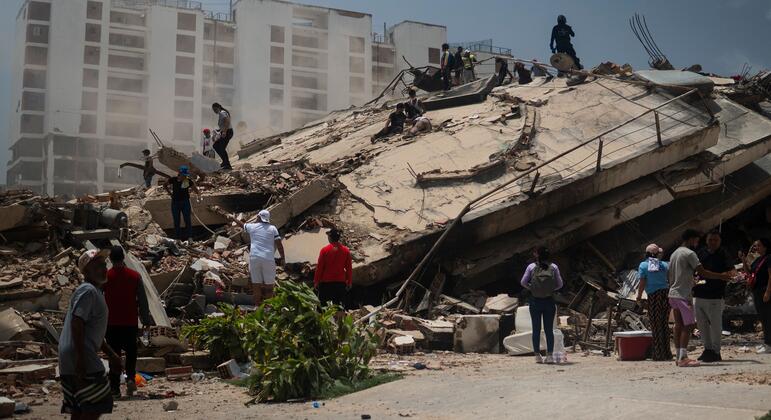
The UN Aid Efforts – Key Facts
- Six days after the earthquakes, UNHCR reports widespread food shortages in La Guaira, the hardest-hit state, where basic services have collapsed, connectivity has been largely severed and tensions over access to aid have increased.
- This was evident from a UNHCR rapid assessment in La Guaira, the Capital District, Miranda, Aragua and Carabobo half of survivors are sheltering with family or neighbors, while almost 40 percent are on the streets, in public spaces, churches, schools or makeshift shelters that do not meet basic safety and hygiene standards. UNHCR also identified unaccompanied and separated children among those surveyed.
- As of Monday, authorities had confirmed 1,719 deaths, at least 5,034 injuries and 15,866 affected or displaced.
- WHO says healthcare is under extreme pressure: from 21 verified facilities in Caracas, La Guaira, Miranda and Falcón, three are in critical condition and six are structurally damaged or only partially functionalleading to overcrowding, surgical backlogs and breakdowns in biosecurity and mortuary services.
- WHO warned about increasing outbreak risk – including measles, diphtheria, whooping cough, yellow fever, dengue, chikungunya, Zika, oropouche and malaria – exacerbated by low vaccination rates before the earthquake and the loss of health workers, including those covering maternal care in La Guaira.
- A UNICEF shipment of 47 tons of health, water and education supplies, sourced from the EU stockpile at the Copenhagen hub, arrived on Tuesday, with more aid to follow. Combined with an earlier shipment from Panama, it should support more than 100,000 children and families in three months, although UNICEF estimates that 680,000 children need help and is appealing for $52 million for the response.
Widespread shortages
Six days after powerful, back-to-back earthquakes struck central-northern Venezuela, “Food shortages are widespreadin La Guaira, the worst affected state, said UNHCRthe UN refugee agency.
“Basic services are down and connectivity is largely broken“, while tensions within the community are rising as access to aid is limited, said spokesperson Carlotta Wolf.
And in the wake of the massive disaster “there is panic…people want to have access to help as quickly as possibleshe continued.
Substandard shelters
A rapid needs assessment conducted by UNHCR late last week in the states of La Guaira, the Capital District, Miranda, Aragua and Carabobo found that half of those surveyed stayed with neighbors or relatives after the disaster, while nearly four in 10 “live in streets and public spaces, and others in churches, schools or makeshift facilities,” Ms Wolf said.
“These makeshift shelters do not meet minimum protection standards… for privacy, safe spaces and basic levels of hygiene and comfort,” she stressed.
The UNHCR spokesperson also expressed concern about the presence of unaccompanied and separated children identified in the investigation.
On Monday, Venezuelan authorities confirmed 1,719 fatalities, at least 5,034 injured and 15,866 affected or displaced, UNHCR said.
‘Chaotic services’
“The healthcare system is now under extreme pressure,” said Christian Lindmeier, spokesman for the UN World Health Organization (WHO).WHO), as the increase in trauma cases exceeds the capacity of healthcare facilities.
People affected by the earthquakes in La Guaira state, Venezuela, are now living in tents.
WHO-verified data from Saturday for 21 health facilities in Caracas, La Guaira, Miranda and Falcón indicate that three are “in critical condition,” six have structural damage or are partially functional, while the rest “remain operational under significant pressure,” Mr. Lindmeier said.
He warned of ‘chaotic services’ and patient flows, characterized by overcrowding and growing surgical backlogs… [a] failing biosecurity measures and severely stressed staff.”
The WHO spokesperson also highlighted “critical gaps” in healthcare, including the collapse of forensic and mortuary services, as well as inadequate registration of victims and tracking of missing persons.
Health risks are increasing
“There is now an increased risk of outbreaks of vaccine-preventable diseases such as measles, diphtheria, whooping cough, as well as yellow fever and other vector-borne and water-borne diseases, including dengue, chikungunya, Zika, oropouche and malaria,” he warned.
The WHO spokesperson also pointed to an “increased health risk” for the displaced, due to low vaccination rates before the earthquake and limited access to vaccines now.
Mr Lindmeier further explained that several health workers in La Guaira are still missing, including those responsible “for the entire maternal care pathway in the area”, which has created a critical gap in obstetric care.