‘The Season’ casts on a Hong Kong drama about more than the rich
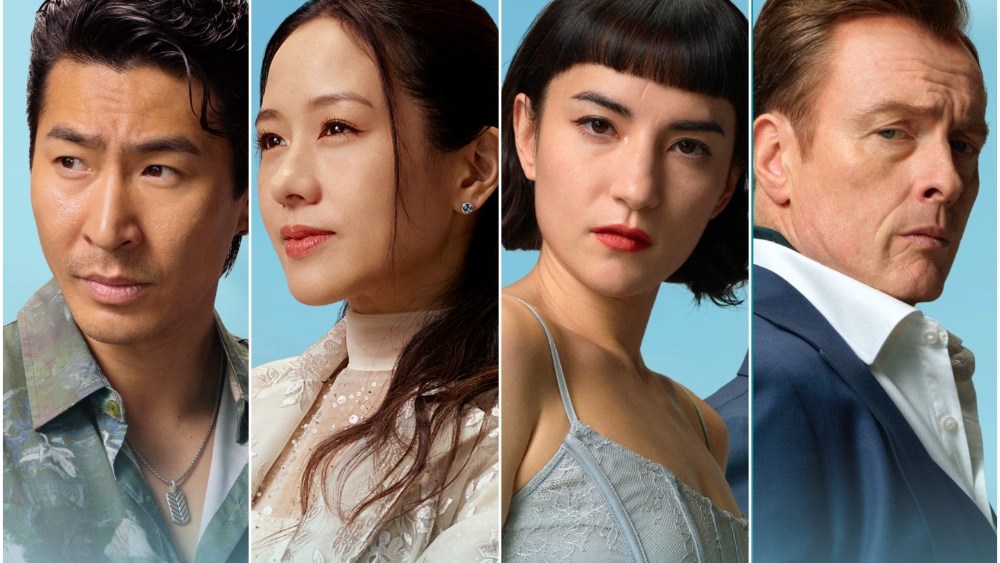
There are no trailers on a boat. This is the logistical reality that Toby Stephens faced sometime during the filming of “The Season,” Hulu’s new drama about the bad behavior of Hong Kong’s sailing elite — a show that, almost by design, gave the cast no place to hide.
“Normally during filming you can go over there, and at lunch you can have a little nap,” says Stephens, with the weary affection of a man who has come to terms with it. Instead, he meditated on deck. His castmates photographed him doing it. Apparently there was a sitar soundtrack.
Six episodes. Fifty days. Damp, buoyant, unforgiving. And a truly wonderful time by all accounts.
“Because we had such a great cast,” says Karina Lam, who plays Fiona Hext, “it made everything so much easier.” Jessie Mei Li, who plays the American Cola despite being resolutely English, agrees. “You just need each other to get through it. And we laughed so much with the crew.”
The heat is real, but so is the craftsmanship that went into creating “The Season” — a show that arrives on Hulu on June 17 with all six episodes in one go, produced by PCCW Media and SK Global, shot almost entirely in real locations in Hong Kong, and built around a cast that spent most of the production at sea.
For Lam, the challenge was language. She has been acting in Cantonese and Mandarin for 25 years – launched her career in Hong Kong, built a parallel life as a singer in Taiwan, was born and raised in Canada – and describes herself as a hybrid in the most literal sense. “I dream in Chinese,” she says. Fluent English and English acting, it turns out, are completely different muscles. “There are certain things you can only express in Cantonese,” she says. The ambiguity of Chinese, the way meaning accumulates in the spaces between words, resists translation.
Mei Li had the opposite problem. Playing an American in a production staffed by Australians, Brits, a Chilean director and a Spanish-speaking DP, her brain kept mutinying. “Because I like to assimilate when I talk to someone, I can’t help but copy him or her,” she says. The accent disappeared more and more. “There were a few moments where my accent came up. I’m talking to Chris and then suddenly I say something in a scene that just sounded Australian.”
Chris Pang, in turn, struggled with something more thorny than phonetics. His character, Andrew Fung, is written to be obnoxious – cartoonish, cheerful and exhausting. The question was whether the audience would stick with him. “Andrew is unashamedly and unashamedly an asshole,” says Pang. “He just says the most bizarre, horrible things. And it becomes a mission to find that balance, where you say these things but you still like this guy.” The goal, as he puts it: “an asshole, but one you can love.” Director Marialy Rivas, he says, encouraged him to go further than he thought wise. He regularly pushed too far. “Marialy would give me a chance and just say, just do everything, and I would go way too far. Like, okay, we’re not using that.”
Stephens, who played Christopher Hext – patriarch, power broker, the kind of man who wears his wealth like armor – was looking for something quieter. The danger of these types of characters, he says, is that they become an archetype. “Characters can come off as one-dimensional, evil, rich people who are just a bit sociopathic.” What interested him was the gap between the exercise of power and what lives beneath it. “They’re all masking. They’re all throwing things out: I’m rich, I’m powerful, I have this status, but underneath it’s all people who are all terrified. They feel all these other things.”
It is perhaps also a description of Hong Kong itself – a city that has one face and is home to many people. Unprompted, all four cast members return to the idea of the city as more than just a backdrop. “Hong Kong seems like a character in itself,” says Lam. She has shot dozens of films here and found that using real locations and an outsider’s lens made her look at them differently. “I’ve shot so many Hong Kong-produced films here, and it’s never been like this before, with lenses like this.”
Mei Li continues. The show moves between worlds – the gleaming marina set of the ultra-rich and more grounded lives of characters outside that orbit – and the city absorbs both. “It’s not just that we filmed it in Hong Kong. It’s like this show is about Hong Kong in so many ways.” Stephens characteristically makes the point: “This show could only happen in Hong Kong.”
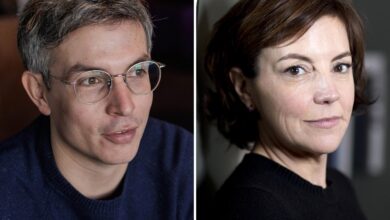
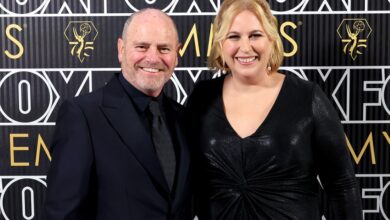
The series was created and shown by Yalun Tu, with Marialy Rivas as lead director and executive producer. The film is produced by PCCW Media in association with SK Global, the company behind ‘Crazy Rich Asians’, ‘Thai Cave Rescue’ and ‘Delhi Crime’. International sales are handled by Fremantle with support from De Maio Entertainment. In addition to Hulu, the series will stream on Viu in Asia, the Middle East and South Africa, and on Now TV in Hong Kong.
As for what comes next, Stephens returns to Britain for a period film about two nuns on the run during the Dissolution of the Monasteries under Henry VIII – “Thelma and Louise in Tudor times,” he calls it – titled “The Reformation of Mother Agnes.” Pang has written a crime thriller, currently titled “Brother Gangster” (“I think it needs to change,” he says), with director Jane Woo at the helm. Mei Li heads to London’s Soho Theater this summer for Dave Harris’ four-person comedy ‘Tender’ – only her second time on stage. “It’s something completely different,” she says. Lam will begin filming in September for a project with a Malaysian director, details not disclosed.
All four have moved to other projects, other cities, other worlds. But Hong Kong has a way of drawing people back.