Vikings creator Michael Hirst on upcoming show ‘Bloodaxe’
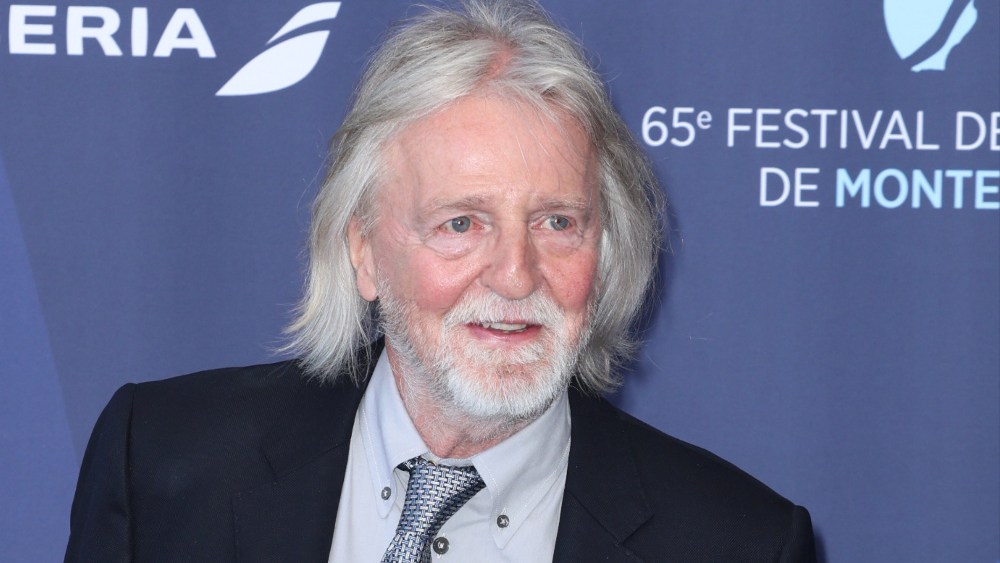
Get ready for ‘Blood Axe’.
“We shot the first season last year and it’s spectacular,” says writer and executive producer Michael Hirst, best known for “Vikings.” Variety at the Monte Carlo Television Festival. The second season of the historical drama – set in the 10th century – is already in the works.
Although “Vikings” fans will flock to see it, “it’s a new world,” he points out.
“There has already been a sequel to ‘Vikings,’ ‘Vikings: Valhalla,’ which I had nothing to do with. This is a new story, set 100 years later, with a completely new cast.”
In ‘Bloodaxe’ Hirst explores the antics of the warrior Erik Bloodaxe, his wife Gunnhild and Egil, ‘a murderer and a poet.’
“For me, Egil was a gift from the gods. In Iceland he is one of the founding fathers of the country. He is full of contradictions, so you never quite know where he is going,” says Hirst enthusiastically.
“He can be gentle and kind, and then he’s completely brutal. In the first episode, he sleeps with the wives of three fishermen, who keep asking him for a new poem. When the fishermen come back, they can’t kill him on the spot, because “the women wouldn’t forgive them.” Egil is totally fearless. You recognize that he has a soul, and from that soul comes his poetry.”
The show embraces magical realism.
“We live in bad times and everything is terrible, including many of the shows. But I’ve always loved magical realism. King Arthur, the Bible – that’s magical realism too. But you have to be very careful how you use it, and the audience has to be aware that you’re emphasizing something real.”
Hirst is still very interested in power, he admits. And families.
“Everything I write is about families – even ‘Billy the Kid’.”
Now he will portray an aging king trying to determine which of his sons should succeed him.
“Erik is a great warrior and an extremely brave young man. Egil became famous because he was such a brilliant robber, but he is impulsive. Then there is Haakon, who was sent to England to be raised by the King of Wessex. Now he does not know where his spirit lies. Once he goes to church and tries to pray to Christ, but suddenly the room is full of ravens and when he looks up, Odin is standing in front of him.”
The first season will mainly focus on the conflict between Erik and Haakon, he says. “And Egil is the joker in the pack.”
Hirst became a storyteller at the age of ten – “I started writing little stories, and of course I was the hero in them all” – but his real breakthrough came when he met acclaimed director Nicolas Roeg.
“I was trying to buy the rights to his movie ‘Bad Timing,’ and I made an excuse to see it. He read my short stories and invited me to his apartment, where I stayed from 8 p.m. to 4 a.m. Those hours completely changed my life,” he recalls.
‘He said: ‘Your stories are correct, but what exactly do you want, Michael?’ I had never thought about it before, so I burst into tears.”
Roeg threw his first script out the window, but by then he had already caught the bug. His unrealized script about Napoleon led to the starring role of Cate Blanchett in ‘Elizabeth’.
“I didn’t want to be conventional in any way. Nic wasn’t, and he always challenged me.”
Hirst says ‘Elizabeth’ director Shekhar Kapur’s lack of knowledge of Queen Elizabeth proved to be a strength. “He kept asking local taxi drivers what they thought of her! This allowed us to portray her as a young woman in a very difficult situation, and that’s why people liked it. They could identify with her.”
He adds: “That’s when I really grew up.”
“The Tudors” and “Vikings” followed, but there is still one story he would like to make someday.
“It is based on a book called ‘Montaillou: Cathars and Catholics in a French Village’” written by Emmanuel Le Roy Ladurie, first published in 1975.
Set in the Middle Ages, it explores the conflict between the local Cathar sect, seen as heretical, and the Catholic Church.
“The Cathars believed that Jesus was just an ordinary man, and then came the Inquisition. The book is full of interviews with the inhabitants of a small village in the Pyrenees. You learn about their sexual lives, their beliefs and the social structure.”
The book left him ‘enchanted’.
“Some of the things they did and believed in were out of this world. For example, the shepherds would take their sheep to the Pyrenees in the winter, where they would meet the dead. And they would exchange messages! There’s that magical realism again.”
“But magical realism only works if there is reality.”