Sharon Stone and Keke Palmer on Euphoria, AI and Calling Women ‘Crazy’
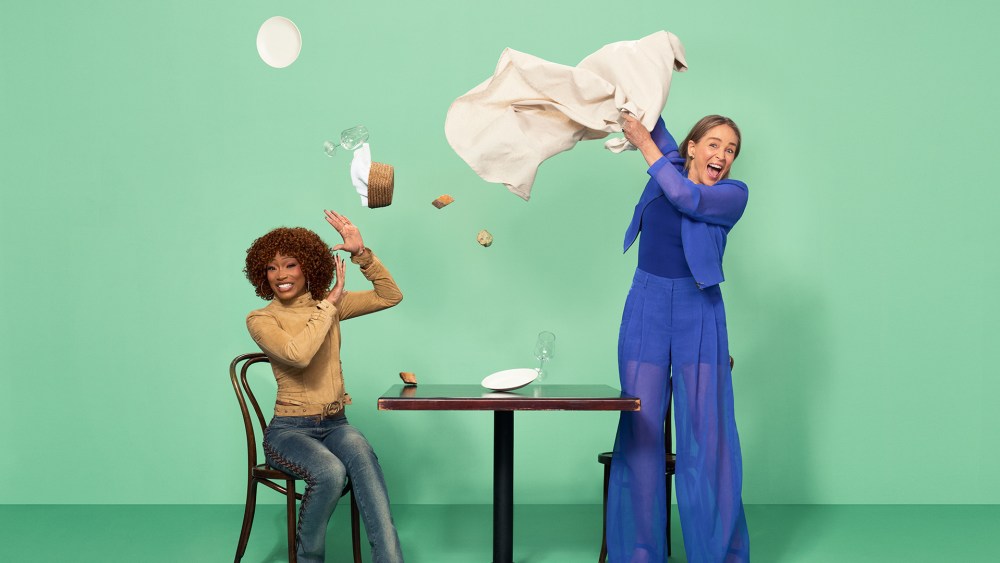
Sharon Stone and Keke Palmer’s chemistry is electric from the second they meet — they start gabbing well before the cameras begin rolling and keep going after the director calls “cut,” exchanging phone numbers and making plans to dine and work together. Stone, who is 68 and has been an industry icon since 1992’s “Basic Instinct,” fittingly plays a powerful Hollywood producer in Season 3 of HBO’s “Euphoria.” Thirty-two-year-old Palmer stars in Peacock’s serialized remake of the 1989 Tom Hanks film “The ’Burbs,” playing a mom for the first time since becoming one herself. Candid and wizened from their decades-long careers, they become fast friends as they discuss their rural upbringings and rail against the patriarchy — starting with their experiences as single moms.
Mary Ellen Matthews for Variety
Sharon Stone: It’s so hard.
Keke Palmer: Especially solo. I have a lot of support, but I’m just saying.
Stone: I did solo. I adopted three boys.
Palmer: I’m not surprised. Boy mom energy.
Stone: Changed me. And then sometimes — you’ll find, I’m sure, with your son as he grows — there are dad questions. I took them in a certain room of my house and closed the door and said, “This is where we do dad questions. And now you talk to me like I’m your dad.” And that’s what we did. “We’re going to talk about anything you might need to know about this, this or this.”
Palmer: As they got older, did they understand how you were creating this safe space?
Stone: Yes. They gave me Father’s Day cards.
Palmer: What made you want to adopt on your own?
Stone: Moving ahead with my own plan and not waiting for other people to figure out if my plan is good, or you like my plan, or you can handle it … I decided that I could, and you couldn’t. Better by myself. “You’re cute for the weekend.”
Palmer: Bye-bye. It’s Monday.
Stone: What kind of dad did you have?
Palmer: My dad is very disciplined. He’s a deacon. Worked in the factory, so a very hardworking man. But he always let my mom have the floor. He did a lot of things that people would assume are mom things. My dad cooked, helped us with our laundry. If we had a problem with something tearing, he would sew it up. As I got older, I expected men to be like my dad.
Stone: That’s the thing. I had a fantastic dad. We were very poor and we lived in the country, so we ate what he hunted and fished for. And my mom grew this garden, which she canned in the fall, and we ate those vegetables and fruits throughout the winter. They were a serious team. And my dad had these very regal manners. When my mom walked in the room, my dad stood up.
Palmer: He respected her.
Stone: He pulled out her chair for dinner. He helped her with her coat. If people swore in front of my mother, my dad would say, “We don’t do that” — though my mother swore like a sailor.
Palmer: My mom, too. I grew up in a matriarch household.
Stone: We understand that we have to go out in the world and women are going to actually keep it together. The men are going to come and go. They’re gonna come and go from work, or from your whole life. But we’re going to keep it together. The food on the table, the kids going to school, doctor, dentist, all the things — we’re the ones. And I grew up in the country, so we also talked to our neighbors. If they were sick, you helped. We took baskets of food and left them on your doorstep. We didn’t have to make sure you knew it was from us. There was a sense of community and care and structure. I feel very grateful to have come from the America that I love and believe in. I have concerns sometimes as we move forward. And maybe that’s why I like playing crazy people.
I notice on your show, “The ’Burbs,” you have a suburban community that actually has all of the players that would be in the suburbs. You have a charming, not only interracial, but international couple. Then you have the lesbian neighbor. The guy who’s undercover from somewhere. And you have, maybe, a murder. You have managed to allow us to be comfortable with suburbia and all the real things that are in it.

Mary Ellen Matthews for Variety
Palmer: That’s the best compliment, because that was the hope for the show. To talk about real things. Expose the stuff that is happening in the underbellies of suburbia, but make it digestible. Dialogue about it. I think about Norman Lear back in the day, watching “The Jeffersons” and Archie Bunker and George.
Stone: Even “Taxi.” Everybody came in and out, including people with mental illness. We are now trying to be too homogenized. We lose sight of the reality of humanity. That it’s our differences that make us special and fabulous.
Palmer: That must have been what drew you to “Euphoria.” That show has so many different characters and conversations.
Stone: It does. But I have history, because Sam Levinson, the writer, director and producer — I worked with Sam’s dad, Barry Levinson, who is a great director.
Palmer: Similar in style to Sam?
Stone: [Barry Levinson makes] comedies, but very smart comedies. I did this movie called “Sphere” with him, which was an underwater movie where I was in a dive tank for five and a half months. But it worked out for me, because I have a deep-sea rescue diving license.
Palmer: What?!
Stone: Well, you’re an athlete.
Palmer: I do love getting down and dirty.
Stone: Body, mind and spirit.
Palmer: Pilates down to my toes.
Stone: If people think that movies and TV are easy, it is not. It beats your body to a pulp, because you work unbelievable hours. That mind-body connection becomes immediately disrupted.
Palmer: The things we do — and it’s like usually some really small indie — we did for the love.
Stone: We never get paid for a photo shoot. All the PR we do. We mostly work for free.
Palmer: The glitz and glam, it can be quite deceiving. How is it getting to play someone that’s a little adjacent to you on “Euphoria,” being a big Hollywood producer?
Stone: I think it’s the greatest show on television. We’ve met these kids. We’ve seen them turn into young adults. We’ve seen them turn into full-on drug dealers. And I’ve gone through it in my family. My brother went to the biggest prison in New York. He got in the drug business. It kept going. I was like, “You have to get out. You have to let me pay off your vig.” He was like, “It doesn’t work like that. You can’t pay it off.”
Palmer: Because they want those people in there. “You either gonna become one of my prostitutes or one of my mules or one of my dealers.”

Mary Ellen Matthews for Variety
Stone: So when the first episode ended, I just sat there and cried. And then I read these reviews about how people wanted it to be this happy ending, and I’m like, “What you saw was so honest.” “Euphoria” is so relevant. I believe it should be shown in every high school, and I think all the parents should have to see it. As a mom, I love it.
Palmer: I think sometimes people stop at the surface of “No, it’s too much sex.”
Stone: “My kid wouldn’t do that.” It’s like, “Really? Do you know? And does your kid tell you who’s next to them?”
On “Euphoria,” you only get a piece of the script. It’s locked down and you can’t see everything, because they don’t want it to get out in the press. So you have to be like a scientist. Maybe your character told a lie, or maybe your person’s a killer, or the hero, but you have to figure out how you’re going to make their behavior make sense. As my acting teacher used to say, “You never tell a director, ‘My character wouldn’t do that.’” If the director says to you, “I’d like you to stand on your head and fart the national anthem,” your response shouldn’t be “My character wouldn’t do that” but “How would my character do that? And why? And what would I be wearing? Or am I naked? Is she drunk? Is she mad? Is she sick?” You need to know why. And in the end, that’ll be the greatest scene in the film.
Palmer: How do you think that one finds that freedom in a performance?
Stone: How do you find it?
Palmer: I am open to the process. It’s not about being pretty. It’s not about being funny. It’s about being real. It’s about honoring what I’m saying. That’s what gets me to places I didn’t even know I could get. And this idea I have in general as an actor of bringing nuance to characters that the system has erased.
Stone: Clark Gable wasn’t born on Park Avenue. Humphrey Bogart didn’t land in Beverly Hills. All of the great stars came from the middle of nowhere, with middle-of-nowhere experiences, just like you and me. We go through things, and bring this to our work. Then we have this emotional bundle that most people have tied pretty tightly; ours keeps going until the ties are not so tight. I mean, I can cry at a Charmin commercial.
Palmer: I did this movie called “Alice” where I played this woman who realized she was a slave. Every day after I did that movie, I was like, “I got to live. For my ancestors.”
Stone: Don’t you think that you called to your ancestors to play the part? And they do not ever let go. They’ll be with you forever because you called to them.
Palmer: Girl. You are speaking the truth. That was the beginning of the era that I’m living in now, which is immense gratitude for self. No more shame. No more time for none of that shit. [They fist bump.]
Stone: This is what “Basic Instinct” did for me. I had to dig into every dark corner until I was literally sleepwalking when I was making this movie. I woke up three times in my car, fully dressed, because it was so traumatizing for me to play such a heavy character. I’m really so light. I’m like these fucking light boxes in here. I’m like a glowworm. What I learned from doing that movie was how light I was. It set me free. Because when people started judging me, I was like, “No. I played a part for three months in a movie and looked at all my darkness, and what’s happening now is you’re triggered, and you’re reflecting your darkness onto me.”
And you know what? I understand that.
Palmer: That happens a lot as a performer. Projection is a constant part of it.
Stone: You see people coming down the street and you can already tell. My ex-husband said this one great thing. I said, “I’m really sorry how people dismiss you when we’re out. They talk to me. They don’t talk to you. It’s so inappropriate.” He said, “Oh, don’t worry. If they don’t see me, they never saw you to begin with.” Very few people are going to ever understand that the more successful you become, the more isolating that it is.
Palmer: I’m not trying to strum that violin, but especially as a woman. When a woman happens to be secure, knows what she wants, somehow we’re such monsters.
Stone: Crazy girl. Crazy monster. I went to college in the ’70s. To go to college and not be able to sign for your own apartment, a credit card, a checking account in your name because you were female — we were marching in the street, burning our brassieres, which sounds absurd at this point.
Palmer: Sounds fabulous!
Stone: When the Kardashians are selling underwear with pubic hair on the outside, it sounds pretty crazy that we were being oppressed to wear certain undergarments. But that’s when we marched to get Roe vs. Wade. Now, people want to take those things away from us again. Would we tell men we’d like to take away their healthcare? “First of all, we’re taking the Viagra.”
Palmer: Because that’s got y’all acting crazy. All that hairline stuff, cut it out.
Stone: Gone.
Palmer: Since y’all are being mean now.
Stone: And we don’t know about the voting. Because you can’t be responsible to come home, take care of your kids or pay that child support —
Palmer: I don’t know if I’m into them driving.
Stone: — so maybe you shouldn’t vote.
Palmer: When you bring up that CS, that child support — they’re going to get us both now.
Stone: That would be the SAFE Act I’d like to see. Because that’s actually about somebody’s safety.
Palmer: Girl, when are you running?! Mic is dropped. Oh, my gosh, I just love you.
Stone: Why does a woman get treated differently when she becomes successful? Why do they say you’re crazy? My theory would be, “You must feel that you are crazy. Because you have power. You have success. You have confidence. So if that equals up to you in a math equation as crazy —”
Palmer: Well, damn it, I’m the craziest bitch you ever met.
Stone: Then guess what? You’re projecting your crazy onto me, because these are things you’ve always had. From an empathetic point of view, I think, “Well, men always have to be the best.” They have to have the best job, the best car, the prettiest girlfriend, the cutest wife. It’s all status in a man’s world, and that will make you crazy. The difference is, in our female world, we don’t have to have the best car or the most handsome boyfriend to be confident, successful and have boundaries. Our world, the female world, isn’t making these demands on us.
Palmer: But wouldn’t it be nice if we were allowed to equalize the score?
Stone: That’s what I think. I think men are entitled to an equality too that isn’t being talked about. This is why men feel lonely and left out. Because guess what, men? We don’t need you to have the cutest girlfriend, the best car, the best job. We also don’t need that. We think that’s crazy.
Palmer: I agree with you so much. But it’s so funny, because [men think] it’s an attack. But we’re actually trying to be like, “I got it too. We’re good.”
Stone: “We’re good.”
Palmer: “Let’s have each other’s back.”
Stone: “We’re good, and we’d like you to feel good too. You don’t have to do all that.”
Palmer: “Ease up.”
Stone: “So why don’t we ease up on you and you ease up on us?”
Palmer: And now we eased!
Stone: That’s what I think “equal” should feel like. But we have to be willing to give that back to men. To understand and say to them, “You don’t have to have everything.”
Palmer: That dinner with that ex-husband or whoever that was that you were telling me about, at first, I thought he was being shady. But there’s a truth to that.
Stone: Right? How could they possibly be experiencing the real me if they’re not experiencing that I’m actually standing here with a person that matters to me?
Palmer: Do you have any particular feelings about AI and how it’s changing our industry?
Stone: I’m not a person who uses that stuff. I am a person who has the 20-volume annotated dictionaries. I love researching on the internet, but to me, AI’s a cover band. That’s all it’s got. It’s never going to be the Rolling Stones; it’s always going to be somebody singing the Rolling Stones. It’s never going to be me doing a performance; it’s going to be somebody faking me doing a performance. You’re never going to get my crazy idea of the day, which is always going to be better, because it’s going to be — guess what? — new. That’s what makes me interesting. I have new ideas.
It’s great in many ways. The things that gather information and stack it up. It’s the tech encyclopedia. I’m all for that. But to imagine that it’s going to run ahead of us —
Palmer: I agree. At the end of the day, the human mind, the people that have visions every day, that comes from spirit.
Stone: We want to see ourselves. We don’t want to see a robot being us. It’s ew.
Palmer: The climate stuff is worrying and concerning, but then there’s the reality that it’s not going anywhere. So I find myself trying to figure out how to be prepared, how to create things that protect the environment, be a part of things that are making it ethical. But I’m also understanding how it’s democratizing a lot of spaces for people that otherwise couldn’t reach them. So it’s weird. It can be so positive, but it also can be so damaging.
Stone: Progress is always like that. It’s a little bit like the Old West, where we have people on horseback running rampage across our country and all kinds of crazy stuff, and people are shooting in the air, not realizing the bullets are going to come back down.
Palmer: Physics! They’re not thinking about this recursively.
Stone: No. There’s not a logic puzzle to the behavior. But they are trying to blaze the new frontier. You got a little fire in your pants and that’s exciting, but at the same time, you don’t need to blaze through and destroy everything that came before, because there’s lots and lots and lots of good, beautiful, important, impactful, educational, interesting and ultimately deeper, more educational things, culturally, historically and sociopolitically, that we are all going to need from each other. Not from a box.
Palmer: You really are the bomb. When are we doing a movie? I need to be with you every day.
Stone: I was just talking to Colman [Domingo]. He has an idea for a series for us.
Palmer: Girl, when?!
Stone: If we do it, there would definitely be a part for you, if you’re into it. I’ve been trying to play his wife forever.
Palmer: He’s so handsome.
Stone: He’s a great host.
Palmer: I need to go to a dinner party at his.
Stone: Why don’t I do that? We’ll all do my house.
Palmer: Sounds like a date.