How Korea Boosts Domestic Spending Through a Nationwide Shopping Event | News
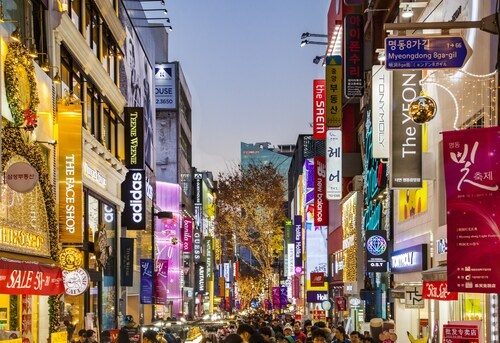
Amid changing global economic conditions, South Korea is exploring a distinctive approach to economic stimulus – one that goes beyond traditional fiscal or monetary measures and focuses instead on mobilizing consumption.
Central to this approach is the Donghaeng Festival (K-Shopping Festa or 동행축제 in Korean), a nationwide initiative led by the Korean Ministry of SMEs and Startups, which literally means a ‘shared journey’ or collective participation.
What started as a seasonal sales campaign has grown into a nationwide mechanism designed to channel spending to small businesses and local economies.
A national consumption framework
The April 2026 edition illustrates the magnitude of this effort. Over a period of 30 days, the festival brings together more than 33,000 SMEs and micro-enterprises through approximately 200 distribution channels, while connecting consumption with more than 50 regional festivals across the country.
Scale alone does not explain its meaning.
The Donghaeng Festival works as a coordinated system. Travel, cultural events and retail promotions do not run in parallel; they are structurally linked. Visitors are drawn to regional areas through festivals and tourism programs, and that movement is then converted into local spending at traditional markets, convenience stores and small business networks.
The result is a deliberate circulation of demand, diverting consumption from concentration in major urban centers to a broader economic base.
The government as a market catalyst
This level of coordination does not arise organically. It is actively enabled by the government, which brings together central ministries, local governments and private sector platforms under a single operational framework.
Rather than acting as a direct market participant, the state acts as a catalyst – aligning incentives, lowering participation barriers and synchronizing fragmented actors. Discount programs, digital vouchers and partnerships with major retailers and financial institutions are designed to accelerate consumer spending while ensuring they reach smaller businesses.
In fact, policy is not used to replace the market, but to organize it.
Impact on small businesses
For small and micro businesses, the effects are immediate.
Many operate with limited financial buffers, making short-term demand fluctuations critical. The festival creates concentrated periods of high visibility and purchasing activity, allowing companies to generate revenue, improve cash flow and stabilize their operations within a relatively short time frame.
This is especially important outside major metropolitan areas, where local businesses are more exposed to a decline in foot traffic and consumer demand.
Measured economic effects
The economic impact is becoming increasingly measurable.
In 2025, three rounds of the Donghaeng Festival generated significant sales volumes:
KRW 313.5 billion (USD 209 million) in March
KRW 702.2 billion (USD 468 million) in May
KRW 1.39 trillion (USD 927 million) in September
In particular, indirect sales – which reflect spillovers to surrounding commercial areas – represent a significant portion of total activity. This suggests that the festival’s impact extends beyond official sales channels, boosting wider local economies.
Local economies, tangible effects
At the regional level, the results are more modest in size, but highly concentrated.
Previous editions attracted tens of thousands of visitors to local events, including about 18,000 visitors to Jeju Island, one of Korea’s top tourist destinations, and about 9,000 visitors to Gwangju, a major regional city in the southwest.
For participating companies, revenue generated through these regional programs ranged from KRW 708 million (USD 470,000) to KRW 2.017 billion (USD 1.34 million) per cycle.
Such figures may seem small in aggregate, but represent meaningful gains for small traders and local producers – with additional revenues having the potential to directly impact business continuity.
Expanding market access
Another defining feature is the integration of distribution channels.
Participating companies can simultaneously access a wide range of platforms – from e-commerce and live commerce to department stores, hypermarkets and convenience store networks. This reduces the structural barriers that typically limit small businesses’ access to larger markets.
The result is not only higher sales, but also greater visibility.
Beyond short-term stimulus: a model for consumption-led growth
The Donghaeng Festival also serves a broader function in revitalizing domestic consumption. By aligning retail promotions with tourism and cultural experiences, it encourages both Korean consumers and international visitors to participate in local spending in different regions.
For households, the festival lowers the barrier to consumption through coordinated discounts and incentives, creating timely opportunities to get back to daily spending. For international visitors, it provides structured entry points into Korea’s local economies, connecting travel experiences with neighborhood markets, regional products and small businesses.
In this way, the initiative strengthens consumption not as a one-off response, but as a more sustainable spending pattern – linking short-term demand activation to a more resilient domestic consumption base.
Beyond its immediate impact, the model also has broader policy implications for how consumption can be effectively mobilized.
The Donghaeng Festival shows how to activate domestic demand in a targeted and inclusive way – integrating tourism, culture and retail into a unified system that engages both residents and visitors. Rather than treating consumption as a passive outcome, it is actively designed and directed to sectors and regions where its impact is most needed.
This approach builds growth not through isolated interventions, but through coordinated participation at scale – with individual spending, whether by local consumers or international tourists, contributing to a broader economic impact.
In a period marked by uncertainty, it offers a practical proposal: that strengthening domestic consumption – supported by both local demand and visitor spending – can provide a more stable foundation for economic resilience.
Rather than relying solely on large-scale policy changes, the Donghaeng Festival suggests that growth can also be built through coordinated, day-to-day spending – across regions, sectors and communities.