41 million visitors postpone their holidays in Europe if EES border delays reach three hours | News
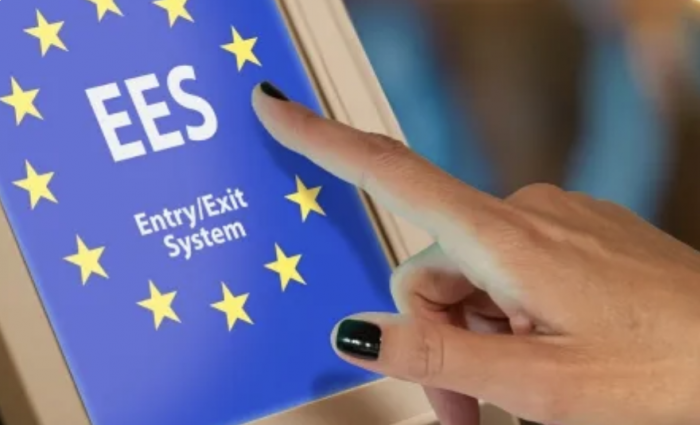
New research commissioned by the World Travel & Tourism Council (WTTC) warns that prolonged border delays due to the rollout of Europe’s new Entry/Exit System (EES) could jeopardize up to 41 million visitor arrivals and $45.4 billion in visitor spending from four of Europe’s top source markets.
The analysis, based on a survey of more than 2,500 travelers from the United Kingdom, United States, Canada and Australia, found that if travelers regularly have to wait three to four hours at the border when entering the Schengen Area, around a third would be much less likely to travel to Schengen or choose not to visit the Schengen Area at all.
Applying these findings to visitor forecasts for 2026 suggests that up to 41 million arrivals and $45.4 billion in spending could be at risk if significant delays become a persistent feature of the traveler experience.
The findings highlight a crucial challenge for European destinations when introducing EES. While travelers broadly support stronger, more modern border controls, their willingness to visit Europe declines sharply when faced with the prospect of long and unpredictable queues. This underlines how ineffective queue management at border crossing points can have a direct negative impact on the overall traveler experience.
Among respondents, 39% of British travelers said they would be much less likely to travel with a delay of three hours or more, followed by 33% of travelers from both the United States and Canada, and 27% from Australia.
Gloria Guevara, President & CEO of WTTC, said: “The introduction of EES is an important step forward in modernizing Europe’s borders and strengthening security. Our research clearly shows that travelers support digital and biometric border systems and understand the long-term benefits they can bring.
As with any major transformation, there will inevitably be teething problems. The challenge now is not whether the EES should move forward, but how governments, border authorities and the travel and tourism sector work together to ensure implementation goes as smoothly as possible.
The good news is that solutions already exist. By making greater use of digital pre-registration tools, improving communication with travelers and ensuring operational preparedness at border crossing points, Europe can reduce friction and deliver the seamless experience travelers expect.”
While the scenario analysis highlights the potential consequences of disruption, the study also found strong underlying support for EES. Sixty-five percent of respondents support the system after hearing about it, and only 6% are very negative about the use of biometric border controls.
Travelers cited better border security (57%), faster processing of future trips (52%) and greater confidence in border controls (43%) as the system’s top benefits.
However, awareness remains low. More than half of travelers (55%) have heard little or nothing about EES, while 49% do not know what is required of them when entering or leaving the Schengen area.
To support a successful rollout, WTTC calls for three priority actions:
Member States should accelerate the adoption of the Travel to Europe app for digital pre-registration.
A coordinated communications campaign is needed in key source markets, particularly Britain, the US, Australia and Canada. Clear step-by-step guidance should be provided to airlines, airports, travel agents, tour operators and destination partners so that travelers understand exactly what is required before they travel.
Member States must ensure that all border crossing points are operational. This includes fully functioning equipment, sufficient staff and measures to streamline processing where possible, including for travelers who have already provided biometric data through visa procedures.
The research shows that travelers want EES to succeed. Most respondents prefer to adopt and improve implementation when disruptions occur, rather than abandoning the system altogether. The findings suggest that with the right combination of technology, communications and operational preparedness, Europe can realize the benefits of modern digital borders while maintaining a positive visitor experience.
Main research results
65% support EES after hearing about it
55% have little or no awareness of EES
49% don’t know what is required of them when traveling
Only 6% are very negative about biometric border controls
87% are willing to accept some disruption if travel becomes smoother in the future
33% would avoid the Schengen area if queues regularly last longer than three hours
Source: GSIQ European Entry/Exit System Consumer Research Study, May 2026. Data based on 2,512 international travelers in the US, UK, Canada and Australia.