World Aviation Festival 2025 – Highlights of Day 3 | News

On day 3 of the World Aviation Festival 2025 in Lisbon, airports and passenger experience were firmly in the spotlight, with world leaders exploring how infrastructure, technology and customer-centric innovation will shape the future of air travel.
Growth and transformation in Saudi Arabia
During a fireside chat, Steven Greenway, CEO of Saudi low-cost airline Flyadeal, outlined the airline’s rapid growth trajectory. Founded in 2017 and now operating 42 aircraft, Flyadeal expects capacity to grow by 42% next year as new aircraft are added to the fleet.
Greenway highlighted the unique strength of Saudi Arabia’s domestic market, which accounts for 75% of the airline’s capacity, as international expansion accelerates. Recent approvals to fly over Syrian airspace will reduce flight times by up to 50 minutes on routes such as Riyadh to Istanbul. flyadeal also supports religious pilgrimages with special charter operations.
JFK’s Terminal One: a new standard for American airports
Lisa Reifer, who is leading the transformation of Terminal One at JFK, shared how the project sets a new benchmark for smart, inclusive and sustainable airport design.
Key innovations include dynamic digital signage to improve passenger flow, touch points throughout the journey to support travelers with different needs, advanced docking systems to improve safety and operational efficiency, and sustainability by design, with solar panels providing renewable energy and all electrical ground service equipment.
Reifer emphasized that partnership and collaboration have been crucial in realizing such a complex project, as it provided the opportunity to leverage different perspectives to set a new standard in airport design.
Customer experience leaders in innovation and expectations
A panel of customer experience leaders from TAP Air Portugal, Star Alliance, IndiGo, Meta and IBM explored how airlines and partners can deliver customer-centric innovation in an era of diverse traveler needs. Sofia Lufinha from TAP Air Portugal emphasized that technology is a tool and not an end in itself, and that listening to customers is the basis of innovation. IndiGo’s Neha Narain noted that many of its passengers are first-time flyers, meaning technology needs to be applied carefully to avoid creating barriers. Star Alliance’s Ambar Franco showed how technology supports seamless travel between multiple airlines, citing the real-time baggage tracker. IBM’s Dee Waddell urged airlines to connect the dots between business-to-consumer and business-to-employee experiences to ensure value is delivered across the chain. Finally, Meta’s Bastian Schütz pointed out the potential of VR and immersive technologies to reshape the customer journey, from planning to inflight entertainment.
Virtual reality and the future of the customer journey
Conversations on VR and AI explored how immersive technologies will transform the aviation experience. Meta’s Schütz argued that VR and smart glasses could one day replace mobile devices. Narain also shared how Indigo’s virtual chatbot has evolved into a booking tool and revenue channel. Lufinha highlighted TAP’s ‘One Order’ transformation program, which aims to simplify booking into a shopping experience, as well as its WhatsApp concierge service that combines AI with human agents to provide personalized support at scale. Waddell pointed out VR’s potential in training, ATC operations and cabin design.
Reinventing flight distribution
In a session on distribution, DerbySoft’s Stephane Pingaud and AirAsia Group’s Siew Lee Tan explored how APIs and AI are reshaping airline sales. AirAsia’s adoption of API systems has already led to market share growth. And transparency is crucial, as support activities make up 20% of LCC revenues. The two leaders indicated that future distribution systems must be customer-centric, data-driven and flexible, with the ability to upgrade quickly. AirAsia sees AI and super apps as the next distribution frontier, building ecosystems that go beyond flights to include broader travel services.
The Vueling model: opportunities and challenges
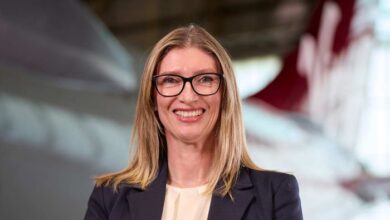
Vueling CEO Carolina Martinoli highlighted the operational pressures facing European airlines, from ATC delays to restricted airports and weather disruptions.
She emphasized that the way airlines deal with disruption will increasingly differentiate them. As part of IAG, Vueling also benefits from group synergies while maintaining a clear market focus, including connections with Barcelona-based Level.
Martinoli also announced a historic fleet renewal, ordering 50 Boeing aircraft (plus options) to replace Vueling’s Airbus fleet from 2026. She noted that the order will give the airline the flexibility to switch between 8 and 10 model variants.
The evolution of low-cost airlines
CEOs of Vueling, flyadeal and TravelX debated the future of the low-cost model. TravelX CEO Juan Pablo Lafosse highlighted the untapped potential of post-booking revenue, allowing for continuous bookings and additional bundling. While Martinoli pointed to shrinking booking windows and the need for flexible capacity management, he emphasized that the market regulates itself and if something airlines do doesn’t make sense, customers will go elsewhere. Flyadeal’s Steven Greenway also highlighted the perishable nature of airline inventory and the need to maximize revenue, while noting that NDC has still not been fully implemented after 13 years. Everyone agreed that AI and predictive capabilities will transform revenue management, with conversational interfaces becoming standard.
Commenting on the success of this year’s event, Daniel Boyle, General Manager Transport at WAF organizer Terrapinn, said: “This year’s World Aviation Festival truly exceeded our expectations. The caliber of speakers, depth of discussion and energy throughout the event reflected the transformation and innovation shaping aviation today. We are proud to have leaders from around the world brought together to share insights and forge connections. As we look to next year, delegates can expect even more world-class speakers, bold conversations and a stronger focus on the technologies and strategies that will shape the future of air travel.”
For more information about this year’s lineup of speakers, visit: https://www.terrapinn.com/conference/aviation-festival/speakers.stm