What the jury will actually decide in the case of Elon Musk vs. Sam Altman
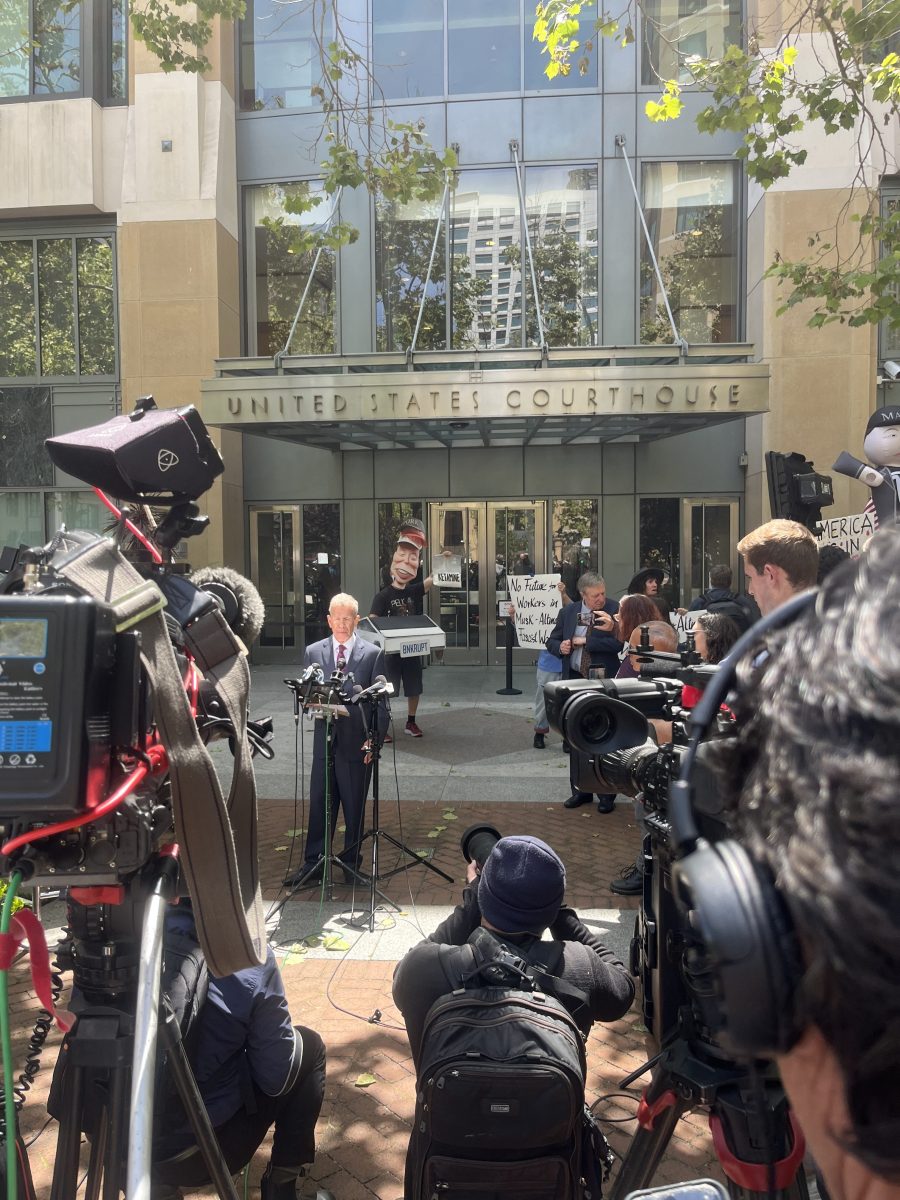
Nine California jury members are now deliberating on the future of OpenAI, the leading artificial intelligence laboratory.
Although the trial examining Elon Musk’s case against the other co-founders of OpenAI and Microsoft covers territory ranging from the founders’ breakup in 2018 to Altman’s resignation and reinstatement in 2023, jurors will consider a series of fairly narrow questions.
- Breach of Charitable Trust – Did OpenAI and co-founders Sam Altman and Greg Brockman essentially breach a specific agreement with Musk to use his donations to OpenAI for a specific charitable purpose and not for general use by the nonprofit?
- Unjust enrichment – did the defendants use Musk’s donations to enrich themselves through OpenAI’s profit motive, rather than for charitable purposes?
- Aiding and abetting Breach of Charitable Trust — Did Microsoft know, through its interactions with OpenAI, that Musk placed specific conditions on his donations and was instrumental in harming Musk?
OpenAI has also put forward three arguments in its defense that the jury will weigh:
- Statute of Limitations – a legal period within which a lawsuit must be filed. Here, if OpenAI can prove for the first time that any harm to Musk occurred before August 5, 2021; August 5, 2022 for the second count; and November 14, 2021 for the first count, then his claims will be moot.
- Unreasonable Delay – By filing his lawsuit in 2024, Musk delayed his claim to such an extent that his request for damages became unreasonable.
- Unclean Hands – a legal doctrine that states that Musk’s conduct regarding his claims against OpenAI was unconscionable and invalidates them.
If Musk wins, it could mean the end of OpenAI as a for-profit company, but it’s not entirely clear what the outcome will be. Next week, the judge will begin a series of new hearings in which lawyers from both sides will debate the consequences of a ruling in favor of the plaintiffs. However, that process could be undermined by a negative judgment.
Breach of Charitable Trust
Musk’s lawyers say the defendants clearly understood that Musk wanted to support a nonprofit that would ensure the benefits of AI for the world and prevent it from being controlled by a single organization. In particular, they say that a $10 billion investment from Microsoft in 2023 in OpenAI’s profitable subsidiary – the first to happen after the statute of limitations – was the event that turned Musk’s concern into a belief.
That deal, Musk’s lawyers say, was different from previous investments and resulted in OpenAI’s investors being enriched by the company’s commercial products at the expense of the charitable mission of AI safety that Musk promoted.
OpenAI’s lawyers have asked each witness to describe specific restrictions on Musk’s donations, and none have done so, including his financial advisor Jared Birchall, his chief of staff Sam Teller or his special advisor Shivon Zilis. They say all involved agreed that private fundraising would be needed to achieve the goals, noting that Musk himself tried to create a for-profit OpenAI affiliate that he would personally control, later merging OpenAI with his company Tesla. They also note that the organization’s other donors have not said their charitable trusts have been violated.
Importantly, a forensic accountant hired by OpenAI testified that all of Musk’s donations were used by OpenAI well before the key date of August 5, 2021. That’s proof that Musk’s donations were being used for their purpose long before he filed his lawsuit, which invalidated any charitable organization that might have existed.
In particular, they emphasize that the for-profit affiliate that runs the bulk of OpenAI’s actual operations continues to fulfill the organization’s mission and has generated nearly $200 billion in equity value to support the nonprofit. In particular, Sam Altman argued that offering ChatGPT for free helps fulfill the mission of sharing the benefits of AI with the world.
Unjustified enrichment
Prosecutors point to the billion-dollar valuations of the shares of OpenAI founders like Brockman and Ilya Sutskever, as well as Microsoft itself, as a sign that Musk’s donations were ultimately used for personal gain, rather than to support the charity’s mission. They claim that the work at OpenAI’s for-profit organization was commercially focused, while the foundation itself remained essentially inactive, with no full-time employees and ultimately not even in control of the for-profit organization.
OpenAI says all of Musk’s contributions were used by the foundation in 2020, and the stock distributions occurred well after he left the organization in 2018. Even beforehand, evidence shows that key players agreed that being able to compensate researchers with equity was key to the development of AGI, the hypothetical form of AI capable of performing any intellectual task a human can do. OpenAI executives argue that the for-profit foundation’s work has meaningfully advanced the foundation’s mission, including security activities. They say the nonprofit’s board continues to monitor the profit motive and has instituted new governance controls after “the blip,” when Altman was fired by OpenAI’s nonprofit board in 2023 for lack of candor and rehired just days later.
Help and support
Musk’s case focused on the events of the blip, when Microsoft CEO Satya Nadella, whose company relied on OpenAI’s technology, was personally involved in bringing back Altman and creating a new board to govern OpenAI. They note that Microsoft executives questioned whether their commercial agreement could conflict with the nonprofit’s goals, and suggest that Microsoft’s commercial priorities pushed OpenAI away from its mission. They have drawn attention to a clause in Microsoft’s agreement with OpenAI that gave Microsoft veto power over major business decisions at OpenAI.
Microsoft’s witnesses have maintained that despite extensive due diligence, the company’s executives were not aware of specific terms for Musk’s donations, and have never vetoed any OpenAI decision. They note that the company’s investments and computing power have enabled OpenAI to achieve its greatest triumphs.
Limitation period
Musk has suggested that his skepticism of his co-founders grew over time, until he finally decided in the fall of 2022 that they had betrayed him when he learned of Microsoft’s plans for a new $10 billion investment due in 2023. He wouldn’t file his lawsuit until mid-2024.
OpenAI’s lawyers argue that the terms of that deal were laid out in a term sheet for an earlier fundraising round in 2018, which Musk received and reviewed by his advisers, but Musk said he had not read it in detail. They also note numerous blog posts and other communications from over the years that show Musk could well have known what OpenAI was doing before taking them to court, including tweets in which Musk criticized the company years before the lawsuit. Zilis, Musk’s advisor, even voted to approve these transactions as a member of the OpenAI board.
Ultimately, OpenAI’s lawyers emphasize that Musk’s formal role in the organization ended in 2018 and his last donations occurred in 2020.
Unreasonable delay
OpenAI’s lawyers say the real reason Musk filed his suit was because he realized he was wrong about OpenAI after the launch of ChatGPT revolutionized the artificial intelligence industry. They argue that OpenAI has operated under its current structure since Microsoft’s initial investment in 2018, and that it is unreasonable to force the organization to restructure eight years later.
Unclean hands
There is evidence that Musk was planning his own competitive AI efforts while he was still chairman of OpenAI, and hired OpenAI employees to work on AI at Tesla. OpenAI’s lawyers argue that these efforts undermined OpenAI at a time when it was using Musk’s donations to pursue its mission. They noted that Zilis, Musk’s mother of three, did not disclose her personal relationships with other OpenAI board members for years. And they claim Musk withheld his donations in 2017 in an attempt to gain control of a planned for-profit subsidiary of OpenAI. Finally, “Mr. Musk left OpenAI for dead in 2018,” Bill Savitt, OpenAI’s lead attorney, told the jury.
When you make a purchase through links in our articles, we may earn a small commission. This does not affect our editorial independence.