VCs discuss why most consumer AI startups still lack staying power
Even three years after the generative AI boom began, most AI startups still make money by selling to corporations, not individual consumers.
While consumers quickly adopted general LLMs like ChatGPT, most specialized consumer GenAI applications have yet to catch on.
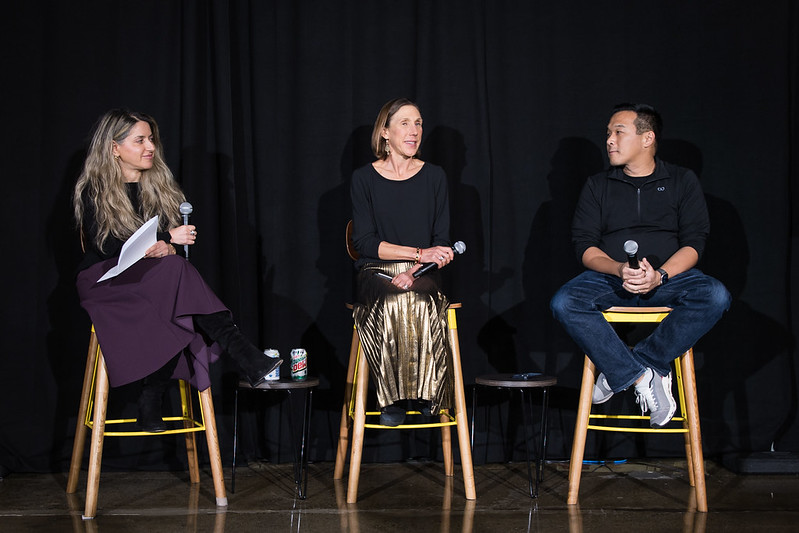
“A lot of early AI applications around video, audio and photo were super cool,” said Chi-Hua Chien, co-founder and managing partner at Goodwater Capital, on stage at TechCrunch’s StrictlyVC event in early December. “But then Sora and Nano Banana came out, and the Chinese opened up their video models. And so a lot of those possibilities disappeared.”
Chien likens some of those applications to the humble flashlight, which was initially a popular third-party download after the iPhone launched in 2008 but was quickly integrated into iOS itself.
He argued that just as the smartphone platform took a few years to solidify before breakthrough consumer apps emerged, AI platforms need a similar period of “stabilization” before sustainable AI consumer products can flourish.
“I think we’re on the cusp of the 2009-2010 era equivalent of mobile,” Chien said. That period saw the birth of massive mobile-first consumer companies like Uber and Airbnb.
We could see inklings of that stabilization as Google’s Gemini reaches technological parity with ChatGPT, Chien said.
WAN event
San Francisco
|
October 13-15, 2026
Elizabeth Weil, founder and partner at Scribble Ventures, echoed Chien’s sentiment about the early days of GenAI, describing the current state of consumer AI applications as an “awkward middle ground for teenagers.”
What will it take for consumer AI startups to mature? Possibly a new device besides the smartphone.
“A device that you pick up 500 times a day, but only sees 3% to 5% of what you see, is unlikely to eventually introduce the use cases that take full advantage of AI’s capabilities,” says Chien.
Weil agreed that a smartphone can be too limiting for reimagining consumer AI products in large part because it doesn’t have an ambient temperature. “I don’t think we’ll be building this in five years,” she said, pointing to her iPhone as she showed it to the audience.
Startups and established tech companies are racing to build a new personal device that can replace smartphones.
OpenAI and former Apple design chief Jony Ive are working on what is reportedly a “screenless” pocket-sized device. Meta’s Ray-Ban smart glasses are controlled by a wristband that detects subtle gestures. Meanwhile, a number of startups are trying, with often disappointing results, to introduce a pin, pendant or ring that uses AI in a different way than smartphones do.
However, not every AI consumer product will rely on a new device. Chien suggested that such an offering could be a personal AI financial advisor, tailored to the user’s specific needs. Similarly, Weil expects that a personalized, “always-on” teacher will become ubiquitous, with specialized guidance delivered directly from a smartphone.
While we were excited about AI’s potential, Weil and Chien expressed skepticism about the rise of several, still stealthy, AI-powered social networking startups. Chien said these companies are building networks in which thousands of AI bots interact with user content.
“It turns social into a single-player game. I’m not sure it works,” he said. “The reason people enjoy social networking is the realization that there are real people on the other side.”