The National Black Doula Association fights for Black moms
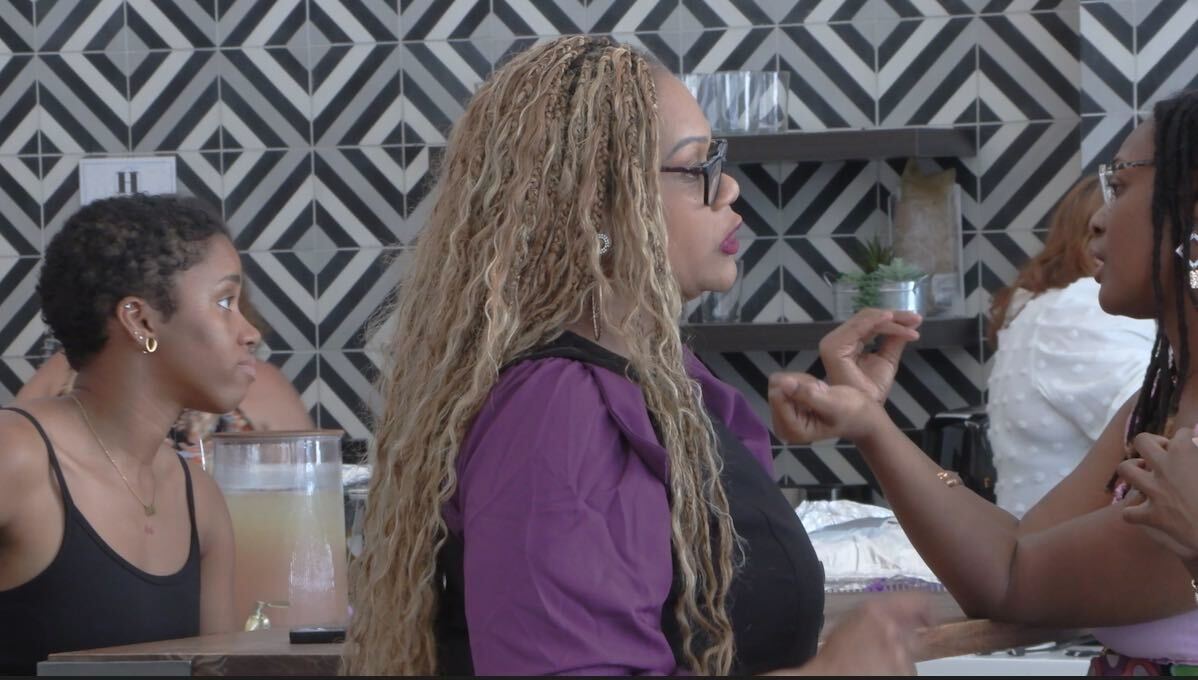
PHOENIX – Yolanda Walker strolled past the long table that served chimichangas, taquitos, fruit platters and cookies in the shape of flowers. She stopped to chat with her colleagues. They were wearing purple to symbolize National Black Doula Day, celebrated on April 11. The issue that preoccupied Walker and many others in attendance was the lack of collaboration and acceptance for Black doulas in medical spaces such as delivery rooms.
Doulas are trained professionals who provide physical, emotional and informational support to mothers before, during and after childbirth. This care promotes the health of mothers and their babies. Walker is a birth and postpartum doula – she helps mothers from the beginning of their pregnancy until months after the baby is born.
The women of the National Black Doula Association celebrated National Black Doula Day on April 4 during an early celebration hosted at the Heard Building in downtown Phoenix. The association is also among the groups celebrating Black Maternal Health Week, a campaign from April 11-17 that builds awareness and community to amplify the voices of Black mothers.
Chief among the doulas’ concerns was how to bridge the divide that still exists between the medical team in delivery rooms.
Walker said everyone is rooting for the same outcome.
“I’m part of your clinical team,” Walker said. “We’re working together to make sure we get that same result. Healthy mom, healthy baby.”
The lack of support for Black mothers in hospitals is what motivates Walker and other doulas to work endlessly to promote better outcomes.
The goal was simple, but the results are vital. Walker and the other doulas were at the Heard to celebrate and uplift each other as they advocate for Black mothers around the Valley. Walker said advocacy and support is particularly important for Black mothers, since Black women’s maternal mortality rates are significantly higher than white women.
“The data is the data,” Walker said. “Black women are three to five times higher than other races to experience any type of death or mortality, morbidity within the first post year, postpartum and childbirth. Why is this happening? Why is it not happening in other races?”
According to the Arizona Center for Investigative Reporting, Arizona’s mortality rates are higher than the national average.
“Arizona’s maternal mortality rate was 30 deaths per 100,000 live births, That’s significantly higher than the national average of 23.2, putting Arizona 11th in the country.”
Studies from the National Library of Medicine show that this is a nationwide issue. The study found that pregnancy-related death rates rose for all women between 2000 to 2019, and disproportionately affected Indigenous and Black women.
Walker described the mortality rates as a systematic issue. She said that some doctors and nurses have been trained to believe in false stereotypes like Black women have a higher pain tolerance than women of other races.
“It’s a broken system,” Walker said. “When you have trained and educated people to literally treat a whole race a certain way, a goal, it trickles down in the system. There is no way…you would teach your residence that Black people have a higher pain tolerance.”
As a result, Walker said most Black mothers are written off when they are in both physical and mental pain. In some cases, these unresolved conflicts are symptoms of infections, hemorrhaging and cardiovascular conditions. These conditions can be detrimental to mothers and babies if they are not properly treated.
Walker thinks some of these stereotypes is even more of a reason for doulas to be present and protective of the mothers in their care.
“We’re all human, and we bleed the same red blood,” said Walker. “So a lot of that goes back to slavery days. Not valuing who we are, even though we bring so much to the table.”
Walker and others doulas think that a big step forward to prevent these deaths would be collaboration with medical professionals. She said their shared end goal should focus on the health of mothers and babies. She said there should be less conflict between doulas and the medical establishment since their goals are the same: to have a successful and safe childbirth for mother and child.
“If I’m doing a little bit at a time to work in the system, and then I get a nurse to come on with me, then I get a doctor to come on with me, and I’m not, I’m not taking over what they do,” Walker said. “I’m not discrediting what they do.”

Cronkite News)
Bethany Davis, who is also a full spectrum doula, recalled her difficult birth experience with her only child. Both her delivery and postpartum journey were traumatic, she said.
Davis had a doula of her own throughout her pregnancy with son Bryson. She expected to have her doula there to support her delivery as well, but she was rushed into a cesarean section. Since she delivered in the operation room, her doula was not allowed to accompany Davis even after her delivery.
Bryson was placed in the neonatal intensive care unit after she delivered, and she told her husband at the time to be with their newborn. Davis felt abandoned after her delivery because she was no longer surrounded by people she knew.
“I ended up being alone for the latter part of my surgery because I sent him with the baby,” Davis said. “And so I didn’t have anybody in there that I knew. And I think the hospitals forget to think about that.”
Another factor in these rates is a cultural pressure and expectation that Black women have to carry everything themselves, many of the doulas said.
“I learned in that experience that most – a lot of Black women forget to set themselves up for success because they think and believe they can do it themselves,” said Davis. “You can do it yourself, but you deserve help. And it’s so much easier if you just have somebody there with you.”
Kay Clinton, who is also a mom and certified doula, said it is important for mothers to have a trusted partner, loved one or doula during the pregnancy process.
“I think no matter if it’s a doula, your mom, your friend or your cousin. It’s important to have them there, to bounce ideas off of, but also to advocate for you,” Clinton said. “Sometimes when you’re going through the moment, like your mind might be cloudy or you might just give in to something because you feel like you don’t want to be troublesome, you know?”
Clinton described pregnancy and childbirth as a beautiful process, and in that process there is so much for parents to prepare for. Having someone to help with major decisions – like a doula – can make a world of difference for the baby and the mother.
“Just having that person there to be like, ‘That doesn’t make sense,’” said Clinton said. “Or, ‘Maybe we should rethink about this,’ could possibly save your life.”
Related

Source link